
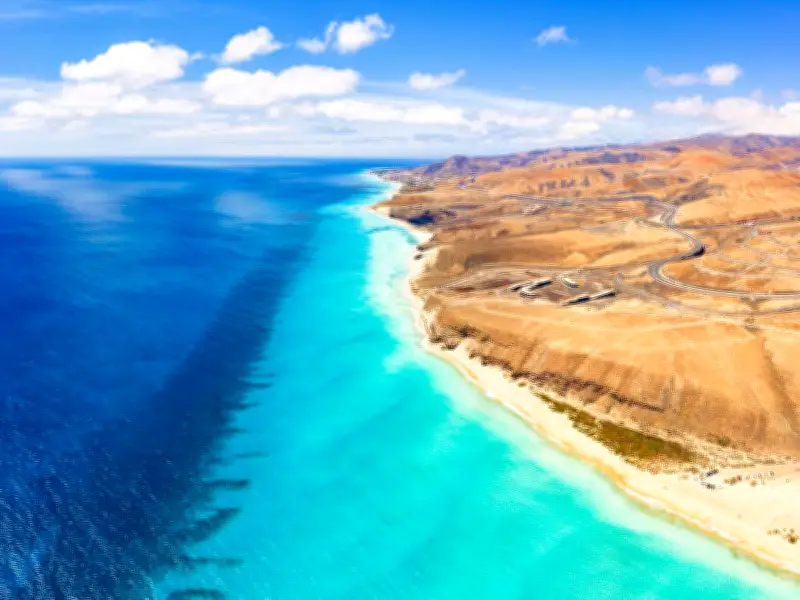
British tourists swimming in the Canary Islands could face serious health risks as untreated brine from desalination plants turns the waters into what experts describe as dangerous pickle juice. Researcher Ricardo Haroun, from the University of Las Palmas Biodiversity and Conservation group, warned that bathers could suffer 'serious consequences' to 'their health' due to the discharges, and urged local authorities to treat the problem as 'urgent'.
Brine Discharges Threaten Marine Life and Swimmers
Speaking to Spanish news outlet Onda Fuerteventura, Haroun explained that some unnamed sites are breaking the law by dumping excess brine without proper treatment. 'Increasingly and without any effective control or mitigation mechanisms in place, there are discharges of wastewater, sometimes also industrial water, that is not properly treated,' he said. 'We are also seeing an increase in brine discharges from desalination plants, which are generating an ever-increasing volume along the Canary Islands coastline.'
Haroun added that untreated brine 'can have consequences for the health of bathers, both locals and the numerous tourists who use our coastline.' The Canary Islands receive around 15 million annual visitors, of which about one quarter are British.
Environmental Impact on Seagrass Meadows
The brine is not only a risk to swimmers but also to marine plants and animals. Haroun stated that all these discharges, 'some legal and others illegal, cause serious environmental impacts, with a loss of biodiversity and emblematic habitats such as seagrass meadows.' Experts have already measured huge losses to the region's seagrass meadows, which support several species of fish popular to local fisheries, due to sewage and brine discharge.
'A significant portion of our historic seagrass meadows have disappeared in recent decades as a result of the impacts generated by sewage spills and, more recently, by the increase in the discharge of brine from coastal desalination plants,' Haroun said.
Reliance on Desalination
The Canary Islands rely heavily on desalination plants to turn salty seawater into fresh, drinkable water. Around 330 plants operate on the islands, producing approximately 700,000 cubic metres of water daily to support the local population and tourists. The report does not mention any specific desalination plants as being at fault, and the Daily Star has approached the Canary Islands' Environmental Agency for comment.




