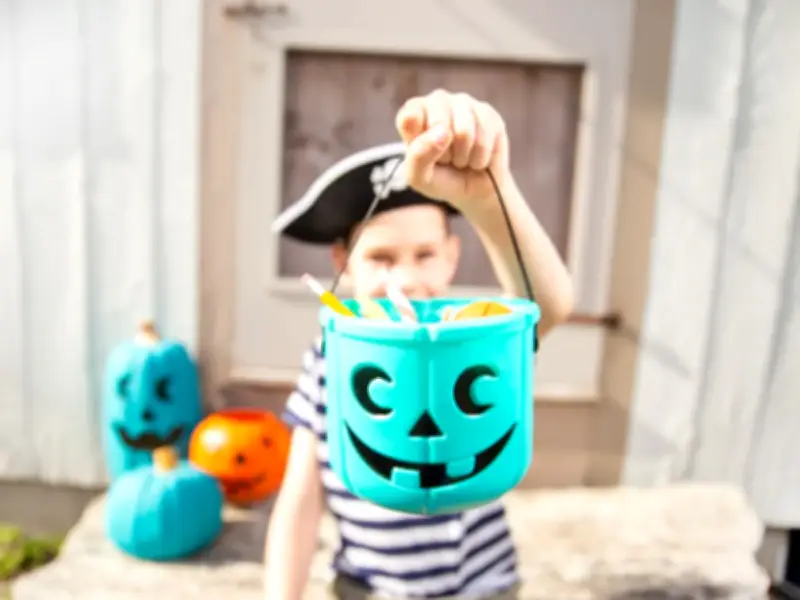
Halloween trick-or-treaters may carry blue, teal or purple pumpkin containers instead of the traditional orange, signalling that a child could be neurodivergent or have allergies or other health issues.
The trend, which began in America, has crossed to the UK in recent years to help some youngsters get the most out of their Halloween experience. Children knocking on doors for sweets and chocolate may choose these coloured carriers, or any type suitable for their treats.
What the colours represent
Blue pumpkins are commonly associated with children with autism, while teal and purple pumpkins are growing in popularity to represent allergies, food intolerances or other health issues. Children carrying purple or teal versions may be unable to eat typical chocolates on offer but would greatly appreciate non-food treats where possible.
Kids carrying purple baskets may have an epi-pen to hand, or it may indicate that the child or parent is taking extra precautions to ensure their safety. If you come across a child with a blue-coloured basket, bear in mind to take your time and be patient, as speaking and interacting with others may be challenging for them.
Mums explain the initiative
American mum Winnie White spoke of the teal pumpkin initiative in a TikTok video. "It alerts people about special dietary restrictions, allergies or sensory needs," she explained. "So if you see a child that is trick-or-treating with one of these pumpkins, it means that child has some special restriction of some sort."
Winnie continued: "Just be aware, you can do an alternative for candy [as your treat] instead. You could do glow-sticks, or little rings, stickers, or pencils - anything other than candy so that they can participate as well."
A second mum, Millie Jane, spoke of the blue pumpkins' significance. "Many children with autism are non-verbal. If a child knocks on your door and holds a blue pumpkin, know that many won't say, 'trick or treat' or talk."
She urged: "Don't take it as being rude or [they are] weirdos, they deserve to enjoy Halloween like everyone else."