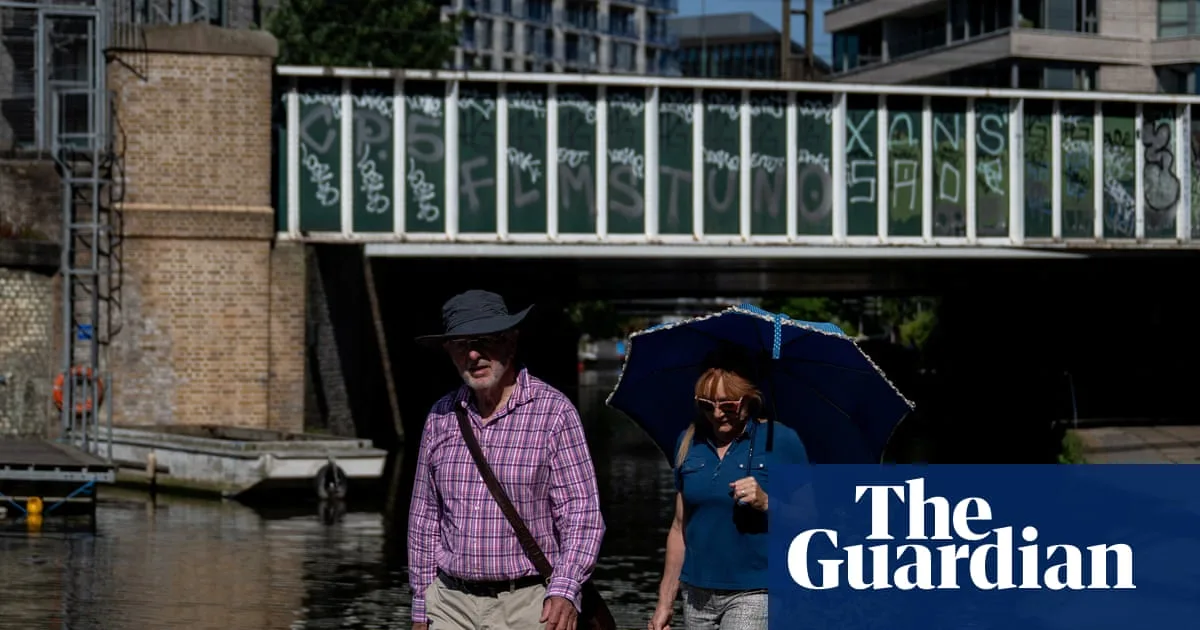
The UK Health Security Agency (UKHSA) has issued an amber heat health alert for several parts of the UK as temperatures are forecast to soar over the bank holiday weekend, potentially breaking the record for the hottest May day ever recorded.
Amber Alert Details
The amber alert, which indicates significant impacts are likely on health and care services, covers the East Midlands, West Midlands, East of England, London, and the South East. It comes into effect from 2pm on Friday and remains in place until 5pm next Wednesday, replacing less severe yellow alerts that were previously in effect for these regions.
According to the UKHSA, an amber heat health alert means there is likely to be “a rise in deaths, particularly among those aged 65 and over or with health conditions,” alongside increased demand across health and social care services.
New yellow alerts have been issued for the North East, North West, Yorkshire and Humber, and South West of England. These less severe alerts indicate that significant impacts on health and social care services are possible.
Health Advice
Dr Anya Gopfert, consultant in health protection at UKHSA, said: “We know that even moderate heat can lead to serious health problems, especially for older people and those with certain health conditions, so it’s important that everyone takes simple precautions while enjoying the warm weather over the coming days.” She added: “If you have friends, family or neighbours who are more vulnerable, it is important to check in on them and ensure they are aware of the forecasts and are following the necessary advice.”
People have been advised to keep their homes cool by closing windows and curtains in rooms that face the sun, and to cover up with suitable clothing such as a hat and sunglasses when going outside. They should also seek shade and apply sunscreen regularly, and avoid being outdoors between 11am and 3pm. Physical activity such as exercising or walking a dog should be done in the morning or evening when temperatures are cooler.
Heat Exhaustion and Heatstroke
The UKHSA has urged people to look out for signs of heat exhaustion and heatstroke. Symptoms of heat exhaustion include tiredness, feeling faint, intense thirst, heavy sweating, and feeling or being sick. Signs of heatstroke include confusion, lack of coordination, a fast heartbeat, hot skin that is not sweating, and seizures. Heatstroke is a medical emergency, and people are advised to call 999 if they suspect someone is experiencing it.
Record-Breaking Temperatures
The alert comes as the UK is forecast to see its hottest May day on record over the bank holiday weekend. Temperatures are expected to reach 33°C in southern England and the Midlands on Monday, surpassing the current May record of 32.8°C. Highs of 28°C are expected in parts of South East England on Friday, before climbing above 30°C across swathes of England and Wales over the following days. Many areas will be hotter than popular European holiday spots such as Mykonos, Marbella, and Benidorm.
Fire and Water Safety
The London Fire Brigade (LFB) has warned of an increased risk of fires, including wildfires, in hot and dry weather. Those planning barbecues should take extra care: ensure the barbecue is on level ground, away from flammable materials like fences, sheds, and trees, and never on a balcony or decking. Children and pets should be kept away. People should also dispose of cigarettes carefully to avoid starting grass fires.
LFB Assistant Commissioner Paul McCourt said: “We had a wetter-than-usual winter, which allowed vegetation to grow, followed by one of the driest Aprils on record. As we head into a week of hot weather, the risk of wildfire is very real.”
LFB also urged caution around water, noting that 40% of water-related incidents occur between May and August. “We know that the warmer weather can tempt people to cool off in rivers, reservoirs and lakes, but even in hot weather most inland water in London remains very cold, and can be below 16°C,” Mr McCourt said. “This can cause cold water shock and lead to drowning.” He advised swimming only in designated areas with lifeguards, and if someone is in difficulty, to call 999 and throw them something that floats, rather than entering the water.






