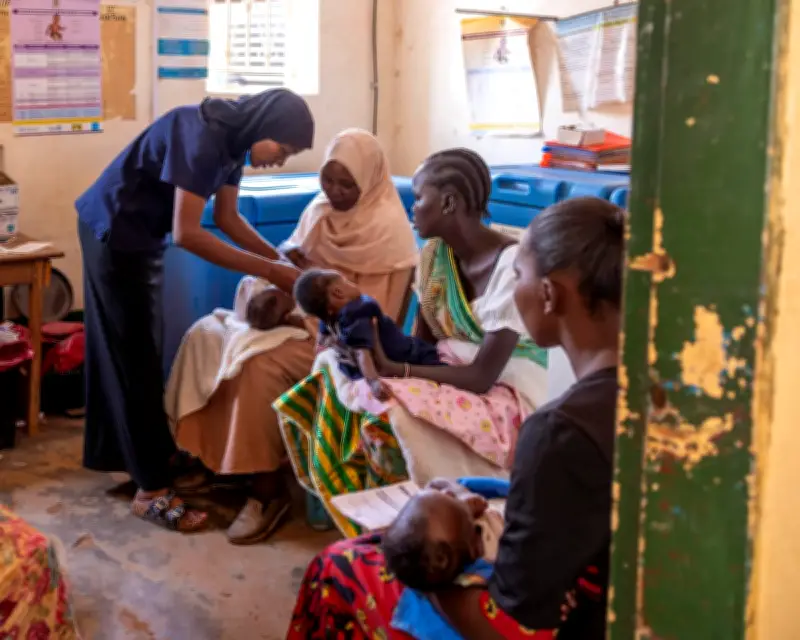
Uganda, home to 2 million refugees—the largest refugee population in Africa—is experiencing a severe humanitarian crisis as funding shortfalls and aid cuts have slashed rations, healthcare, and other essential services. The UN refugee agency, UNHCR, received only 12% of the $850 million it needs for Uganda this year. The World Food Programme (WFP) has cut rations: in early 2025 it supported 1.6 million refugees, but this year can help only 663,000, leading to worsening hunger and malnutrition. Acute malnutrition among children under five has risen by nearly 50% in a year.
Health System on the Brink
The International Rescue Committee (IRC) says funding cuts have pushed the country's health system to the brink. In 2025, the IRC's Uganda health budget was about $18 million, the bare minimum to keep critical services running. In January, it fell to $4 million, forcing the IRC to close health clinics in 11 refugee settlements and lay off about 80% of its staff, leaving people more vulnerable to diseases such as cholera, measles, and mpox.
“Two million lives are at stake here. Without a response, I worry the refugee health systems will collapse,” says Elijah Okeyo, the IRC’s country director. “We risk reversing all the work that has gone into the humanitarian health system.”
Clinic Closures Force Long Journeys
In December, the IRC shut the two clinics it supported in Kiryandongo settlement, home to more than 167,000 people. Suzan Mandera, 30, from South Sudan, regularly attended one of the closed clinics to get medicine for her children's malaria or typhoid and pain relief for her chronic back pain. Now she walks nearly 9 miles to the government-run Panyadole health centre, which is operating under severe strain after losing 58 of its 130 staff in December and struggling to serve 300,000 people.
Mandera points at surrounding guava, mango, and eucalyptus trees and says: “That is now my medicine. I mix the leaves in a pot, boil them all and drink until I become dizzy with sleep. I don’t think it is a good idea, but what can I do?”
Staff Overwhelmed, Maternal Deaths Rise
Dr Nicholas Sabiiti, a medical officer at Panyadole, barely has time to eat as he races between wards, theatre, and outpatients. “We had to let go of more than half our staff in 2025,” he says. “I rarely have a day off. I am not able to get a proper meal until night-time.” Midwife Sarah Birungi says pausing for a break would mean patients giving birth unattended. She reports that while no cases of puerperal sepsis (infection of the reproductive tract after childbirth) were diagnosed at Panyadole before staff cuts in October, there were at least five cases in January. According to IRC records, newborn deaths at Panyadole rose from 13 in October to 23 in January.
Critical Shortage of Midwives and Supplies
In January, the United Nations Population Fund (UNFPA) identified a critical need for 267 midwives across all of Uganda’s settlements. The persistent funding gap means only 23% of these are in place. Kristine Blokhus, UNFPA country representative in Uganda, says: “Camp, fuel and salary cuts have largely grounded our mobile midwife teams. When women in remote zones cannot access a mobile team or afford transport to a clinic, they are forced to give birth at home, dramatically increasing the risk of maternal death.” The UNFPA says there is a 30% shortage of supplies in at least seven settlements, including oxytocin, misoprostol, magnesium sulphate, clean delivery kits, neonatal resuscitation equipment, and HIV post-exposure prophylaxis kits.
Malnutrition and Community Outreach Cut
When targeted projects aimed at curbing malnutrition were shut down due to funding losses, the prevalence of acute malnutrition rose from 5.4% to 7.8% in Uganda’s settlements. A recent $5.4 million boost to the Ugandan ministry of health from Unicef and UNHCR is expected to improve the situation. However, community outreach, mental health services, neonatal and post-operative care, and laboratory services have been scaled back or suspended in many locations. The number of village health teams has fallen from 2,517 in 2025 to just 163, weakening health promotion and early response to illnesses such as malaria, pneumonia, and diarrhoea.