
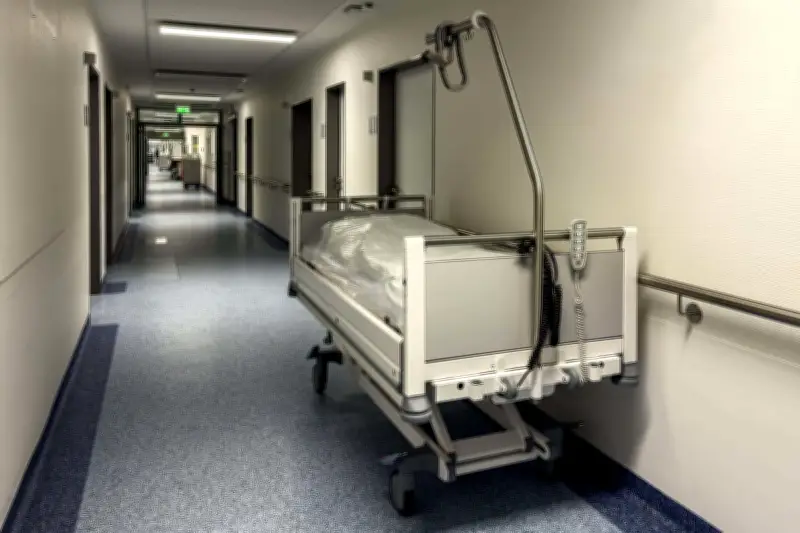
An average of 3,181 patients were treated in hospital corridors or makeshift areas each day in England in June, according to newly published NHS figures. This marks an increase from 2,900 per day in May, as heatwaves add to the strain on the health service. Officials say summer is now putting as much pressure on the NHS as winter.
Corridor care numbers rise
Of the June total, 2,432 patients received corridor care in A&E departments and 749 elsewhere in hospital wards. In May, the figures were 2,242 in A&E and 658 in wards. The data, published for the second time by NHS England, covers patients who spend at least 45 minutes in settings not clinically appropriate or safe, lacking privacy, access to food, water, toilets, and proper lighting or noise control for sleep.
Government response
Health Secretary James Murray told the Press Association: “The reason why we took a decision as a Government for the first time to publish these statistics on corridor care is because corridor care is completely unacceptable, it’s undignified, and we want to eliminate it by the end of this Parliament. The first step to eliminating it is to identify where it is.” He added that he is working with NHS leadership to prepare for heatwave pressures as well as winter pressures.
NHS medical director comments
Professor Frankie Swords, NHS national medical director, said: “These figures show that summer is now putting the NHS under just as much pressure as winter, with staff facing an onslaught of demand – and we have to prepare for it in the same way. Staff are currently experiencing the busiest months of their career, but they are delivering for patients despite this record demand.” He noted that Mondays have been particularly busy due to weekend heatwaves and the World Cup, urging the public not to delay seeking care and to use NHS 111 for non-emergencies.
Waiting list rises
The waiting list for routine hospital treatment rose for the second consecutive month. An estimated 7.28 million treatments were waiting to be carried out at the end of May, relating to 6.16 million patients, up from 7.22 million treatments and 6.11 million patients at the end of April. The number of people waiting more than a year increased to 104,734 from 99,781. However, 65.6% of patients began treatment within 18 weeks of referral, slightly up from 65.0% in April, meeting an interim target set by the Government and NHS England.
Expert analysis
Bea Taylor, fellow at the Nuffield Trust, said there is “no doubt” that heatwaves are adding strain. The Royal College of Nursing in Scotland warned corridor care is now a year-round crisis, with a survey finding almost a fifth of nurses providing care daily in inappropriate areas.
Government outlook
Mr Murray told PA: “We always knew that turning the NHS around is going to take time, and there will be bumps in the road. But the direction of travel is the right one, and we need to keep going in that direction.” The Government has pledged that 92% of patients will be seen within 18 weeks by the end of the current parliament in 2029.




