
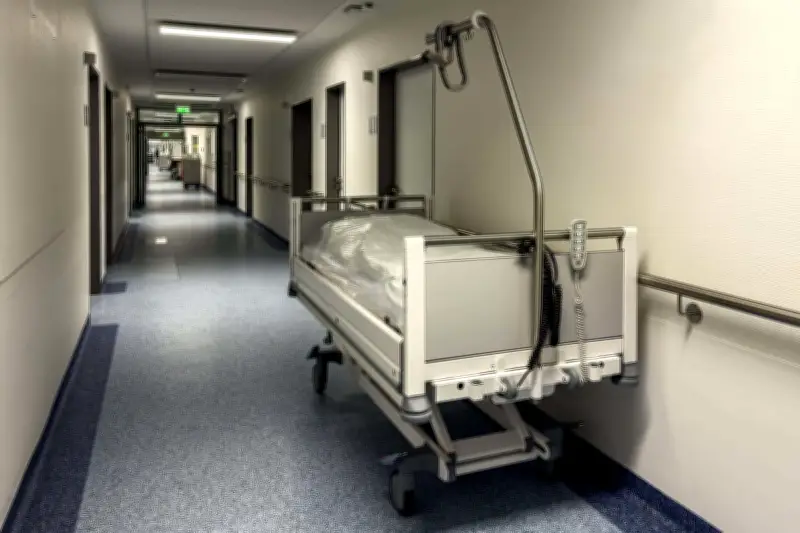
More than 3,000 patients a day were treated in hospital corridors or makeshift areas in England in June, according to figures released by NHS England, as heatwaves placed additional strain on the health service. Officials said the data shows that 'summer is now putting the NHS under just as much pressure as winter'.
Corridor care numbers rise
An average of 2,432 patients received corridor care in A&E departments each day in June, along with 749 elsewhere in hospital wards, totalling 3,181. This is up from 2,242 in A&E and 658 in hospital wards each day in May, totalling 2,900. It is the second time NHS England has published these figures, which cover patients who receive corridor care for at least 45 minutes. This means care did not take place in a clinically appropriate and safe setting where patients have privacy, access to food, water and toilets, and lights can be turned off and noise levels minimised to allow sleep.
Summer pressure matches winter
Professor Frankie Swords, NHS national medical director, said: 'These figures show that summer is now putting the NHS under just as much pressure as winter, with staff facing an onslaught of demand – and we have to prepare for it in the same way. Staff are currently experiencing the busiest months of their career, but they are delivering for patients despite this record demand.' He added that Mondays have been particularly busy for emergency departments amid weekend heatwaves and the World Cup. 'What we’re seeing on the ground is really busy Mondays following weekends of football and sunshine, so please don’t delay coming forward for care when you need it, even if it’s in early hours on a weekend. In the continuing warm weather, please take precautions like staying hydrated, and check in on loved ones or those who are vulnerable, and as always, please dial 999 in an emergency, and otherwise use 111.'
Waiting list rises again
The waiting list for routine hospital treatment increased for the second consecutive month to its highest since December. An estimated 7.28 million treatments were waiting to be carried out at the end of May, relating to 6.16 million patients. This is up from 7.22 million treatments and 6.11 million patients at the end of April. There was also a rise in the number of people facing long waits for treatment, with 104,734 waiting more than a year at the end of May, up from 99,781 at the end of April. However, 65.6% of patients began hospital treatment within 18 weeks of referral, up slightly from 65.0% in April. The Government and NHS England set an interim target of March this year for the figure to reach 65% and have also pledged that 92% of patients will be seen in this timeframe by the end of the current parliament in 2029.
Experts warn of year-round crisis
Bea Taylor, fellow at think tank Nuffield Trust, said there is 'no doubt' that heatwaves are putting additional strain on the health service. 'The health service is used to dealing with the extra pressure that winter brings each year, but climate change means hospitals are now facing multiple shocks throughout the summer months too,' she said. Meanwhile, leaders of the Royal College of Nursing in Scotland warned that corridor care is 'now a year-round crisis', as a survey found almost a fifth of nurses providing care on a daily basis in 'inappropriate' areas of hospitals.
Government response
Health Secretary James Murray said: 'Even in the face of record temperatures and the busiest summer in NHS history, healthcare staff have continued to deliver for patients and I want to thank every one of them for their extraordinary dedication. More people are now being treated within 18 weeks than at any point since 2021, while three in four A&E patients were seen within four hours.'




