A train driver killed in a rail crash north of London continued to speed up after going through a red signal, investigators have said.
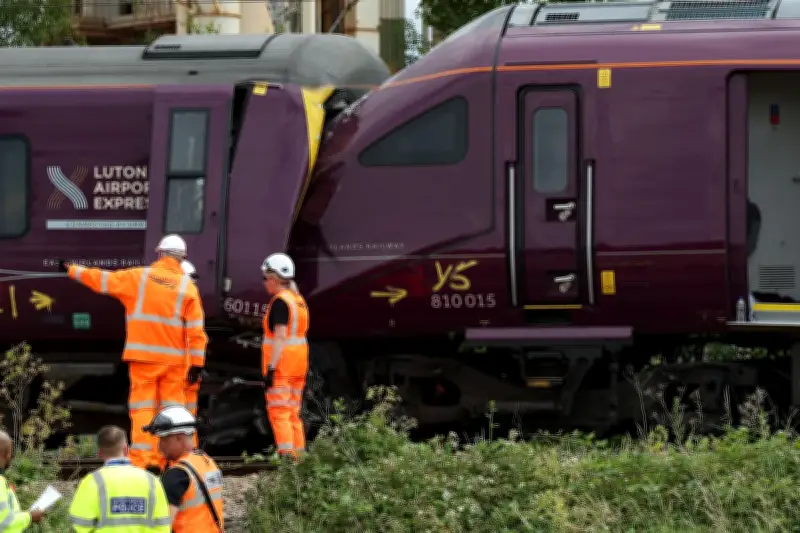
Shaun Burton, 60, died when the East Midlands Railway (EMR) train he was driving went into the back of a stationary train run by the same operator near Elstow in Bedfordshire on June 19. He applied the emergency brake seconds before the crash.
Crash details
The crash derailed both London-bound trains with around 257 people on board, with more than 160 passengers injured and 102 taken to hospital.
The Rail Accident Investigation Branch (RAIB) said in an interim report that data recorders from the train show the Corby to London St Pancras train acknowledged a red signal warning but then “continued to accelerate, reaching a maximum speed of 76mph”.
Braking sequence
The report said the train driver initially applied the full service brake around 10 seconds before the crash. About two seconds later the emergency brake was applied when the train was travelling at around 75mph, around 200 metres from the back of the other train, which was en route from Nottingham to London St Pancras.
Data from the moving train also shows its speed dropped to around 50mph at the point of the crash. “It is likely this sequence represents the driver of train 1H46 detecting the presence of train 1B67 on the line ahead and responding to it,” the report said.
Visibility limitations
The report added the last available footage from Mr Burton’s train is around 600 metres away from the train it collided with, and it is not possible to see if the trains are on the same line because of the curve of the tracks. “A train driver may experience the same limitation of visibility,” investigators said.
RAIB previously said the stationary train involved in the collision had come to a stop “unexpectedly” after a fault with its automatic warning system equipment caused its brakes to apply. This resulted in the signal behind it automatically changing to red, investigators said. Approaching trains should stop at red signals.
Ongoing investigation
The latest report also found data for the accelerating train showed the driver controlled its speed as it left Bedford and acknowledged a yellow signal warning. Drivers are trained to expect the next signal to be red and to “control the speed of their train to allow them to stop before it”, it said.
Instead investigators said data from the train recorded the driver acknowledged the red signal warning “but the train continued to accelerate towards and beyond the signal, which it passed at 17:12:53”.
RAIB said it will continue to probe the actions of those involved and any factors that influenced them and the reasons why Mr Burton’s train passed the signal “at danger”, the status of the braking and other safety systems on the train.
The investigators said: “RAIB investigations, like many others, start by examining the immediate events around an accident and then working outwards to determine why they occurred, and to find any underlying factors.
“That means that a report published at the early stages of an investigation may contain information about immediate events without necessarily providing an explanation as to why they occurred.
“The reasons why train 1H46 passed signal WH154 at danger continue to form part of the ongoing investigation.”