Trump Announces Sweeping 100% Tariffs on Prescription Drugs
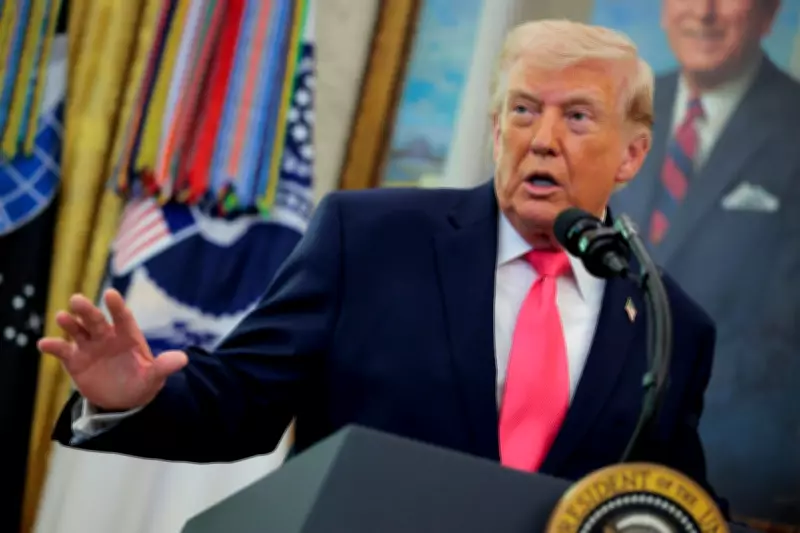
President Donald Trump has imposed 100 percent tariffs on prescription drugs from overseas companies that have not reached agreements with his administration to lower prices. This significant move was announced on Thursday, exactly one year after what Trump termed 'Liberation Day,' when he initially introduced broad global tariffs that were later struck down by the Supreme Court.
Details of the New Tariff Structure
According to a White House memorandum, certain large pharmaceutical companies will face these new 100 percent tariffs within the next 120 days, while smaller companies will have 180 days before the tariffs take effect. The memo emphasized that despite the United States being a global leader in pharmaceutical research and development, the country remains heavily dependent on imports, which could potentially limit access to life-saving medications during global supply chain disruptions.
Companies that have entered into 'Most Favored Nation' pricing agreements and commitments to produce drugs within America will be exempt from these tariffs. This policy follows an executive order issued by Trump in May that directed administration officials to communicate most-favored-nation price targets to pharmaceutical manufacturers, aiming to align American drug prices with those in comparably developed nations.

Previous Executive Order and Administration Rationale
In his earlier executive order, President Trump accused drug manufacturers of scheming to deeply discount their products for foreign markets while subsidizing those discounts through substantially higher prices in the United States. "As the largest purchaser of pharmaceuticals, Americans should get the best deal," Trump argued, framing the new tariffs as a mechanism to pressure companies into fairer pricing arrangements.
Company Responses and Alternative Tariff Rates
Several major pharmaceutical companies, including industry giants Eli Lilly and Novo Nordisk, have already negotiated deals with the Trump administration to reduce drug costs and increase investment in American manufacturing. For companies that agree to onshoring arrangements but fail to lower drug prices, the administration will impose a reduced 20 percent tariff instead of the full 100 percent.
The new policy includes nuanced provisions for different trading relationships. Pharmaceutical products originating from countries with existing trade agreements with the United States will face lower tariff rates. Specifically, products from the European Union, Japan, Korea, Switzerland, or Liechtenstein will be subject to a 15 percent tariff rather than the full 100 percent.
Exemptions and Special Considerations
Specialty pharmaceutical products, including orphan drugs and medications for animal health, will be exempt from the new tariffs if they come from countries with established trade deals or if they "meet an urgent public health need," according to the White House memorandum. This exemption reflects concerns about maintaining access to critical medications while pursuing broader pricing reforms.
Historical Context and Legal Challenges
One year prior to this announcement, President Trump imposed a 10 percent tariff on all imported goods along with additional reciprocal levies against trading partners accused of unfair practices. However, last month, the conservative-leaning Supreme Court ruled 6-3 that tariffs implemented under the 1977 International Emergency Economic Powers Act were unlawful.
Chief Justice John Roberts wrote in the decision that "the president asserts the extraordinary power to unilaterally impose tariffs of unlimited amount, duration, and scope. In light of the breadth, history, and constitutional context of that asserted authority, he must identify clear congressional authorization to exercise it."
Not all previous tariffs were affected by this Supreme Court ruling. Tariffs imposed on specific sectors such as aluminum and steel remained intact because they were implemented under Section 232 of the 1962 Trade Expansion Act—the same legal authority Trump is using for the new pharmaceutical tariffs, providing a potentially more durable legal foundation for this latest trade action.