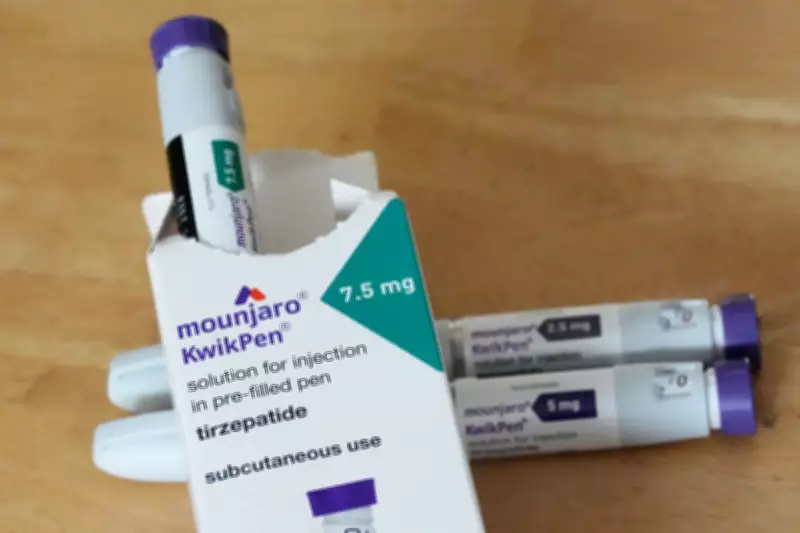
Pharmaceutical giant Eli Lilly has issued an urgent public health warning concerning potentially dangerous impurities in compounded weight-loss medications. The company specifically highlighted risks associated with products containing both tirzepatide, the active ingredient in its Zepbound and Mounjaro drugs, and vitamin B12.
Significant Health Concerns Identified
In a detailed statement released on Thursday, Eli Lilly revealed that laboratory testing of products obtained from compounding pharmacies, medical spas, and telehealth networks uncovered what the company describes as "significant levels of an impurity." This impurity forms through a chemical reaction between tirzepatide and vitamin B12 during the compounding process.
The company tested ten samples from various sources and found the impurity present in every single one. According to Eli Lilly's chief medical officer, David Hyman, "Nothing is known about its short- or long-term effects in humans, the potential impact on the drug's interaction with the GLP-1 and GIP receptors, toxicity, immune reactions, or how it is absorbed, distributed, metabolized, and eliminated."

Legal Battles and Regulatory Actions
This warning represents the latest development in Eli Lilly's ongoing campaign against drug compounders, whom the company accuses of marketing unauthorized versions of its popular weight-loss and diabetes treatments. The pharmaceutical manufacturer has initiated legal proceedings against numerous compounders, wellness centers, and other entities for selling products claiming to contain tirzepatide.
Eli Lilly has formally notified the U.S. Food and Drug Administration of its findings and has called for a nationwide recall of all products containing both tirzepatide and vitamin B12. The FDA has previously demonstrated concern about compounded weight-loss drugs, having issued warning letters to thirty telehealth companies in September for making false or misleading claims about such products.
Compounding Controversy Continues
Compounding pharmacies argue that their offerings are legitimate under specific federal provisions that allow for customized medications when patients require tailored treatments. These might include formulations with added vitamins or specific dosages not available in branded pharmaceutical products.
However, the FDA maintains a clear position on the matter, warning that "compounded products can be risky for patients because they are not reviewed for safety, effectiveness, or quality." Hyman emphasized this point, stating that "adding a reactive substance like vitamin B12 without clinical testing or FDA review introduces additional unknown risks."
Broader Industry Implications
The issue of compounded weight-loss drugs extends beyond Eli Lilly's products. In February, telehealth company Hims & Hers Health announced plans to sell a compounded version of Novo Nordisk's Wegovy pill, prompting the FDA to threaten action against what it termed "illegal copycat drugs." Hims subsequently reversed course and announced this week that it would instead sell Novo's authentic Wegovy and Ozempic medications through its platform.
This situation highlights the growing tension between pharmaceutical manufacturers seeking to protect their intellectual property and market share, and compounding pharmacies operating within what they believe to be legal boundaries. As weight-loss drugs continue to gain popularity, regulatory scrutiny of compounded versions is likely to intensify, with patient safety remaining the paramount concern for all parties involved.