
More than three-quarters of children’s doctors say poverty-related illness has increased over the last two years, as they warned of an “unbearable level” of hardship among children. A survey by the Royal College of Paediatrics and Child Health (RCPCH) and the Child Poverty Action Group (CPAG) found 96% of paediatricians said poor living conditions like damp and mould were contributing to ill health. Doctors reported that children on chemotherapy have died after catching fungal infections from dire housing.
Some 95% of paediatricians said poverty was preventing children from attending appointments because parents cannot afford time off work or transport costs. The survey revealed 78% of children’s medics said the number of children with poverty-related ill-health has increased in the last two years, while 79% said it is becoming more severe. In one case, a doctor said a child with diabetes was not taking her insulin at night because her family could not afford heating and she lacked energy in the cold.
Another doctor said they had written more letters in the last two years to ask housing providers to address damp and mould for children with chronic respiratory conditions than in the previous 18 years of their consultant career. The RCPCH and CPAG called for the two-child benefit limit to be scrapped and for an enhanced Young Patients Family Fund to help families cover hospital appointment costs.
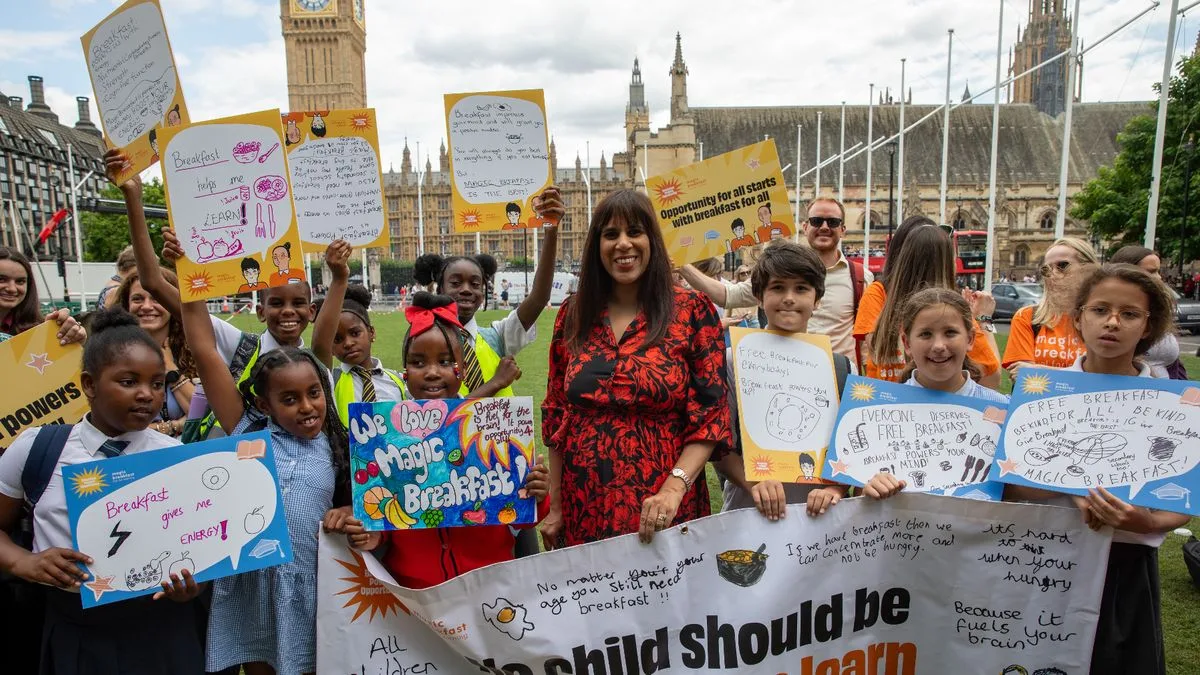
The research comes as children’s charity Magic Breakfast gathered in Parliament Square with pupils and teachers to call for a stronger school breakfast policy. Labour has committed to free breakfast for all primary schoolchildren, but Magic Breakfast warns the plan risks leaving out vulnerable children, including older students with special educational needs. Labour MP Sharon Hodgson said expanding free breakfasts could help tackle the health crisis, while teacher Sharon Pourou noted it also benefits children’s mental health.
Students attending the rally urged expansion of free breakfasts in secondary schools. Arabella Gibbs, 17, said a healthy breakfast means a healthy mind, while Isa Mostofa, 15, said it ensures older pupils are properly fuelled for heavy workloads. Praisel Okoro-Maduka, 15, added that breakfast is often forgotten by teens, and free school breakfasts encourage healthy habits. Dr Helen Stewart of RCPCH said child poverty is at an unbearable level, deeply concerning for paediatricians seeing the condition of children arriving at frontline services.




