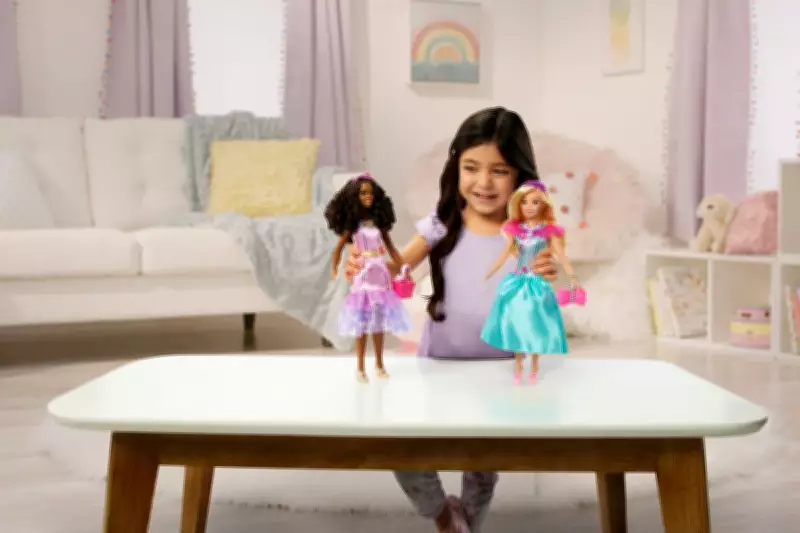
Barbie Doll Play Found to Significantly Enhance Children's Social Development
Playing with Barbie dolls has been scientifically proven to substantially boost children's social skills and foster empathy, according to groundbreaking new research from Cardiff University. The comprehensive study reveals that doll play helps both boys and girls achieve crucial developmental milestones related to social understanding, with particular benefits for children experiencing difficulties connecting with peers.
Six-Week Study Reveals Dramatic Differences
Over a six-week observation period, researchers discovered that children were far more likely to use language expressing emotions and engage in meaningful social play when interacting with dolls compared to screen time on tablets. The study also documented that doll play encouraged significantly greater interaction with siblings, friends, and parents, creating valuable opportunities for social practice.
Dr Sarah Gerson, from Cardiff University's School of Psychology, explained the mechanisms behind these findings. "We believe that doll play may encourage children to engage in social interactions more frequently and provides them with enhanced opportunities to rehearse or reflect on others' beliefs, emotions, or intentions compared to other types of play," she stated.

The Science Behind Pretend Play
Dr Gerson elaborated on how doll play functions as a developmental tool. "When playing with dolls, children have the opportunity to role-play characters, create narratives, and act out scenarios – doing so relies on and fosters the ability to imagine others' thoughts, feelings, and intentions. These pretend play scenarios allow children to practice social skills, emotion processing, and emotion regulation within a safe environment."
The research methodology involved assigning children aged four to eight to either play with Barbie and Ken dolls or use tablets with pre-loaded games designed to be similarly open-ended. Parents maintained detailed diaries tracking play frequency, duration, and social context throughout the study period.
Measuring Theory of Mind Development
At both the beginning and conclusion of the six weeks, children underwent laboratory assessments measuring their understanding of others' mental states, including a specific test evaluating their grasp of "false belief" – the ability to recognize that others may hold incorrect beliefs. This concept forms a cornerstone of "theory of mind," the crucial skill of understanding and differentiating others' thoughts.
Dr Gerson emphasized the lifelong importance of this skill. "Theory of mind is a foundational ability for developing relationships with peers, teachers, and parents, and a skill that people carry through their lives to build relationships as adults. Most research examining the development of theory of mind has focused on interactions with caregivers, siblings, or peers. We wanted to understand more about how play can be a critical mechanism for children to learn cognitive and socio-emotional skills."
Context of Growing Screen Time Concerns
These findings emerge against a backdrop of increasing concern about children's screen time. Government research has revealed that approximately 98% of children watch screens daily by age two, with parents and teachers reporting greater difficulties with concentration when children begin formal education.
Additional research has demonstrated that children with the highest screen time – around five hours daily – could speak significantly fewer words than those watching for approximately 44 minutes. The Government is expected to publish official guidance on screen time for children under five in April, making this research particularly timely for parents and educators seeking evidence-based alternatives to digital entertainment.
The Cardiff University study provides compelling evidence that traditional doll play offers substantial developmental advantages that screen-based activities cannot replicate, highlighting the enduring value of imaginative, social play in children's cognitive and emotional development.