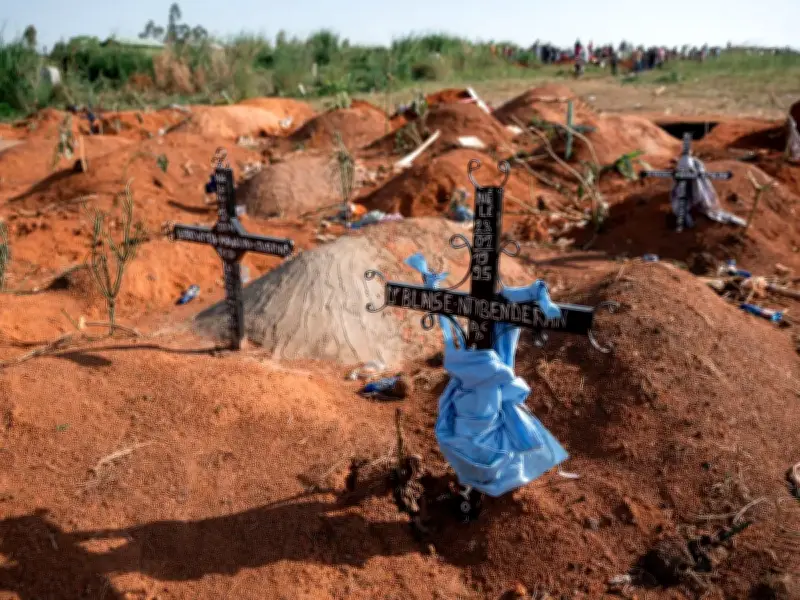
The World Health Organisation (WHO) has issued a “very high risk” warning over a deadly Bundibugyo Ebola outbreak in the Democratic Republic of Congo, with 5,794 confirmed cases and 2,786 deaths — a 48.1% fatality rate. The rare strain has no approved targeted vaccine or specific treatment.
Outbreak Spread and Impact
The virus has spread across 60 health zones in six provinces, with the epicentre in Ituri and North Kivu. These areas are also affected by armed conflict. Aid workers say violence, displacement and insecurity are blocking contact tracing and medical surveillance, allowing unmonitored community transmission to continue.
Adding to the danger, Bundibugyo Ebola does not always show the hallmark symptom many people associate with Ebola. Instead, early illness can look like flu or malaria — fever, fatigue and headaches — which may lead people to stay home and delay isolation, increasing the risk of further spread.
Vaccine and Treatment Challenges
Unlike previous Ebola epidemics, the standard ERVEBO jab used against the Zaire strain is ineffective against Bundibugyo. Frontline workers are still being offered it in the hope of partial protection, but WHO says there is no approved vaccine designed for this strain.
WHO confirmed that on 7 August, its Technical Advisory Group on candidate vaccine prioritization released a report recommending that Ervebo, the only licensed Ebola vaccine, be prioritized for inclusion in a randomized clinical trial in the context of the ongoing outbreak. Additionally, WHO is sponsoring a clinical trial to find effective treatments against Bundibugyo virus disease. The trial, known as the PARTNERS trial, began enrollment on 2 July and is now open in three clinical management facilities in Ituri province, with over 250 confirmed cases enrolled.
Travel Advice and International Response
Despite the scale of the outbreak, WHO urged countries not to impose blanket travel bans, saying: “Based on the currently available information, WHO advises against any restriction of travel to, or trade with, affected countries.” WHO added that it continues to closely monitor and, where necessary, verify travel and trade measures.
WHO also noted that updated Temporary Recommendations issued to States Parties on 24 August 2026 underscore the importance of coordinated outbreak control, strengthened cross-border collaboration, and sustained surveillance and preparedness. Uganda declared the end of its cross-border outbreak on August 26, but there have been isolated medical evacuations of humanitarian workers to Germany and France. WHO says global risk remains low.