British scientists have developed a groundbreaking 'universal' vaccine that could protect against entire families of viruses, potentially preventing future pandemics and avoiding lockdowns. The world-first jab, created using artificial intelligence, targets parts of viruses that cannot mutate, offering broad and lasting immunity.
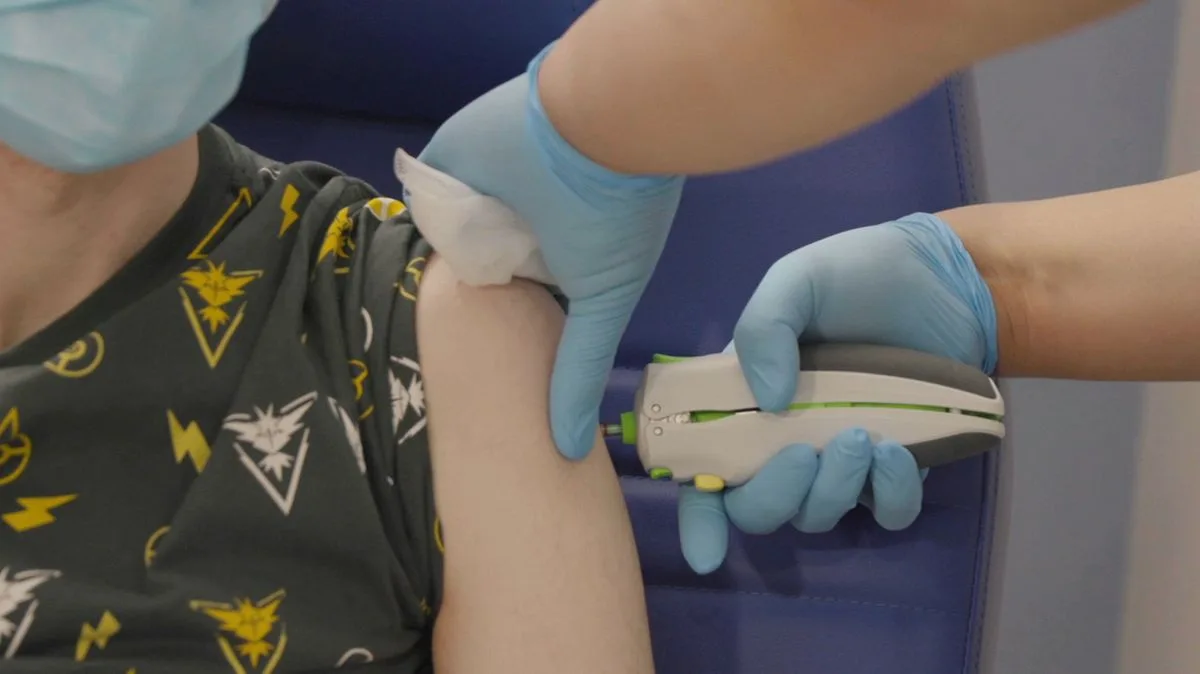
The vaccine, developed by experts at the University of Cambridge and the University of Southampton, was tested on 49 healthy volunteers aged 18 to 50. It was administered as a DNA vaccine through a needle-free micro fluid jet, which pushes the vaccine directly into skin cells. Results showed it is safe and triggered an immune response against SARS-CoV-2, SARS, and related bat viruses.
Professor Jonathan Heeney, from Cambridge's lab of viral zoonotics, described the vaccine as a 'game changer'. He said: 'We're targeting something in a virus family which the virus can't change easily.' The technology uses AI to analyse all known viral mutations and identify a 'super antigen' essential for the virus family's survival.
Chief investigator Professor Saul Faust, of Southampton University, said: 'This new class of universal vaccines are future-proofed. They not only protect against many variants simultaneously, but potentially against related viruses that haven't yet emerged.' The team is now launching a phase II trial with over 200 volunteers.
The study, sponsored by University Hospital Southampton NHS Foundation Trust, was funded by the National Institute for Health and Care Research. Professor Marian Knight called the trial 'a pivotal leap forward in our ability to deliver broad, lasting viral protection.'