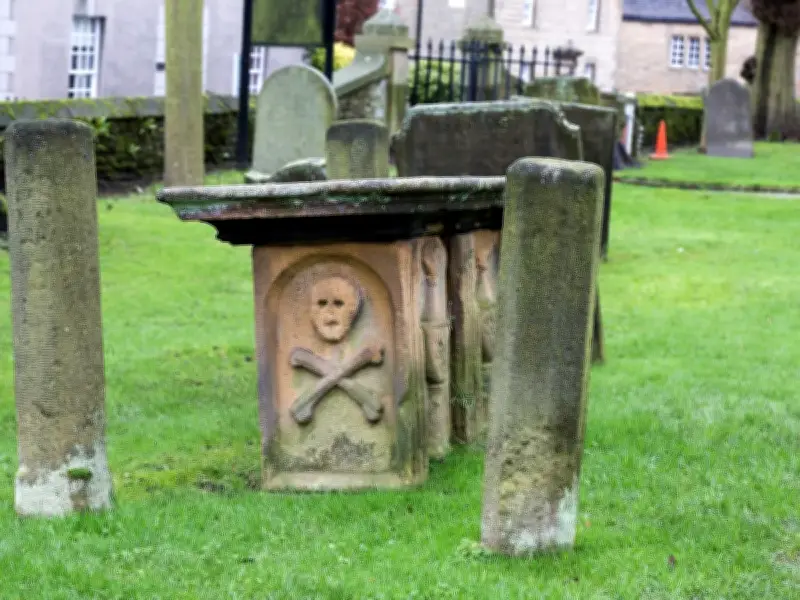
The village of Eyam in the Peak District imposed its own lockdown in 1666, more than 360 years before Covid-19 restrictions, after an outbreak of bubonic plague. The village, still known as the plague village, cut itself off from the rest of the country to stop the disease spreading to nearby towns.
How the plague reached Eyam
At the time, London was being ravaged by the black death, which killed 100,000 people, roughly one quarter of the capital's population. Modern science suggests the deadly contagion was spread by human body lice or fleas, with contact with the excrement of those parasites also thought to have contributed to transmission.
Eyam became caught up in the disaster through a consignment of cloth ordered from London. The 160-mile journey north took an estimated 10 days, just long enough for the fleas and lice to survive on the cloth in the summer weather.
The first death and the village's sacrifice
The cloth arrived damp and tailor Alexander Hadfield ordered his assistant George Viccars to dry it. A few days later Viccars was dead, the first Eyam resident to perish from the plague, recorded on September 7, 1665. Historians believe the bubonic plague was most likely spread via Viccars' own body lice or fleas.
By the end of 1665, more than 40 deaths linked to the plague had been recorded, and by spring many villagers were considering fleeing to Manchester, Sheffield and Bakewell. Clergyman William Mompesson recognised the dangers of the disease spreading and ordered Eyam to lock itself off from the rest of the country.
Rules of self-isolation and the toll
According to history blog Now I'm 64, the rules were simple: nobody was to enter or leave the village for any reason; food supplies would be delivered to drop-off points at the village boundary, where villagers would leave coins soaked in vinegar to pay for food delivered by the Earl of Devonshire's men and others; church services would be held outdoors; the churchyard was to be closed and the dead buried in fields at the edge of the village; and families would bury their own dead.
Without any scientific understanding of the disease, the people of Eyam sacrificed themselves in an effort to save the larger populations around them. When the restrictions were lifted, 260 villagers had died, estimated to be around one third of their population. Mompesson's actions hit him personally as his wife was one of the fatalities.