After 100 days, the deadliest Ebola outbreak on record can still be stopped, according to the heads of Africa CDC and the World Health Organization (WHO). In a joint appeal, Dr Jean Kaseya and Dr Tedros Adhanom Ghebreyesus argue that community leadership, protected health workers, and predictable financing are essential to ending the epidemic.
Communities hold the key
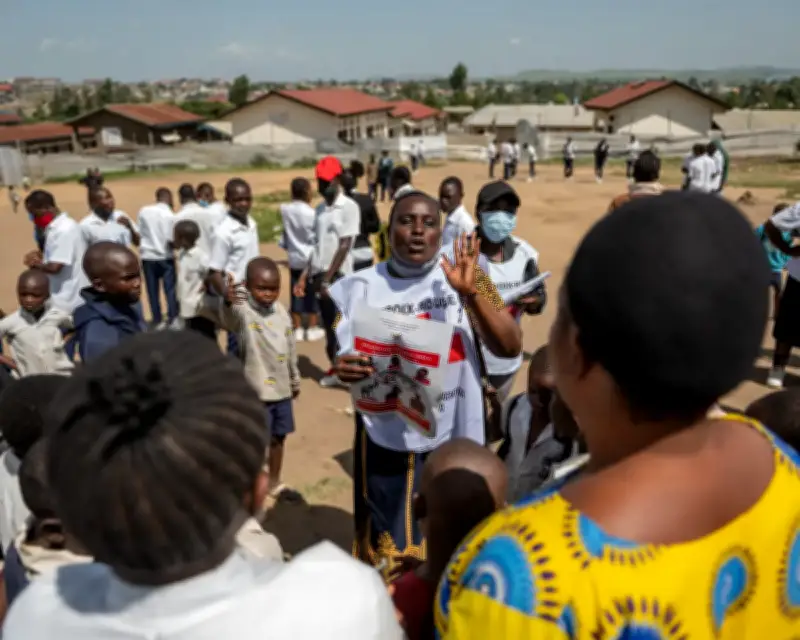
Ebola spreads through communities, and communities hold the knowledge required to stop it, the two directors general write. They say that in Bunia, they met dozens of community representatives – survivors, women, young people, local organisations, health workers, and leaders from affected areas – whose message was direct: involve us.
Communities can identify illness early, alert health teams, help trace contacts, challenge dangerous rumours, and support families through treatment and safe, dignified burials. The response will move faster when communities lead alongside national authorities and health workers.

Deadliest outbreak on record
The government of the Democratic Republic of the Congo (DRC) declared its 17th Ebola outbreak 100 days ago after confirmation of the Bundibugyo virus. The outbreak has since become the deadliest ever recorded, with about 2,500 deaths.
Behind this toll are families grieving and communities confronting Ebola alongside conflict, displacement, and fragile access to care. Health workers care for patients, laboratory teams identify the virus, contact tracers follow its path, and burial teams help families honour their loved ones safely. Some have contracted Ebola in the line of duty; some have paid with their lives.
Progress and the road ahead
The response has made progress. Under the leadership of national authorities, Congolese responders, WHO, Africa CDC, and partners have expanded surveillance, deployed laboratories, supported treatment centres, reinforced infection prevention, and delivered essential supplies.
Uganda has interrupted transmission and declared the end of its outbreak, proving the Bundibugyo Ebola virus can be stopped. The emergency continues in the DRC, where cases are still being detected outside known contact lists. The next phase must reach the village, with surveillance, testing, treatment, vaccination, infection prevention, and community engagement operating together close to affected families.
As of 18 August, 163 health workers have been infected and 47 have died in the DRC, while Uganda has recorded four health worker infections. Every facility needs trained staff, protective equipment, clean water, and sanitation.
Financing remains a decisive test. National and local teams need predictable funding, frontline workers must be paid on time, and supplies must arrive before stocks run out. Cross-border coordination must remain strong, with rapid information-sharing, aligned surveillance, and prepared health facilities along major routes.
Africa CDC will continue working with the DRC, alongside neighbouring countries, communities, and partners, to bring the full strength of international and continental cooperation behind the nationally led response. This outbreak can be ended – Uganda has shown what focused leadership and community action can achieve.