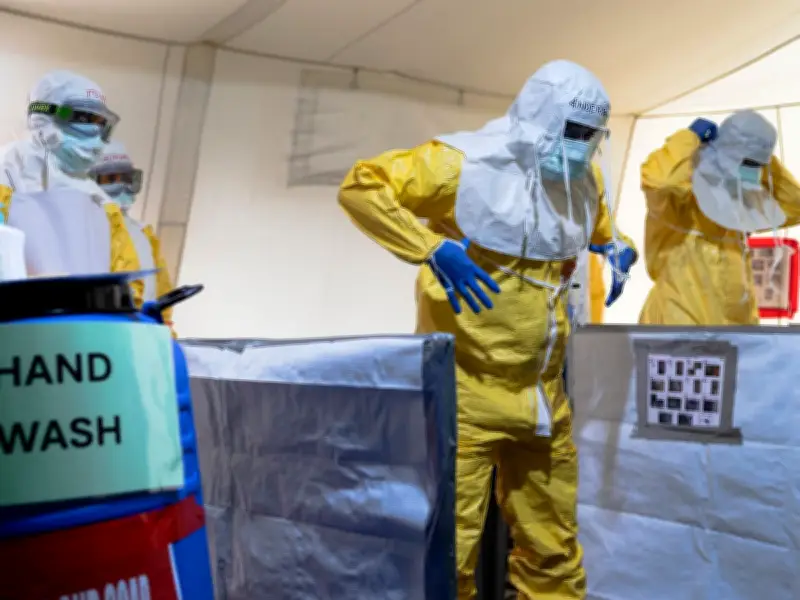
The ongoing Ebola outbreak in the Democratic Republic of Congo has become the fastest-growing on record, with more than 2,000 confirmed cases and a death toll exceeding 750 people. According to the World Health Organization, 80% of new cases are linked to unknown chains of transmission, complicating efforts to isolate patients and slow the virus's spread.
Spread to Major Cities Raises Concerns
Beyond eastern Congo, suspected cases have emerged around Kisangani, one of the country's largest cities, sparking fears about how far the virus has spread. The outbreak's origin remains untraced, but medics say it is driven by the Bundibugyo strain, which has no approved vaccines or treatments. This leaves health providers with fewer tools to combat the disease.
Strikes by Unpaid Health Workers Hinder Response
Efforts to contain the outbreak suffered a blow this week when unpaid staff went on strike at two health centers. Workers at a treatment center in Ituri province, believed to be the epicenter, closed a facility on Monday and blocked access after weeks with little or no pay. The workers, including epidemiologists, case investigators, drivers, and gravediggers, agreed to return on the condition they were paid within 72 hours. A second strike began at Bunia General Hospital on Wednesday, where workers barricaded an entrance. Congolese officials say they are in talks to find a solution, but wider walkouts could further strain the overstretched health system.
Challenges in a Conflict-Affected Region
The outbreak is hitting a region grappling with limited infrastructure, armed conflict, and misinformation claiming Ebola "wasn't real." Authorities have restricted traditional funeral practices, including washing and preparing bodies, as the virus can spread after death. These measures have proven controversial and angered some local communities.
Clinical Trials for Potential Treatments Underway
Earlier this month, researchers began enrolling patients in a clinical trial testing two potential treatments for the Bundibugyo strain. One candidate is Gilead Sciences' antiviral drug remdesivir, approved for treating COVID-19 and showing promising results against Bundibugyo in lab studies. The other is Mapp Biopharmaceutical's experimental therapy MBP134, an antibody-based treatment targeting multiple Ebola virus species. According to the WHO, participants will be randomly assigned to receive standard care alongside remdesivir, MBP134, both, or standard care alone. The WHO cautioned it could take several months and up to 1,000 patients before determining effectiveness. The study is currently conducted at a single treatment center in Ituri province, with plans to expand.