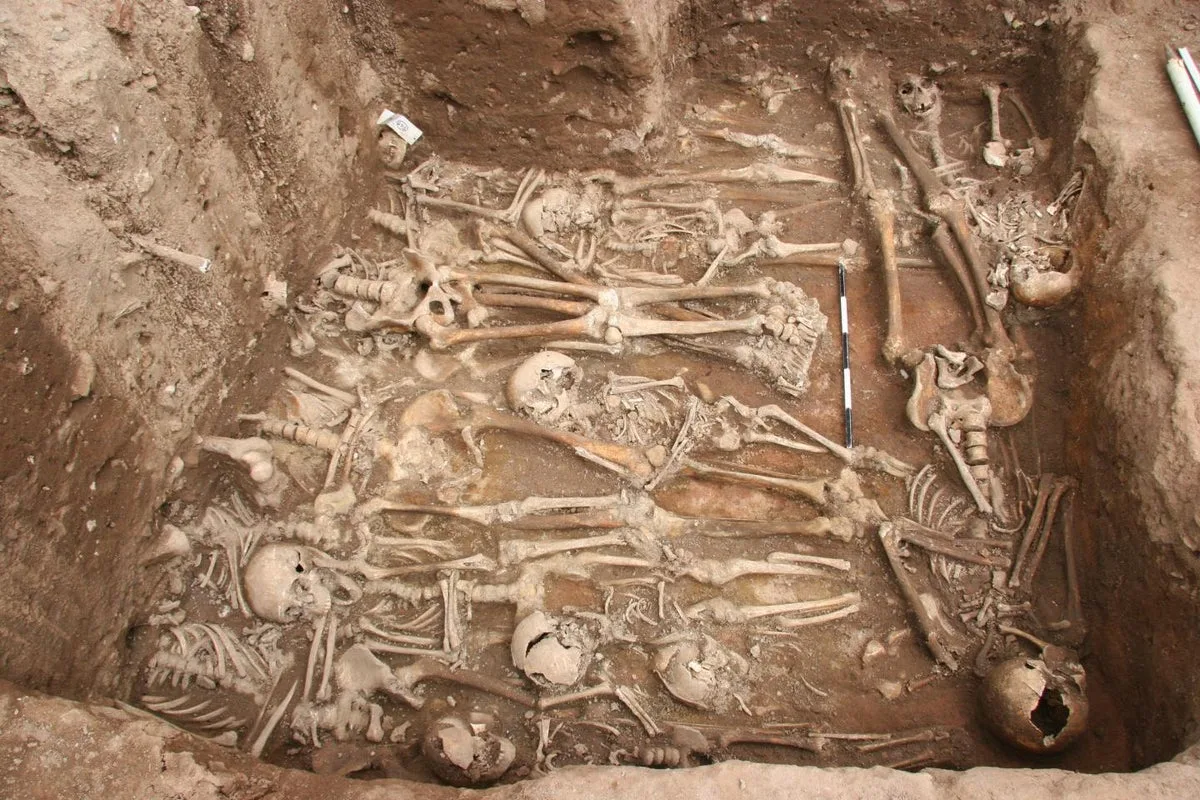
Researchers have identified a mass grave near the German city of Erfurt that likely contains the remains of thousands of Black Death victims. The find is the first systematically identified burial site associated with plague victims in Europe, according to a study published in the journal PLOS One.
Between 1346 and 1353, the Black Death pandemic wiped out nearly half the population in some parts of Europe. Written records from the time indicated that about 12,000 people were buried in large pits outside Erfurt, but their exact locations had remained unknown.
An interdisciplinary team assessed historical sources, land measurements, and sediment cores to pinpoint a burial structure corresponding to the plague pits described in 14th-century chronicles. The analysis revealed a large subsurface structure near the deserted medieval village of Neuses, containing fragments of human remains dating back to the 14th century.

“Our results strongly suggest that we have pinpointed one of the plague mass graves described in the Erfurt chronicles,” said geographer Michael Hein from Leipzig University. “Definitive confirmation, however, will only be possible through planned archaeological excavation.”
The discovery is significant as confirmed and precisely dated Black Death mass graves remain exceedingly rare, with fewer than ten known across Europe. Further research could shed light on the evolution of the plague pathogen Yersinia pestis and how societies coped with epidemics.