
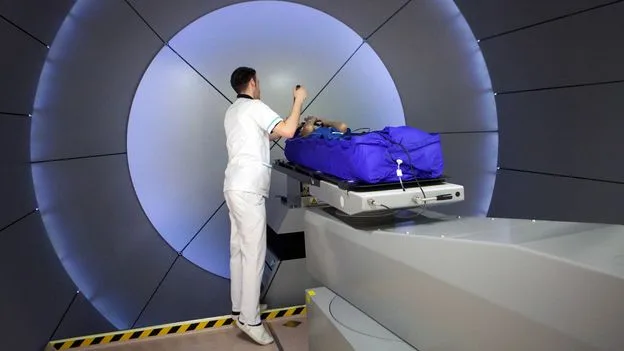
A new cancer treatment, known as Flash radiotherapy, is being developed at CERN in Geneva, offering the potential to treat a wider range of cancers with fewer side effects than conventional radiotherapy. The treatment delivers radiation at ultra-high dose rates in less than a second, compared to the several minutes required for standard radiotherapy.
The Flash concept was pioneered by radiobiologist Marie-Catherine Vozenin, now at Geneva University Hospitals, and her colleagues in a 2011 paper. Their experiments showed that delivering radiation at extremely high speed could destroy tumours in rodents while sparing healthy tissue. Since then, the approach has been tested on various animals and is now being trialled in humans.
Conventional radiotherapy, which two-thirds of cancer patients receive, involves multiple sessions over weeks, with risk of side effects due to damage to healthy cells. Flash aims to minimise this by boosting the radiation dose in a fraction of a second, potentially improving outcomes for difficult-to-treat cancers such as brain tumours and metastases.
Professor Billy Loo of Stanford University explains that tumours are often not well-separated from healthy tissue, limiting the dose that can be safely given. Flash could overcome this, allowing higher doses that enhance cure rates. Animal studies have shown reduced side effects, such as less saliva reduction and swallowing difficulties, even with repeated treatment.
While cautious optimism surrounds Flash, researchers believe it could revolutionise cancer therapy by offering a quicker, safer option. Further human trials are underway to confirm its efficacy and safety.




