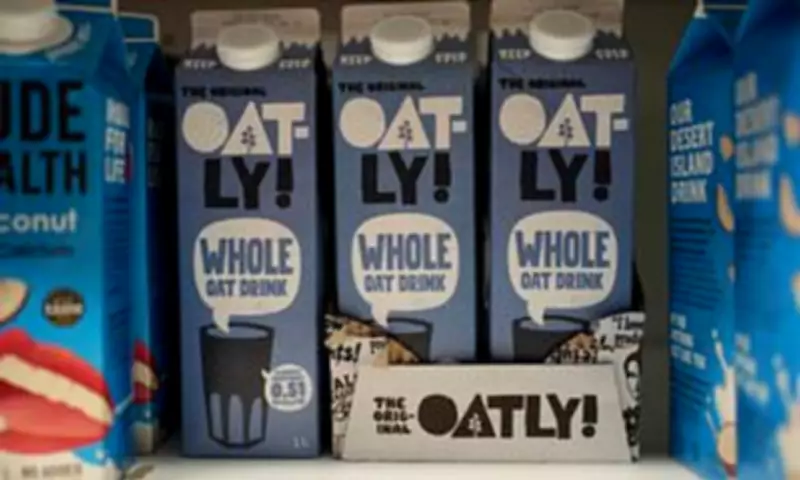
Supreme Court Rules Oat 'Milk' Label Unlawful Amid Health Concerns
Sales of oat 'milk' have surged over the past decade, but a recent Supreme Court decision has declared it unlawful to classify the beverage as milk. This ruling concludes a protracted legal dispute between industry leader Oatly and the dairy sector. Concurrently, health experts are raising alarms about the nutritional profile of this popular plant-based drink.
The Rise of Oat Milk in the UK Market
Originally developed in the early 1990s by Swedish food scientist Rickard Öste, who co-founded Oatly in 1994, oat milk began as a niche alternative for vegans and those with lactose intolerance. Today, it has become a mainstream staple. In Britain, nearly one in ten glasses of milk consumed is now a plant-based alternative, a dramatic increase from one in a hundred just ten years ago.
The oat milk industry in the UK is currently valued at £275 million, accounting for 40% of all plant milk sales. However, nutritionists caution that despite its popularity, oat milk may be the least healthy option among dairy alternatives.

Nutritional Warnings from Health Professionals
Rob Hobson, a nutritionist based in Brighton, emphasised the importance of clear labelling. 'Clearer labelling can help avoid ambiguity and keep comparisons fair,' he stated. 'Nutritionally, oat milk and dairy milk are very different products. Dairy milk is naturally rich in high-quality protein, iodine, calcium, and vitamin B12. Oat milk is typically lower in protein and often relies on fortification to match calcium and B vitamin levels.'
Experts highlight that oat milk often contains added sugars and oils, particularly in barista editions and flavoured varieties. Barista versions, commonly used in coffee shops, may consist of only about 10% oats, with the remainder being water mixed with oils and emulsifiers to achieve a frothy texture similar to dairy milk.
Dr Oliver Guttmann, a consultant cardiologist at The Wellington Hospital in London, warned about the potential health risks. 'Oats, eaten in porridge for instance, can actually lower cholesterol over time as they have lots of fibre, and fibre decreases cholesterol,' he explained. 'But drinking the frothy kind of oat milk that has a higher fat content could cause high cholesterol if you're drinking it in excess.'
Health Risks Associated with Oat Milk
The high sugar content in oat milk can lead to glucose spikes, where blood sugar levels rise rapidly and then drop sharply, causing hunger pangs. Over time, regular glucose spikes are linked to an increased risk of type 2 diabetes and heart disease.
Nutritionist Sarah Carolides noted, 'Whereas we always thought that saturated fats were bad for cholesterol, it's now become increasingly recognised that sugars in the diet can also affect it. This may well be why there are anecdotal reports of people lowering their cholesterol levels when they switch away from oat milk.'
Soy Milk Recommended as a Healthier Alternative
Experts suggest that soy milk is the most nutritious plant-based alternative to dairy. A 2025 research paper from the University of Minnesota concluded that soy milk is the alternative most nutritionally similar to traditional cow's milk.
Soy milk is low in calories and saturated fat and contains plant-based proteins, which may offer health benefits. It is made by soaking and grinding soybeans and can be fortified with nutrients like vitamins B2, B12, D, calcium, and iodine. Studies indicate that isoflavones in soybeans may lower breast cancer risk and slow signs of ageing.
Clementine Vauhan, a London-based nutritionist, affirmed, 'Soy milk has been widely drunk in Asia for centuries and is the best plant-based alternative as it is most nutritionally similar to cow's milk.' She added that myths about soy feminising men are unsupported by research, with a review of 38 clinical studies finding no adverse effects.

Implications of the Supreme Court Ruling
Following the Supreme Court decision, manufacturers like Oatly have expressed concerns about customer confusion. Bryan Carroll, general manager for Oatly UK & Ireland, stated the company was 'deeply disappointed' by the ruling, which he said 'creates unnecessary confusion and an uneven playing field for plant-based products.'
The ruling also applies to terms derived from milk-based products such as cream, butter, cheese, and yoghurt. Richard May, a partner at law firm Osborne Clarke, advised, 'For plant-based producers the safer course is to use clearly descriptive alternatives such as 'oat drink' or 'plant-based drink'.'
This legal shift aims to standardise labelling across the industry, ensuring consumers have accurate information about the products they purchase.