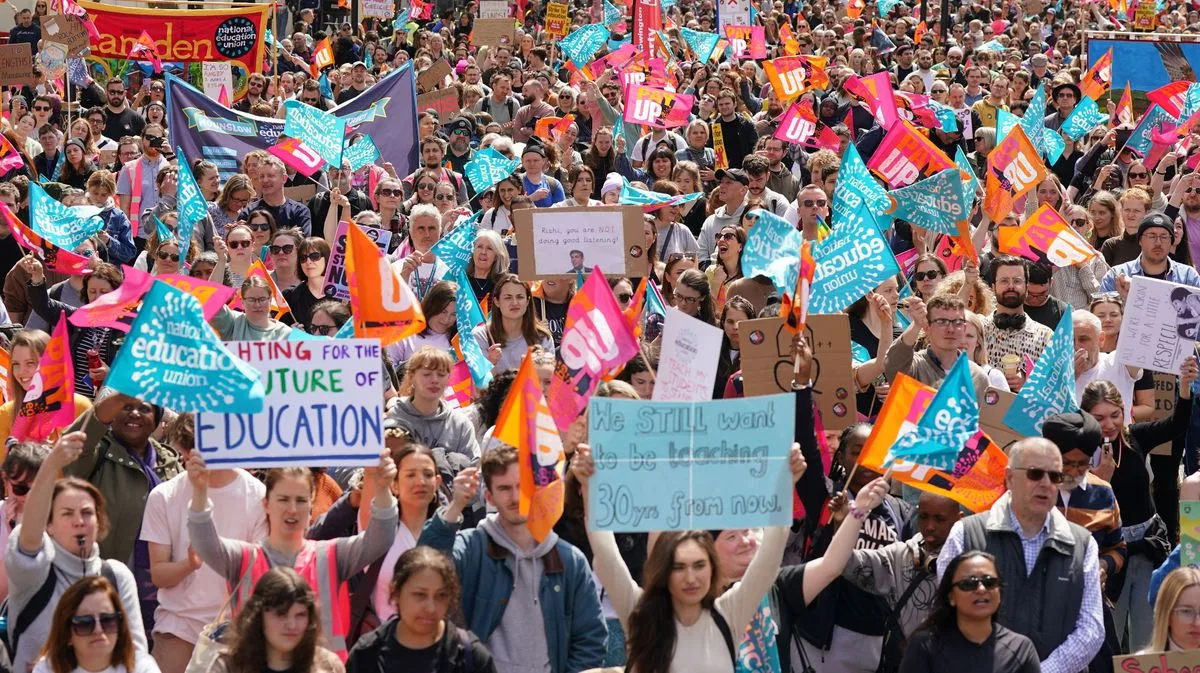
Teachers Face Strike as Pay Deal Falls Short of Inflation
Teachers Strike Likely Over Pay Deal Below Inflation

Teachers are anticipated to stage strikes later this year over a new pay agreement that will not keep pace with rising inflation, which is expected to spike due to the conflict in Iran. The School Teachers' Review Body (STRB), an independent pay review authority, has recommended that educators receive a salary increase slightly above the inflation rate for the upcoming academic year. However, this proposal is likely to fall short of the actual cost-of-living increases, prompting fears of widespread industrial action.

Industrial Action Feared 'Catastrophic'

Headteachers have warned that the potential strikes could be 'catastrophic' for schools, which are already under significant strain. Some school leaders have even declined the government's breakfast club initiative, citing insurmountable financial and logistical hurdles. A Labour source commented, 'This is going to be catastrophic. Teachers will almost certainly strike over this, and even meeting a below-inflation deal they hate is going to mean further pain for schools. If we are trying to do a big reset after the elections, how can we come out and announce this?'

Inflation Uncertainty and Economic Pressures

The inflation outlook for the coming academic year remains uncertain. The Consumer Prices Index (CPI), the government's official inflation measure, stood at 3.3% in March but is projected to rise. The Bank of England has indicated that CPI could peak at around 3.6% to 3.7% by the end of the year and remain elevated, with a worst-case scenario seeing inflation reaching as high as 6.2% next year. This economic backdrop exacerbates the challenges facing the education sector.

Wide Pickt banner — collaborative shopping lists app for Telegram, phone mockup with grocery list

Funding Disputes and Budget Constraints

Education Secretary Bridget Phillipson is in discussions with Chancellor Rachel Reeves and the Treasury regarding financing the proposed pay award. Concerns have been raised that the deal could force schools to make significant cuts. The STRB's recommended three-year deal reportedly includes even smaller increases for the subsequent academic years of 2027–28 and 2028–29. Unions have indicated that the three-year package will easily meet the threshold for strike action, while ministers may be forced to implement steep cuts to school budgets to cover the rise.

Daniel Kebede, general secretary of the National Union of Teachers (NEU), stated, 'Unless any pay award is both above inflation and fully funded, it's hard to see any outcome other than strike action. Schools are already being asked to do more with less — grappling with inadequately funded Send reforms while trying to meet rising levels of need with shrinking resources.'

The Treasury insists that the Department for Education must fund the pay rise from its own budget. A Treasury official said, 'Recommendations for pay awards are made by the independent pay review bodies and, as set out in the spending review, awards will need to be funded by departments.'

Pickt after-article banner — collaborative shopping lists app with family illustration




