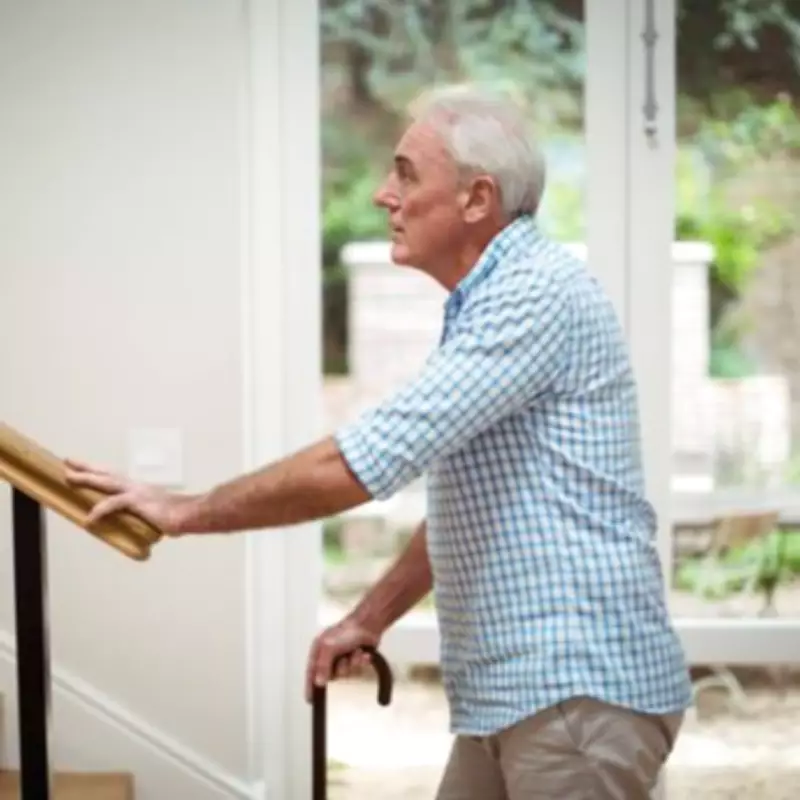
Struggling with stairs could be an early warning sign of dementia, with experts highlighting this subtle symptom which can affect movement and spatial awareness before memory loss becomes apparent.
Understanding dementia
Dementia is a broad term describing a decline in mental abilities serious enough to disrupt everyday life. It is not a single condition but a syndrome triggered by various disorders affecting the brain. Alzheimer's disease is the most prevalent form, though other varieties include vascular dementia, Lewy body dementia, and frontotemporal dementia.
While dementia is frequently linked with memory problems, disorientation, and struggles with routine activities, one often-missed warning sign can manifest in an unexpected manner: when navigating stairs.

Specialists highlight less-recognised early indicator
Specialists are highlighting this less-recognised early indicator of dementia that may emerge before substantial changes in behaviour become apparent. Alzheimer Scotland, a prominent dementia charity, has emphasised the significance of identifying symptoms beyond forgetfulness.
The organisation explained: "People often assume that memory loss and dementia are one and the same, but there are other key symptoms and signs to look out for. Every person with dementia is different. How their illness affects them depends on which areas of their brain are most damaged."
Dementia manifests in different ways, and while memory loss, reduced thinking speed, decreased mental acuity, and language problems are familiar symptoms, there are additional indicators that might signal its development.
Balance and spatial awareness changes
Shifts in balance, coordination, and spatial awareness can serve as an early warning sign that something is wrong, yet many people brush off these subtle changes as simply part of getting older. Alongside cognitive decline, dementia can also have a profound effect on physical movement, as those affected often struggle to judge distances accurately — likely due to the brain's reduced ability to process spatial information.
The condition can lead to weakened visuospatial awareness, making everyday tasks such as going up or down stairs considerably more challenging. Those affected may struggle to lift their legs properly and become increasingly susceptible to slipping or falling.
Alzheimer Scotland cautions that dementia can alter the way we interact with our surroundings, potentially heightening the risk of trips and falls.
Changes in gait
The Alzheimer's Society has pointed out that changes in a person's gait, such as shuffling their feet rather than lifting them, could be an early indicator of dementia. "Things like slips, trips and falls might become more common. You might start to notice that a person is shuffling as opposed to lifting their legs when they are walking," the charity explains.
Should someone be struggling with stairs while displaying other signs of dementia, it is advisable to arrange a GP appointment on their behalf. To enhance safety on staircases, the society recommends discussing necessary modifications with landlords or letting agents where required, as well as taking part in strength and balance exercises.
"You can reduce your risk of falling by doing strength or balance exercises twice a week. These include sitting, standing and walking exercises. Your GP could also refer you to a physiotherapist."
The charity also recommends inspecting homes for potential hazards such as loose carpets and clutter.
Other notable symptoms
The NHS further highlights other notable dementia symptoms to look out for, including memory problems and difficulties with communication. Dementia UK has identified several additional physical signs of dementia.

Dementia symptoms affecting cognitive ability
- Difficulty understanding time and place, e.g., getting up in the middle of the night to go to work
- Difficulty with choosing what to buy and paying when shopping
- Struggling with decision-making and reasoning
- Loss of interest in activities they used to enjoy
- Restlessness such as pacing, fidgeting, and trying to leave the house
Early symptoms of dementia
According to the NHS, these are typically the early symptoms of dementia, though it can manifest differently from person to person:
- Memory loss
- Difficulty concentrating
- Finding familiar daily tasks difficult or confusing
- Struggling to follow a conversation or find the right word
- Being confused about time and place
- Mood changes