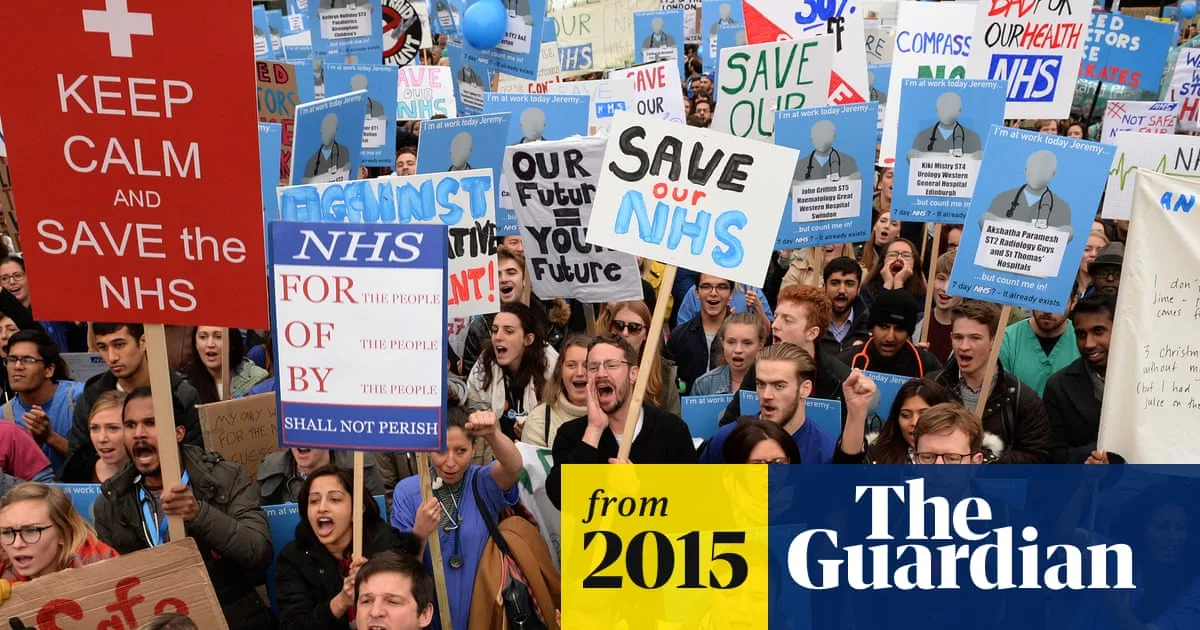
Urgent negotiations aimed at preventing a major winter strike in Scotland's hospitals have concluded without an agreement, setting the stage for a potentially catastrophic four-day walkout in January.
Talks Collapse as Strike Deadline Nears
The stand-off between SNP Ministers and resident doctors, who constitute almost half of all doctors in the NHS, is now poised to extend over the Christmas and New Year holidays. This follows a decisive ballot last Friday, where medics voted overwhelmingly in favour of industrial action over pay disputes.
First Minister John Swinney, speaking during a visit to the Royal Children’s Hospital in Glasgow, expressed his desire to avoid the planned action. He vowed his Government would negotiate in ‘good faith’ but emphasised operating within ‘very tight financial constraints’ when questioned about additional funding.
‘I welcome the discussions that have taken place this morning, and the fact we are going to have more discussions next week,’ Swinney stated. He pointed to a 2023 agreement that would see resident doctors’ pay increase by 35 per cent by 2027, claiming it fulfils the terms of the deal.
Political Reactions and Winter Crisis Warnings
The Scottish Conservatives have accused the SNP of failing to grasp the severity of the situation. Tory deputy leader Rachael Hamilton warned: ‘A doctors’ strike at the peak of winter could be catastrophic for Scotland’s crisis-ridden NHS.’
She criticised Swinney for ‘posing for photo ops’ instead of leading talks, while also describing the threat of a walkout at the busiest time of year as ‘irresponsible’ and a risk to lives.
The discussions involved Health Secretary Neil Gray and BMA Scotland’s resident doctors committee, with both sides describing the talks as ‘positive’ and ‘constructive’. However, they also acknowledged that negotiations would likely continue for several weeks, with no further meetings expected before Christmas.
Mr Gray insisted there had been ‘substantial’ progress on pay since the 2023 deal but committed to exploring potential compromises. ‘Both sides want to find a way to avoid what would be incredibly disruptive industrial action at the height of winter,’ he told BBC Scotland.
Doctors' Demands and the Path Forward
Dr Chris Smith, chair of BMA Scotland’s resident doctors committee, said the talks were ‘useful’ but stressed that ‘considerable and urgent progress’ is needed to avert strikes.
The dispute centres on pay restoration after years of inflation. Ahead of the talks, a key demand highlighted was raising the starting wage from £17.40 to £20.90 per hour. The current offer would see basic pay for a newly qualified doctor rise from £34,500 to £37,345 by 2026/27.
The ballot saw more than 90 per cent of Scottish resident doctors who returned their papers support strike action, with a turnout of 58 per cent. This group, formerly known as junior doctors, includes staff from newly qualified to those with over a decade of experience.
Scottish Liberal Democrat leader Alex Cole-Hamilton urged the government to ‘knuckle down’, warning that with hundreds of thousands on waiting lists and A&E overwhelmed, further disruption would be a ‘nightmare’.
The situation mirrors tensions in England, where a recent five-day resident doctors' strike led to thousands of cancelled appointments. While a strike was avoided in Scotland in 2023, the relationship has since deteriorated, with the four-day walkout now scheduled to begin on January 13.




