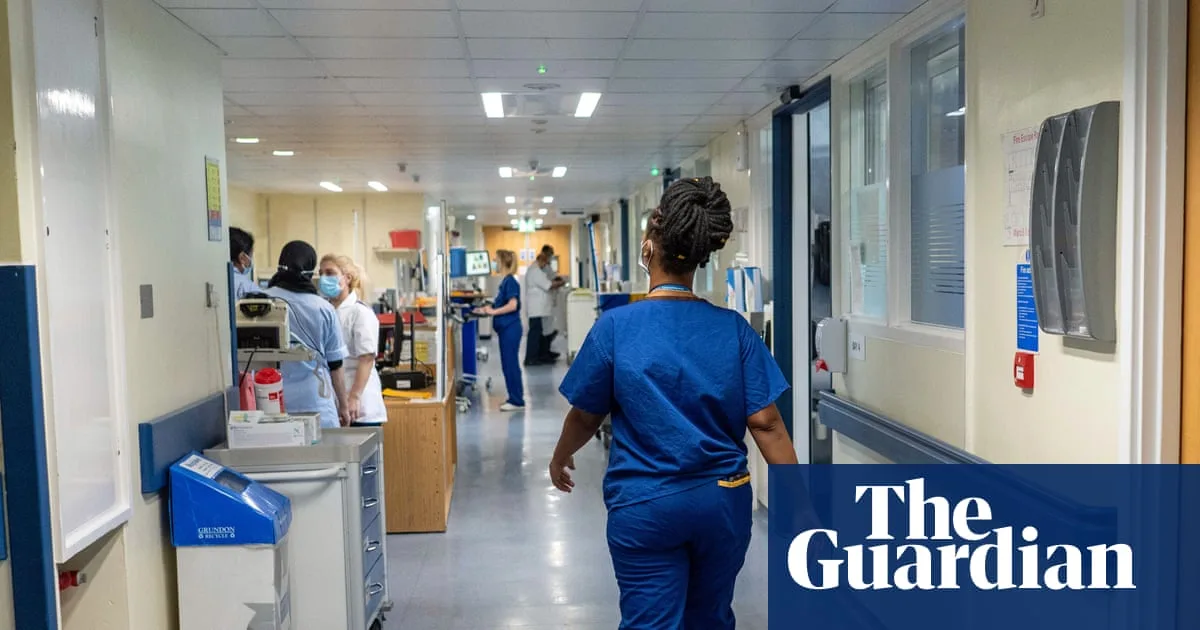
Nurses Warn of 'Deadly Mix' as NHS Faces Severe Cuts and Job Losses
Nurses Warn of 'Deadly Mix' as NHS Faces Cuts and Job Losses

Nurses are struggling to keep patients safe due to a “deadly mix” of increasingly complex care and widespread vacancies in the profession, grim research shows, as NHS organisations warn of cuts to jobs and services.

RCN Survey Reveals Staffing Crisis

Just one in ten nurses say staffing is at the right level for all patient needs to be met, while more than two thirds (69%) say the situation is now forcing them to make difficult decisions about prioritising care, according to a Royal College of Nursing (RCN) survey.

The RCN study, which polled more than 13,000 nursing staff, also found four fifths (79%) say that clinical complexity has increased over the last two years alone. The union's analysis also claims that growth of the registered nursing workforce has reached an eight-year low in England.

Wide Pickt banner — collaborative shopping lists app for Telegram, phone mockup with grocery list

NHS Alliance Poll: Cuts and Job Losses Expected

Meanwhile, a separate study by NHS Alliance has found almost two thirds of NHS organisations expect to cut or reduce services this year and more than half said they expect to slash jobs. The poll carried out by the membership body - which formed from the merger of NHS Providers and the NHS Confederation - included 187 responses from the leaders of NHS trusts and integrated care boards (ICBs).

More than three quarters (75%) said finances would be even tougher in 2026/27 compared to the previous 12 months. Some 64% said they expected to cut services while more than half (57%) said they expected to reduce clinical staff this year. And 64% expressed concerns about patient experience and more than eight in 10 (83%) said they worried about the impact of financial measures on planned care.

NHS Alliance said the health service's “hard-won gains” in recent years are “now at risk”. It comes after the Government last week hit a key pledge for 65% of patients to be treated within 18 weeks by March 2026, with the figure hitting 65.3%. Labour has a manifesto pledge to meet the 92% target by the end of the Parliament in 2029.

Political Turmoil and Leadership Changes

The Department of Health and Social Care is also expected to undergo a period of adjustment after Health Secretary Wes Streeting resigned from government after losing confidence in Keir Starmer. He was replaced by James Murray. Zubir Ahmed - an ally of Streeting - also quit as Health Innovation and Safety Minister.

RCN Congress Speech: Government Failing in Basic Task

In a speech at RCN's annual congress on Monday, Professor Nicola Ranger, the union's general secretary and chief executive, will say that the Government is failing in the “most basic task” of keeping citizens safe. “Widespread vacancies of registered nurses are always unsafe, but the risk is being compounded by the demands of delivering ever more complex care to an ageing, sicker population, with multiple conditions. It is a deadly mix. It is a government's first priority to keep its citizens safe, but our analysis and the testimony of nursing staff show ministers are too often failing in this most basic task.”

Prof Ranger will also use her speech to call for an end to violence against nursing staff. “There's a torrent of violence, sexual assaults, discrimination and abuse faced by nursing staff while we provide care,” she is expected to say. “It's rising. And it has to be stopped.”

NHS Alliance Chief Executive Comments

NHS Alliance chief executive Sir Ciaran Devane said: “In the last year the NHS has pulled off a remarkable double - improving performance at a time of growing demand, and balancing budgets in the face of relentless and often unpredictable pressures such as strike action. But our survey and interviews also show that the focus on targets and delivering record efficiency savings have come at a cost, with many hard-won gains now at risk. Local NHS leaders point to likely service closures and job cuts this year, as well as deteriorating staff morale. They are also concerned that the Government's well-supported ambitions to move more care into the community will be derailed if short-term measures are prioritised and cash savings are not recycled into funding reform.”

Pickt after-article banner — collaborative shopping lists app with family illustration

Sir Ciaran said the prospect of inflationary pressures caused by conflict in the Middle East, as well as the threat of strikes, “will only make matters worse”. Earlier this month, the British Medical Association started balloting senior doctors on industrial action. Resident doctors also have a mandate to strike until August. Sir Ciaran called for more support for local NHS leaders, adding: “NHS leaders across the system need financial support to mitigate the impact of additional pressures such as rising inflation and industrial action - costs that are not factored into the 2026/27 budget.”

Government Response

A Department of Health and Social Care spokesman said: “We recognise the challenges NHS leaders face, but this government has supported the health service with record investment, boosted productivity, and driven improvements in tech. Waiting lists are at their lowest level in more than three years, and over half a million fewer people are waiting for treatment since July 2024.” And on nursing pressures, they added: “We have recruited 16,000 more nurses and health visitors since we were elected in July 2024, and our upcoming 10 Year Workforce Plan will set out a clear roadmap to improve working lives in the NHS, including better treatment of staff, higher-quality training, and more fulfilling roles.”




