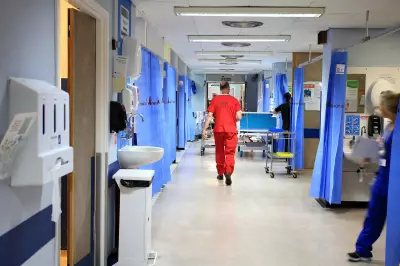
Senior NHS figures have issued a stark warning that the health service's toughest winter challenges are still ahead, as data reveals a sharp resurgence in flu and other seasonal viruses across England.
Sharp Uptick in Hospitalisations
Official statistics released this week paint a concerning picture. More than 2,940 hospital beds in England were occupied by flu patients in the last week alone, marking a significant nine per cent increase compared to the previous seven days. This rise follows a brief two-week period of declining numbers, which had offered a glimmer of hope that admissions were stabilising.
The pressure is not isolated to influenza. Daily hospitalisations for both the winter vomiting bug, norovirus, and Covid-19 have also climbed above the figures recorded the week before. This triple threat is severely testing NHS capacity during the coldest months.

The 'Super Flu' Strain and Systemic Pressures
Behind the flu surge is a particularly troublesome variant known as H3NS, referred to by some as subclade K or 'super flu'. This strain underwent several mutations over the summer, potentially allowing it to bypass some existing immunity. It is believed to pose a heightened risk to elderly and vulnerable populations.
The situation is compounded by the cold weather, which brings more patients with respiratory issues into Accident & Emergency departments and leads to an increase in injuries from slips and falls. Total NHS bed occupancy remains critically high at around 92 per cent, barely down from the 94 per cent seen before Christmas when admissions spiked by 40 per cent in some regions.
Corridor Care Risks and Official Warnings
Amid this surge, a patient safety watchdog has highlighted the growing reliance on 'corridor care' in hospitals nationwide. The Health Services Safety Investigation Body (HSSIB) warned that treating patients in non-clinical areas increases the risk of harm, including:
- Difficulty in properly monitoring patients' conditions.
- A heightened risk of infection spreading.
- A lack of essential equipment like piped oxygen.
- Insufficient staff numbers to provide adequate care.
Dr Vicky Price, President of the Society for Acute Medicine, expressed grave concern, stating there are 'people dying as a direct consequence of the situation'. The HSSIB acknowledged that until underlying issues with patient flow are solved, hospitals may have no alternative but to use these temporary spaces.
NHS England's Medical Director, Professor Meghana Pandit, left no room for optimism, stating clearly: 'It's clear that the worst is far from over for the NHS this winter.' Echoing this, the Health and Social Care Secretary, Wes Streeting, commented: 'Today's data shows we are not out of the woods yet.' He credited staff for ensuring the NHS is 'better prepared and performing more strongly' than last year but conceded the current cold snap is applying 'fresh pressure on frontline services'.