
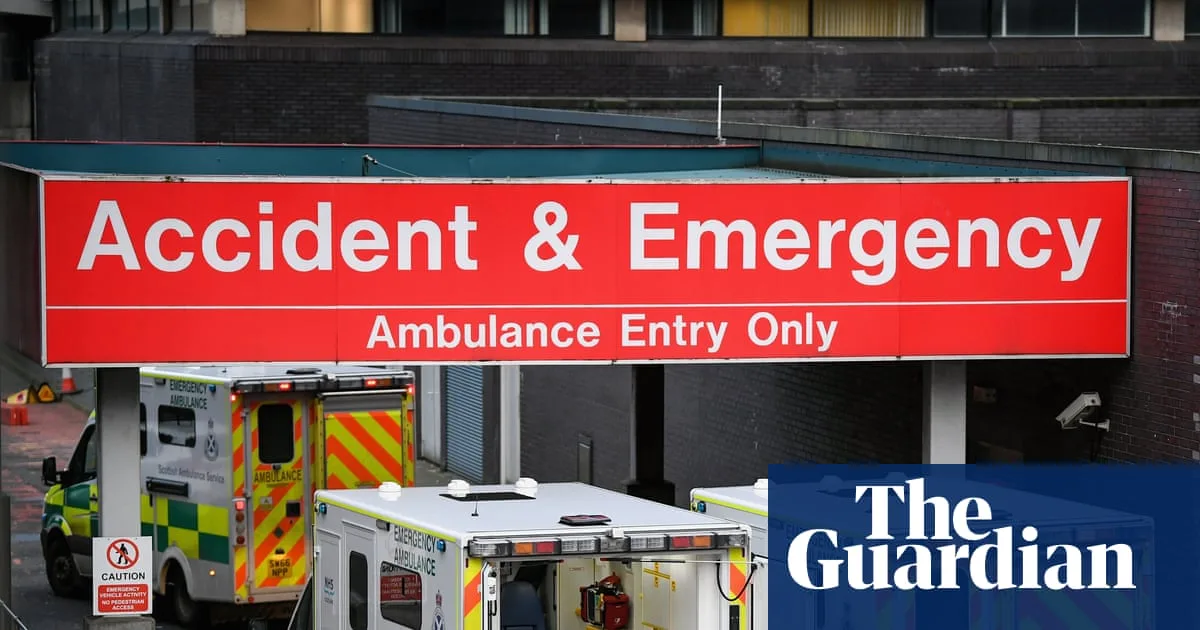
The government has claimed that sharing access to patients' health data across NHS providers in England could result in 20,000 fewer A&E visits annually and save £20 million each year. The claim comes ahead of the second reading of the NHS modernisation bill on Monday, which would also abolish NHS England.
The bill introduces single patient records (SPR) for everyone receiving health and social care in England, requiring GPs and hospitals to securely share data as part of the government's 10-year health plan. Combining SPRs with virtual care is expected to reduce A&E attendances for frail patients by about 10,000 a year, with another 10,000 fewer visits due to fewer misdiagnoses, saving doctors approximately 500,000 hours annually, according to the Department of Health and Social Care (DHSC).
The DHSC also predicts 6,000 fewer hospital admissions annually from avoided A&E attendances, better heart failure management, and improved mental health care. The £20 million savings would come from reducing medication errors, adverse drug reactions, and duplicate prescribing. Maternity and frailty care are expected to benefit from 2027.
All NHS providers, including hospitals and GPs, would share data so medical professionals can access a patient's medical history without the patient needing to repeat their issues. The system would include social care records and those from private providers working on behalf of the NHS. Patients would have more control over their care, with clear safeguards, audit trails, and choice over data use.
The British Medical Association has called for doctors to remain in control of GP data rather than the DHSC, warning that taking control away could damage trust and risk confidentiality. Health Secretary James Murray emphasised the importance of strict legal safeguards and cybersecurity protections to ensure public trust in the system.
The bill also abolishes NHS England, transferring its functions to the DHSC to cut bureaucracy, and introduces targeted measures to support local decision-making through integrated care boards. NHS Online, a virtual hospital model launching in 2027, aims to provide the equivalent of up to 8.5 million appointments and assessments in its first three years.




