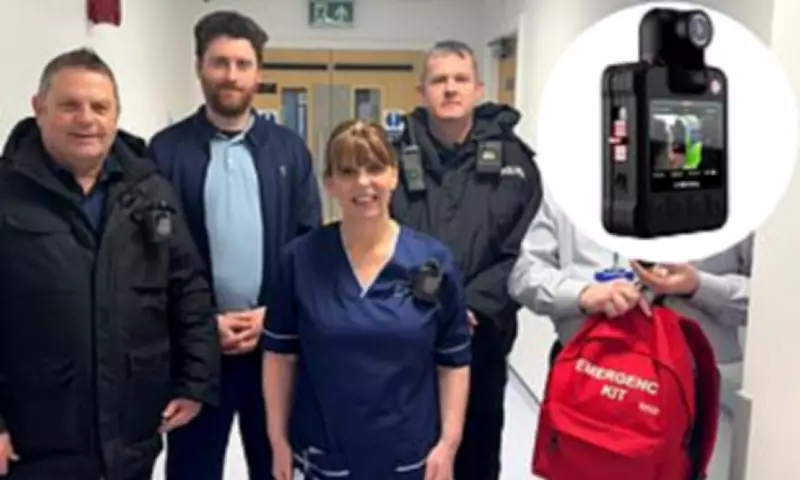
NHS Scotland Introduces Body Cameras for Hospital Staff in Safety Pilot
Nurses and doctors within the NHS have commenced using body-worn cameras as concerns escalate over a surge in violent incidents across Scotland's hospitals. Staff members at Western Isles Hospital on Lewis have become the inaugural public sector health workers north of the Border to be equipped with these devices, setting a precedent that could see other regions adopt similar measures.
Response to Escalating Aggression
The NHS Western Isles health board confirmed that the cameras are being piloted specifically in the emergency department. This decision follows what officials describe as 'a significant rise of violence and aggression on-site, affecting staff, patients and visitors'. This development represents the first instance where such devices, already standard issue for police officers nationwide, have been allocated to NHS staff in Scotland.
In addition to the camera initiative, the hospital in Stornoway is implementing 'electronic access control locks' within its high-dependency unit and all ward areas. These security enhancements are a direct response to 'increasing episodes of violence and aggression'. The safety measures come in the wake of alarming statistics from last year, which revealed over 51,000 attacks against health workers in Scotland since 2019.

Detailed Incident Breakdown
Among these attacks, 25,142 violent incidents were directed towards nursing staff, with an additional 344 targeting doctors and 63 aimed at midwives. Scottish Conservative health spokesman Dr Sandesh Gulhane commented on the situation, stating: 'It's disgraceful that these safety measures are even needed in the first place, but I hope medics feel reassured that they have these devices to deter attacks.'
NHS Western Isles clarified that the body-worn cameras 'do not automatically record' but instead require manual activation by staff 'if a situation escalates'. Health bosses emphasised that staff will inform individuals 'when a camera is being activated and explain why'. The hope is that the presence of these cameras will act as a deterrent against potential assaults.
Supplementary Safety Measures
Beyond the cameras, the health board has distributed personal safety alarms to more than 120 staff members, many of whom work independently in community settings. These advanced devices are capable of detecting if the wearer has fallen or been involved in a crash, automatically alerting emergency services to their location.
They also feature an 'SOS button' that, when pressed, connects the staff member to workers at an alarm centre, their manager, or emergency services directly. Gordon Jamieson, Chief Executive of NHS Western Isles, addressed the public, saying: 'Whilst we continue to live in a relatively safe environment, it is fair to say that we are seeing an increase in security related incidents, and violence and aggression towards our staff.'
He added: 'I trust the public will understand that, in response, we have introduced the measures outlined which are necessary to protect our staff and patients in our care.'
Historical Context and Wider Implications
Ministers had previously reviewed a petition lodged in 2019 that advocated for body-worn cameras to be provided to all frontline NHS staff and paramedics in Scotland. In 2022, the Scottish Government responded, indicating it was awaiting the results of a planned pilot by the Scottish Ambulance Service (SAS).
However, the SAS ultimately abandoned its plans in 2024 'due to concerns from staff' without ever trialling the technology. At that time, the service estimated that introducing the technology to ambulance staff would incur an initial cost of £1,500,000, plus ongoing expenses.
The Royal College of Nursing had also responded to the petition, raising 'ethical and data protection concerns' regarding the use of such devices. When contacted, all of Scotland's health boards were asked if they had implemented or planned to provide body-worn cameras for clinical staff.
While some boards reported issuing cameras to security personnel and car park wardens, no other board has yet extended their use to health workers, making the Western Isles pilot a pioneering step in Scottish healthcare security.