
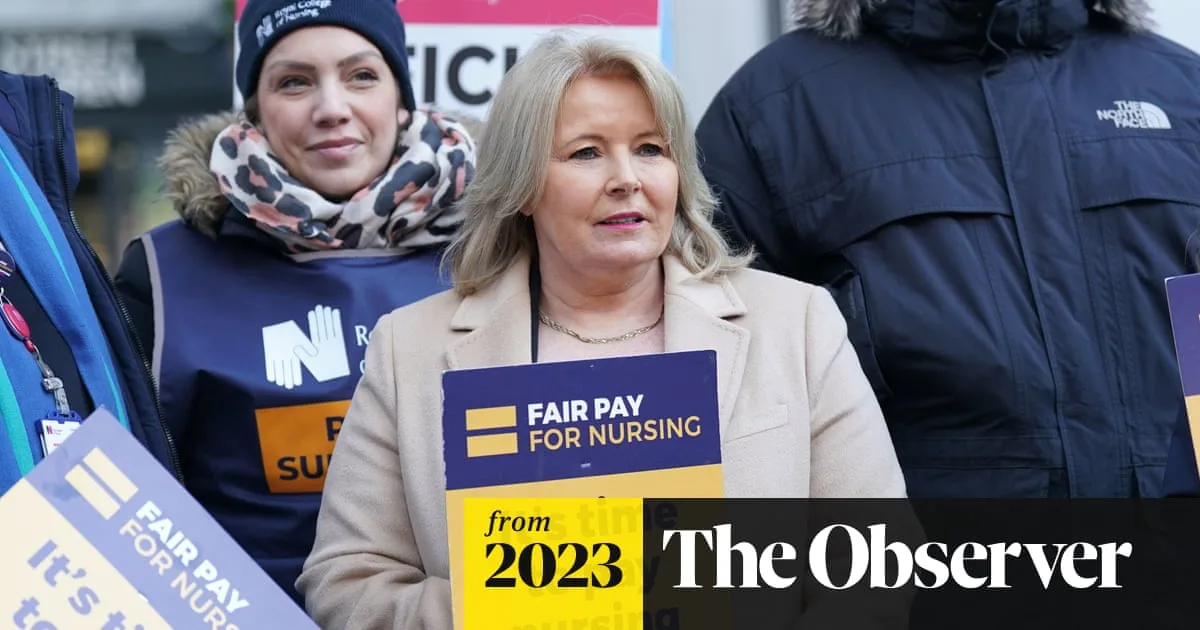
The Royal College of Nursing (RCN) is to ballot its 280,000 NHS members in England on a single national strike, potentially doubling the number of affected trusts. The union rejected a government pay offer of 5% plus a cash payment, with 54% voting against despite leadership backing the deal.
Junior doctors from the British Medical Association (BMA) have warned they may coordinate action with nurses. Dr Vivek Trivedi, co-chair of the BMA's junior doctors committee, said 'coordinated action in the future is definitely something we would consider', including striking on the same dates or alternating.
NHS Providers chief executive Sir Julian Hartley described the prospect of coordinated strikes as 'completely unprecedented' and 'uncharted territory'. He warned that staffing ratios in some trusts have been worse than during the pandemic, impacting morale and risking staff retention.
The RCN's general secretary Pat Cullen stated: 'The prime minister cannot run an NHS without nurses and doctors for the rest of the year. His last pay offer has failed the fairness test with nurses, and so they are expecting him to put another on the table.'
Hospital consultants are also threatening to ballot for strikes, raising the spectre of widespread industrial action across the NHS in the run-up to a likely 2024 general election. The developments jeopardise Prime Minister Rishi Sunak's pledge to reduce waiting lists.




