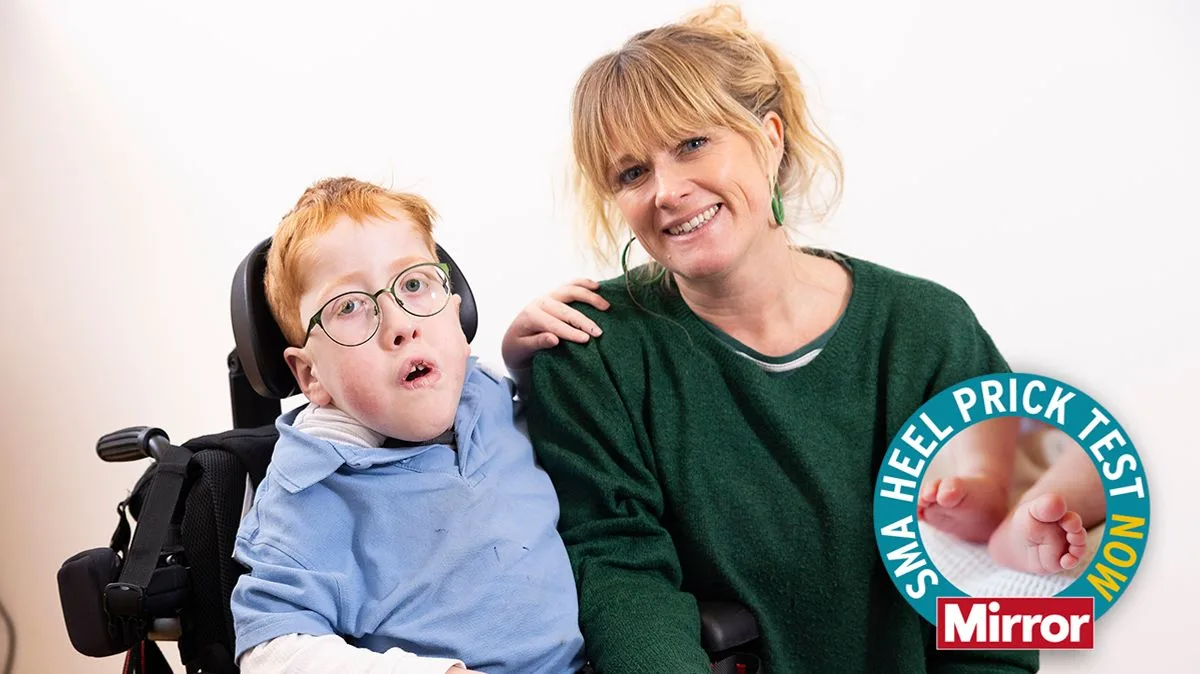
A mother whose son was among the first in the world to be treated for spinal muscular atrophy (SMA) is supporting the Mirror's campaign for all newborns to be screened for the condition. Portia Thorman, 46, from Ramsgate, was told her son Ezra would not live past two after his diagnosis, but he is now nine years old.
Portia said: 'We just need newborn screening now so that people can get treated before symptoms start. It's not a death sentence any more.' The NHS newborn heel prick test does not check for SMA, despite it being included in screening programmes in most other developed nations. The Mirror has been highlighting this issue since 2024.
SMA type 1 is the most severe form, caused by a breakdown of nerve cells in the brain and spinal cord in the first weeks of life. This stops the brain from sending messages to control muscle movement, severely limiting movement and causing breathing and swallowing difficulties. Pharmaceutical firm Novartis estimates that 33 babies in the UK each year are left needing a wheelchair because they are diagnosed too late.
Ezra cannot walk, struggles to sleep, is fed through a tube directly into his stomach, and needs a nurse at his side all night to ensure he does not stop breathing. In his first two years, he nearly died ten times, each time he caught a cold. He was five weeks old when he first became ill and ended up in intensive care. Despite multiple health visitor checks, his condition was missed until Portia broke down at an NHS clinic, where a doctor noticed his tongue wobbling – a tell-tale sign of SMA.
Ezra was one of the first children to receive the drug Nusinersen (Spinraza), which increases production of a key motor neurone protein. His treatment was initially funded by a pharmaceutical firm and is now approved on the NHS. Two further treatments have since been developed that halt nerve damage, but they are often administered after irreversible damage has occurred.
Portia sent a message to pop star Jesy Nelson, whose twins were recently diagnosed late with SMA: 'It feels like the end of the world when you first get the news. Your life will have plenty of hurdles but it will still have plenty of joy. Take it one day at a time.'