Health Secretary Announces Expanded Meningitis Vaccination Programme
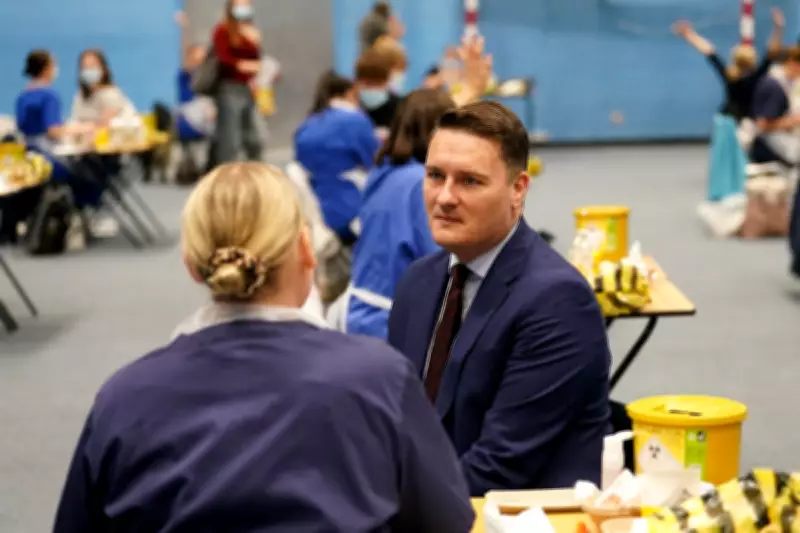
Health Secretary Wes Streeting has pledged to extend meningitis vaccinations to more individuals as the number of cases in a Kent outbreak rises to 27. During a visit to the University of Kent campus in Canterbury, Mr Streeting confirmed that the government is taking proportionate steps to contain the spread of the disease.
Outbreak Details and Response
The UK Health Security Agency (UKHSA) reported that as of Wednesday evening, 15 cases of meningitis have been confirmed, with an additional 12 under investigation. This marks an increase from 20 cases reported previously. Tragically, two students have died in connection with the outbreak. Nine of the confirmed cases are known to be caused by meningitis B (menB), the strain affecting those who fell ill after visiting Club Chemistry in Canterbury.
Mr Streeting outlined the expanded vaccination strategy, stating: "We are now encouraging anyone who attended Club Chemistry from March 5 until it voluntarily closed to come forward for both antibiotics and vaccination." The programme will also include:

- Sixth-formers at four schools in Kent with known or suspected cases.
- Additional university students at the University of Kent and Canterbury Christ Church University.
- Individuals previously offered prophylactic antibiotics.
He emphasized that these measures are designed to protect at-risk groups while keeping the situation under continuous review.
Public Reassurance and Transmission Risks
Addressing public concerns, Mr Streeting sought to differentiate the meningitis outbreak from the COVID-19 pandemic. He stated: "This isn't like Covid. The risk to the general public is extremely low." He explained that meningitis spreads through close personal contact, such as sharing utensils, cups, or intimate interactions, rather than through airborne transmission.
He added: "We've got effective treatment through antibiotics and effective vaccination. All of these factors mean the risks, even for students in Canterbury, are relatively low." Despite this, he acknowledged that it is understandable for people to be worried and anticipated that case numbers might continue to rise in the short term.
Community Impact and Expert Insights
The outbreak has affected various community segments. A Morrisons employee who attended Club Chemistry has contracted meningitis, though the company confirmed the distribution centre is operating normally. At the University of Kent, Olivia Parkins, an 18-year-old cheerleading society member, reported that three society members have confirmed cases and are hospitalized.
Louise Jones-Roberts, owner of Club Chemistry, expressed relief at the expanded vaccination efforts but called for broader measures: "I'd like to see it given to all under-25s. It needs to be looked at right across the country." She indicated the club would not reopen imminently, pending further assessment.
Public health officials provided critical context. Dr Anjan Ghosh, Kent County Council's director of public health, noted that the outbreak cannot yet be declared contained due to potential secondary transmission. He advised: "There's no reason to be anxious. This disease doesn't spread like Covid or measles. However, if people have signs of meningitis, they need to act fast."
Trish Mannes, UKHSA regional deputy director for the South East, urged eligible students to take preventative antibiotics promptly, even if they have returned home, by contacting their local GP.
Scientific Analysis of the Outbreak
Professor Robin May, chief scientific officer at the UKHSA, described the outbreak as very unusual, highlighting that typical meningitis cases are sporadic. He explained: "What is remarkable about this case is the large number of cases all originating from what seems to be a single event." Experts are investigating two possible reasons:

- Behavioural factors among individuals at the event.
- Potential evolution of the bacteria to become more transmissible.
Prof May noted that the bacteria is carried by about 10% of adults, often without causing disease, but can lead to severe illness in some cases. Transmission occurs through saliva and close contact, such as kissing or sharing items like vapes.
To date, thousands of antibiotic doses have been distributed to Club Chemistry attendees and University of Kent students in halls. The UKHSA confirmed cases in four Kent schools, and Escape Studios in London reported a student with meningitis linked to Kent.