How Leona Helmsley's Foundation is Revolutionising Rural Healthcare
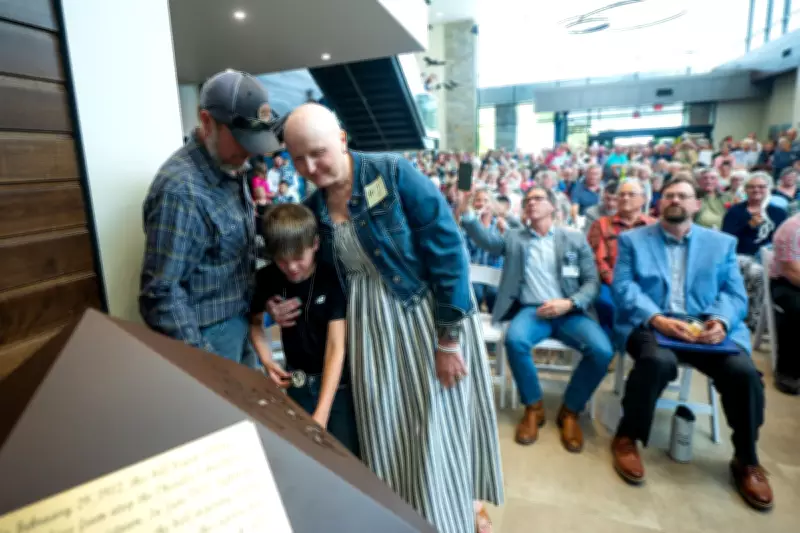
When Marcy Smith received a breast cancer diagnosis requiring radiation treatment, she initially refused. The prospect of travelling 220 miles daily from her Glendive, Montana home to Billings for six weeks seemed impossible while balancing work and caring for her foster children. However, her oncologist delivered transformative news: a new cancer centre was opening at Miles City Hospital, just an hour away. Smith underwent treatment, driving her foster daughter to kindergarten, receiving radiation, and returning home in time for dinner. A year later, she is cancer-free. "Thank the lord," Smith says. "Getting the radiation was probably life-saving for me."
An Unlikely Philanthropic Force
This life-saving facility was largely funded by an unexpected source: the charitable trust of Leona Helmsley, the late New York billionaire once dubbed the "queen of mean." Since 2009, the Leona M. and Harry B. Helmsley Charitable Trust has allocated more than $850 million to rural healthcare initiatives across the Upper Midwest and Rocky Mountain regions. The trust contributed $6 million towards the $17 million required to establish the cancer centre in Miles City, a town of 8,000 residents.
Helmsley's philanthropic efforts arrive at a critical juncture for rural healthcare systems. Between 2005 and 2023, 81 rural hospitals closed their doors, with further strain anticipated from Medicaid funding reductions. Although Congress allocated $50 billion over five years to support rural healthcare, independent analyses suggest this covers only one-third of the projected losses from Medicaid cuts.

Bridging the Urban-Rural Healthcare Divide
While philanthropic contributions cannot fully compensate for diminished federal funding, strategic initiatives like Helmsley's are narrowing the gap between urban and rural medical services. The trust plans to spend $84 million on rural healthcare in its current fiscal year. Walter Panzirer, the Helmsley trustee who launched the rural health programme, emphasises: "Your ZIP code should not determine your health outcomes, and yet for so many rural Americans, it does."
Personal Experience Drives Philanthropic Vision
The foundation's focus on rural healthcare stems not from its urban namesake but from Panzirer, Helmsley's grandson. After relocating to South Dakota to pursue outdoor interests, Panzirer served nearly a decade as a police officer, witnessing firsthand the healthcare limitations facing low-income rural communities, particularly regarding mental health services.
Following Helmsley's 2007 death, Panzirer was appointed as a trustee. Despite initial disputes over fund allocation—Helmsley famously advocated for canine welfare—Panzirer championed rural healthcare, recognising a lack of national foundation attention in this area. "I understood the challenges, the differences, and sometimes the inequities with rural America not always having state-of-the-art medical equipment or not having access to specialty care," Panzirer explains. "That was kind of a lived experience for me."
Targeted Investments Yield Tangible Results
The trust established a regional office in Sioux Falls, South Dakota, deploying four programme officers who extensively engage with hospital executives, medical professionals, and first responders to identify local needs. Their investments have produced measurable impacts:

- Emergency Cardiac Care: $60.4 million granted for over 24,000 automated external defibrillators for police and first responders, with documented cases of more than 600 lives saved.
- Cancer Screening Access: Funding for more than 70 mammogram machines, ensuring patients travel no further than 60 miles for breast cancer screenings.
- Telemedicine Expansion: Over $100 million invested in telemedicine, connecting rural patients with distant specialists.
- Mental Health Innovation: "Virtual crisis care" programmes in South Dakota, Nevada, and Wyoming provide police with tablets to link individuals in crisis with remote mental health counsellors.
Comprehensive Cancer Care Expansion
Helmsley has established comprehensive cancer centres in five rural communities, committing $128 million to expand chemotherapy and radiation services at 20 health centres while constructing five new facilities. In Lewistown, Montana, the Central Montana Medical Center's CEO Cody Langbehn acknowledges the cancer centre would have remained unimaginable without Helmsley's involvement. The trust's $9 million contribution catalysed local fundraising, covering nearly the entire $19 million project cost.
Karen Costello, former president of Miles City Hospital during its cancer centre development, highlights the trust's rigorous sustainability assessments: "The worst thing you can do is bring a wonderful service to a market and then have it peter out after five or six years. That's worse than never having it at all."
Strategic Focus on Regional Hubs
Helmsley also targets small cities within predominantly rural areas, recognising their crucial role in providing specialty care and training healthcare professionals. At Billings Clinic, Montana's largest hospital, the trust has been the primary funder for four major initiatives: Montana's first internal medicine residency programme, its inaugural psychiatric residency programme, its first surgical intensive care unit, and a new centre supporting rural hospitals with patient transfers to Billings for advanced care.
Jim Duncan, recently retired after 30 years leading the clinic's foundation, praises Panzirer's strategic approach: "He has a very strategic eye for where the needs and gaps are—and how to creatively pursue ways that philanthropy can be transformational."
Through sustained investment and community-focused strategies, the Helmsley Charitable Trust is fundamentally reshaping healthcare accessibility for rural Americans, proving that philanthropic vision can indeed save lives where they are most at risk.