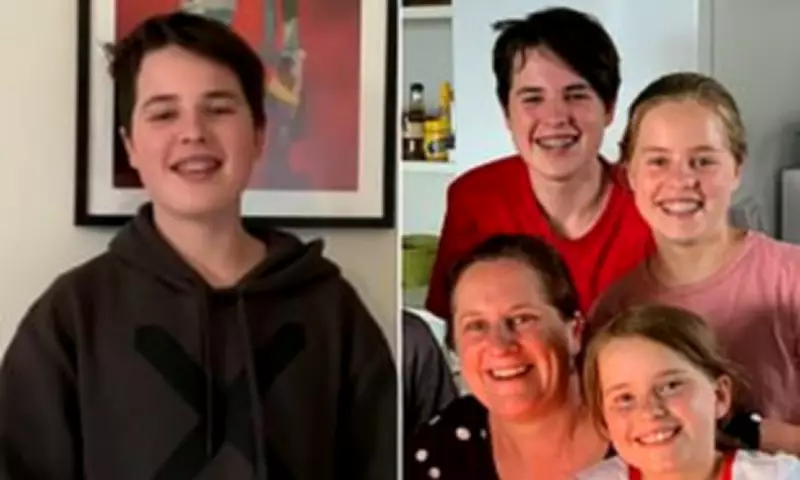
Coroner Finds Teenager's Fatal Allergic Reaction May Have Been Preventable
A Victorian coroner has determined that the tragic death of a teenage boy, who suffered a severe allergic reaction after consuming a slice of apple crumble, may have been preventable. The ruling highlights critical failures in emergency medical response that potentially cost the young life.
Fatal Incident at Grandmother's Home
Max McKenzie, a 15-year-old boy from Melbourne, was visiting his grandmother's home in August 2023 when he experienced a fatal anaphylactic reaction. Unbeknownst to both Max and his grandmother, the apple crumble contained traces of walnuts, to which Max was severely allergic. Despite using his EpiPen and Ventolin inhaler—as he also suffered from asthma—his condition deteriorated rapidly, leading to his death on August 19 after being rushed to hospital.
Coroner's Investigation Reveals Critical Lapses
Victorian coroner David Ryan conducted an inquest into Max's death, examining the interventions provided by medical professionals. On Thursday, he identified several missed steps that could have altered the outcome. The findings pointed to paramedics failing to administer adrenaline at the earliest opportunity and medical staff at Eastern Health's Box Hill Hospital not intubating him soon enough.

"I am satisfied that… he required the administration of earlier and more adrenaline while being treated by Ambulance Victoria paramedics, and more critically, the earlier establishment of a secure airway by Eastern Health clinicians," Coroner Ryan stated, as reported by the Herald Sun. "This would have given him the best opportunity for survival."
However, the coroner clarified that while the death may have been preventable, he could not be comfortably satisfied it was entirely avoidable due to the "rare and incredibly challenging" circumstances faced by medical professionals that day.
Specific Failures in Emergency Response
The inquest revealed that a graduate paramedic should have driven the ambulance with lights and sirens to the hospital, allowing more experienced personnel to care for Max in the back. This misstep delayed critical treatment. As a result, Coroner Ryan recommended that Ambulance Victoria review its guidelines for treating patients with asthma and anaphylaxis to ensure consistent adrenaline administration. He also urged that graduate paramedics undergo emergency driving training before deployment, ensuring experienced workers are available for patient care.
Family's Heartbreaking Response
Outside the court, Max's parents expressed profound grief and concern over the missed opportunities to save their son. "It's been four-and-a-half years to get to these coronial findings, it's been a long journey," said his father, Dr. Ben McKenzie, an emergency physician. "While not every aspect or concern we have about Max's care was able to be addressed today, the coroner found that Max should've got more adrenaline from Ambulance Victoria and he should've been intubated on arrival at Eastern Health Hospital. Those two things didn't happen, and they robbed Max of his best chance of survival. Max should not have died."
Dr. McKenzie recounted performing CPR on his son at the hospital, a situation he believes should never have occurred. "I should never have had the opportunity to participate in Max's resuscitation because it should have been done before I got there and I think the coroner has highlighted that today," he added.
Max's mother, Tamara, called for accountability, noting that the hospital had previously described their care as "best practice," but the coroner's findings contradicted this. "Max was let down in so many ways, at so many points in time, and the coroner has found two points where Max's care was not appropriate and not OK," she said, requesting a "heartfelt apology" from Eastern Health.

Health Authorities Respond
Eastern Health and Ambulance Victoria extended their "deepest sympathies" to the McKenzie family and acknowledged the coroner's findings. A spokesperson for Ambulance Victoria stated, "Ambulance Victoria's deepest sympathies and thoughts remain with the McKenzie family for their devastating loss. Ambulance Victoria takes very seriously its commitment to patient safety and strives to continuously improve the care and services it provides to the community. Ambulance Victoria acknowledges the Coroner's findings delivered on 5 February 2026 and will respond to the Coroner's recommendations."
This case underscores the critical importance of timely and appropriate medical interventions in life-threatening allergic reactions, sparking calls for systemic improvements in emergency healthcare protocols.