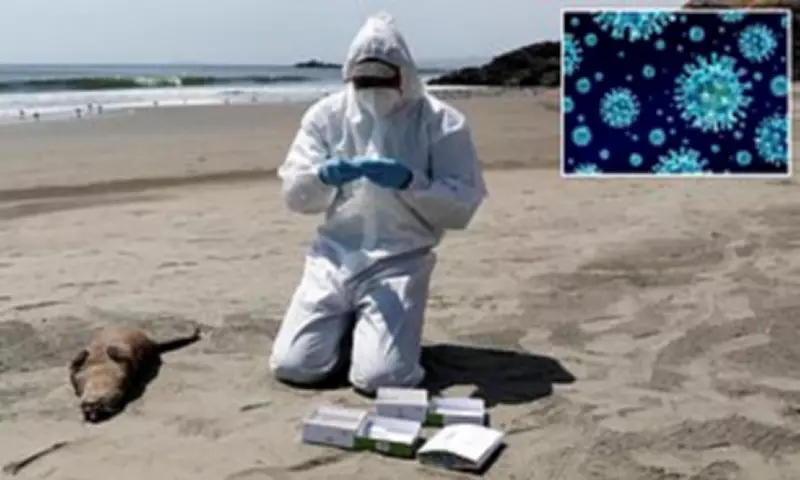
Bird Flu Jumps to Marine Mammals in California, Sparking Mutation Concerns
Health officials in California have confirmed the first-ever detection of bird flu in two new marine mammal species within the state, raising alarms about potential virus mutations that could threaten human populations. The infections were identified in a California sea lion and a southern sea otter in San Mateo County, near San Francisco, marking a significant expansion of the virus's reach.
Outbreak Linked to Elephant Seal Colony
The newly reported cases are believed to be connected to an ongoing outbreak within the county's elephant seal colony, where at least thirty seals have already tested positive for the virus. Officials disclosed that the infections in the sea lion and sea otter were detected at Año Nuevo State Park, home to one of the largest elephant seal breeding colonies in the United States, attracting thousands of visitors annually for guided walks.
While details on the condition of the infected animals remain undisclosed, authorities emphasize that the risk to the general public is currently assessed as 'very low'. However, as a precautionary measure, people are strongly advised to avoid any contact with stranded, sick, or deceased marine mammals and birds to minimize infection risks.

Additional Cases in Marin County
In a separate development, health officials in Marin County, located on the opposite side of the Bay Area, have also confirmed a bird flu infection in a common murre, a seabird resembling a penguin. The positive test result was obtained from one of three common murres examined at Kehoe Beach on the Point Reyes National Seashore, a popular destination drawing approximately two million visitors each year.
The testing initiative was launched following observations of a sudden increase in dead common murres in the region. The National Park Service, which conducted the tests and issued warnings, reiterated that visitors should never approach or handle wildlife and must keep pets leashed and away from sick or dead animals to prevent further stress or potential infection.
Experts Warn of Mutation Risks
Every instance of the virus spreading to a new species heightens concerns among experts, as it increases the likelihood of mutations that could enable easier human-to-human transmission. Although the sea lion and sea otter are not considered 'intermediate hosts' that could facilitate a direct jump to humans, the broader pattern of cross-species infection remains deeply troubling.
Since late 2020, a major bird flu outbreak has infected over sixty marine mammal species globally, alongside a wide array of other animals including cats, dogs, foxes, bears, skunks, and dolphins. The virus has evolved to become more infectious and capable of causing severe disease, tearing through animal populations with increasing intensity.
Human Infections and Ongoing Monitoring
In the United States, seventy-one human cases of bird flu have been recorded to date, resulting in two fatalities. Notably, all but one of these cases have been traced back to direct exposure to infected animals, with no evidence of human-to-human transmission thus far. The majority of patients had contact with dead birds or other infected creatures, including cows, where the virus began spreading in early 2024 and has now affected 1,088 herds nationwide.
The two human deaths occurred in Louisiana and Washington state, both involving older adults with underlying medical conditions who had been in contact with sick birds. Symptoms reported included high fever, confusion, and severe respiratory distress. Despite these incidents, the Centers for Disease Control and Prevention maintains that the current risk to the American public remains low.
Precautionary Measures and Public Guidance
Officials suspect that the marine mammals may have contracted the virus through contact with feces or carcasses of infected seals, birds, or other animals. In response, the National Park Service has issued clear guidelines: visitors should maintain a safe distance from sick or dead wildlife and report any sightings to park staff via visitor centers, phone, or email.

This warning follows recent events in New Jersey, where more than 1,100 geese were found dead in waters, fueling fears of a broader bird flu outbreak. Researchers continue to monitor the situation closely, vigilant for any signs of mutation that could enhance the virus's ability to spread among humans, while reinforcing that immediate public health threats are minimal but warrant careful observation and adherence to safety protocols.