Amsterdam's Concertgebouw Hosts Singing Circle for Dementia Support
A remarkable singing circle at Amsterdam's renowned Concertgebouw concert hall is offering crucial support and connection for individuals living with dementia and various other brain conditions. This innovative program harnesses the power of music to provide emotional and cognitive benefits, creating a supportive community environment for participants and their carers.
Musical Memories Provide Comfort Amid Neurological Challenges
Megan Worthy, 58, vividly recalls singing in choirs during her youth in Canberra, Australia. Now facing a rare form of early-onset dementia that is gradually affecting her vision and cognitive functions, she finds solace and connection through participating in the singing circle with her daughter, Bronte. "It's pretty brutal," Worthy acknowledges about her neurological condition. "I'm starting to lose everything, you know, and this is really rewarding and seeing all these people, yeah, it did make me have a lot of memories."
The program, organized by opera singer Maartje de Lint at the historic concert venue, specifically caters to seniors with what she describes as "vulnerable brains." Many participants experience various forms of dementia or Parkinson's disease, conditions that affect millions worldwide through progressive loss of memory, reasoning, language skills, and other cognitive functions.

Scientific Basis for Musical Intervention
Neurobiologist Brankele Frank, who is not affiliated with De Lint's project, confirms that singing can provide significant benefits for individuals with dementia, Alzheimer's, and other neurodegenerative diseases. "Music speaks to brain areas that haven't really been degenerated yet," Frank explains. "So, for example, their verbal skills often are compromised, but music speaks to parts of the brain that don't necessarily need verbal skills. And so it taps into their emotion, their sense of self, their identity."
Scientific research continues to explore the potential benefits of music for people with dementia, traumatic brain injuries, Parkinson's disease, and stroke recovery. Music activates multiple regions of the brain simultaneously, strengthening neural connections between areas governing language, memories, emotions, and physical movement.
The Singing Circle Experience
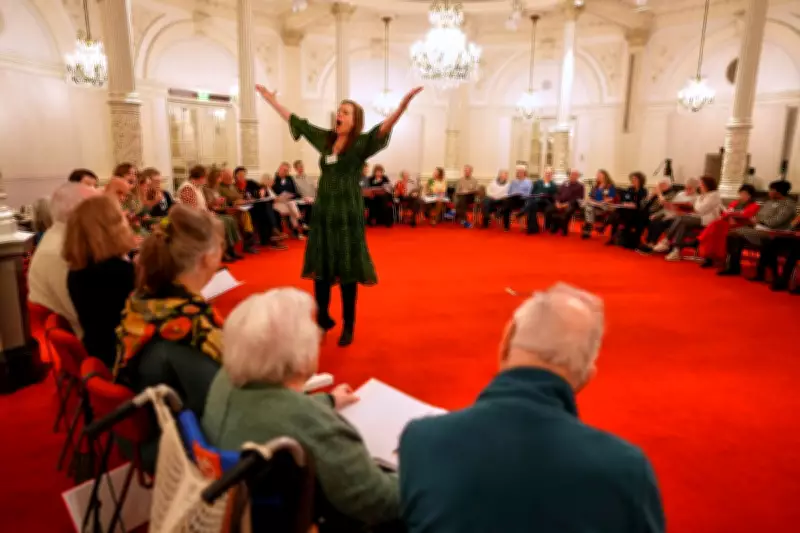
Participants, who each pay 20 euros (approximately $23.50) to attend, gather with their carers in a circle of chairs beneath fourteen crystal chandeliers in the venue's ornate Mirror Hall. De Lint moves among the singers during sessions, often kneeling to connect personally with participants as she leads the group through familiar songs ranging from Elvis Presley's "Love Me Tender" to Frank Sinatra's "Fly Me to the Moon" and traditional hymns like "Amazing Grace."
"We always say, music is like vitamins," remarks Selien Kneppers, 78, a former manager of a Dutch boogie woogie and blues band who now regularly attends the singing circle. The emotional impact of the hour-long sessions is palpable, with carers frequently distributing tissues as participants become moved by the music and shared experience.
Building Resilience and Human Connection
De Lint emphasizes that singing serves as both brain training and a means of strengthening family bonds. "So we give people perspective," she explains before a session. "It's like actually a training for the brain, for the body, to get more resilient and understand the perspective that you still have." Her organization conducts similar singing workshops throughout the Netherlands and across Europe.
Bronte Henfling, Megan Worthy's daughter, notes the importance of participating in activities that aren't medically focused. "Just hearing everyone come together and sing... it reminds us that we're all human and there's a humanity out there which is really pleasing and nice to be a part of," she observes. The program creates moments of tender connection, as evidenced when one participant gently touched the face of the woman beside him during a particularly emotional song.
This innovative approach to dementia care demonstrates how creative programming in cultural institutions can provide meaningful support for vulnerable populations while fostering community and preserving dignity through shared musical experience.