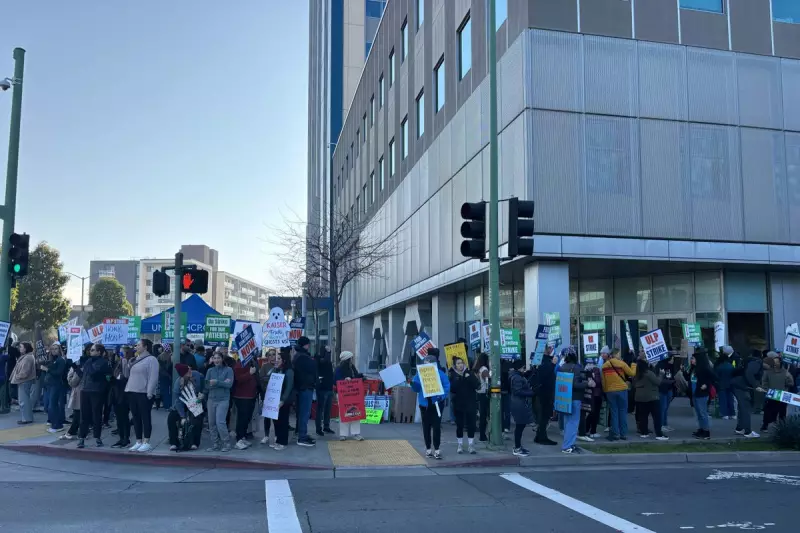
Major Healthcare Strike Disrupts Kaiser Permanente Operations
An estimated 31,000 registered nurses and other frontline healthcare professionals employed by Kaiser Permanente have commenced an open-ended strike this week across facilities in California and Hawaii. The industrial action represents a significant escalation in an ongoing labour dispute centred on demands for enhanced wages and improved staffing ratios.
Second Major Walkout in Recent Months
The picketing, which began on Monday, constitutes the second substantial walkout by employees represented by the United Nurses Associations of California/Union of Health Care Professionals in a matter of months. This follows a five-day strike in October that concluded with the resumption of negotiations. However, those talks ultimately broke down in December, leading to the current impasse.
This week, the union has levelled accusations against Kaiser Permanente, alleging the healthcare giant is refusing to return to national bargaining discussions. In a strongly worded statement, the union bargaining committee declared, "We will continue to push Kaiser to stop their egregious unfair labor practices against the frontline workers who deliver the best care for their patients and billions in profit to do the right thing, and come back to the table to bargain in good faith."

Dispute Over Bargaining and Alleged Threats
Kaiser Permanente has presented a contrasting narrative. The company stated on Sunday that the union had agreed to return to local bargaining discussions, even as workers proceeded with the strike. The firm explained it paused national bargaining last month following what it described as a threatening incident involving a union official.
Greg Holmes, Kaiser’s chief human resources officer, asserted in a statement, "Illegal threats are a line that cannot be crossed. This union official’s actions have compromised the national bargaining process and undermined both parties’ ability to continue good-faith bargaining."
Core Demands: Wages and Staffing Shortages
The striking workers, a group that includes pharmacists, midwives, and rehabilitation therapists, argue that their wages have failed to keep pace with inflation. Furthermore, they highlight a critical shortage of staff, which they say prevents them from adequately meeting patient demand.
Their central demand is a 25% wage increase over four years, which they claim is necessary to close a pay gap of at least 7% compared to their peers in the industry. Kaiser Permanente has countered this proposal with an offer of a 21.5% increase over the same period.
The company contends that its represented employees already earn, on average, 16% more than their counterparts elsewhere. It has warned that meeting the union's full pay demand would necessitate charging customers higher premiums.
Impact on Patient Care and Staff Retention
Arezou Mansourian, a physician assistant serving on the union bargaining team, told the San Francisco Chronicle that Kaiser has been struggling to retain and recruit medical providers, a situation that is directly impacting the quality of patient care. Mansourian reported that medical staff have been departing Kaiser for higher-paying positions at other local hospitals.
She framed the union's fight for improved working conditions as ultimately beneficial for patients, stating, "We know it’s a pain right now, but it’s so that we can take care of you better in the future."
Service Continuity and National Context
Kaiser Permanente has assured the public that its health clinics and hospitals will remain operational during the strike. Contingency plans include shifting some in-person appointments to virtual consultations and rescheduling certain elective surgeries and procedures.
As one of the nation's largest not-for-profit health plans, Kaiser Permanente serves approximately 12.6 million members across 600 medical offices and 40 hospitals, primarily in western U.S. states. The organisation is headquartered in Oakland, California.

This strike occurs within a broader national context of healthcare labour unrest. In a parallel development earlier this month, about 15,000 nurses in New York City who had walked off the job returned to the bargaining table. The New York State Nurses Association confirmed that contract negotiations had resumed with officials at three major private hospital systems: Montefiore, Mount Sinai, and New York-Presbyterian.