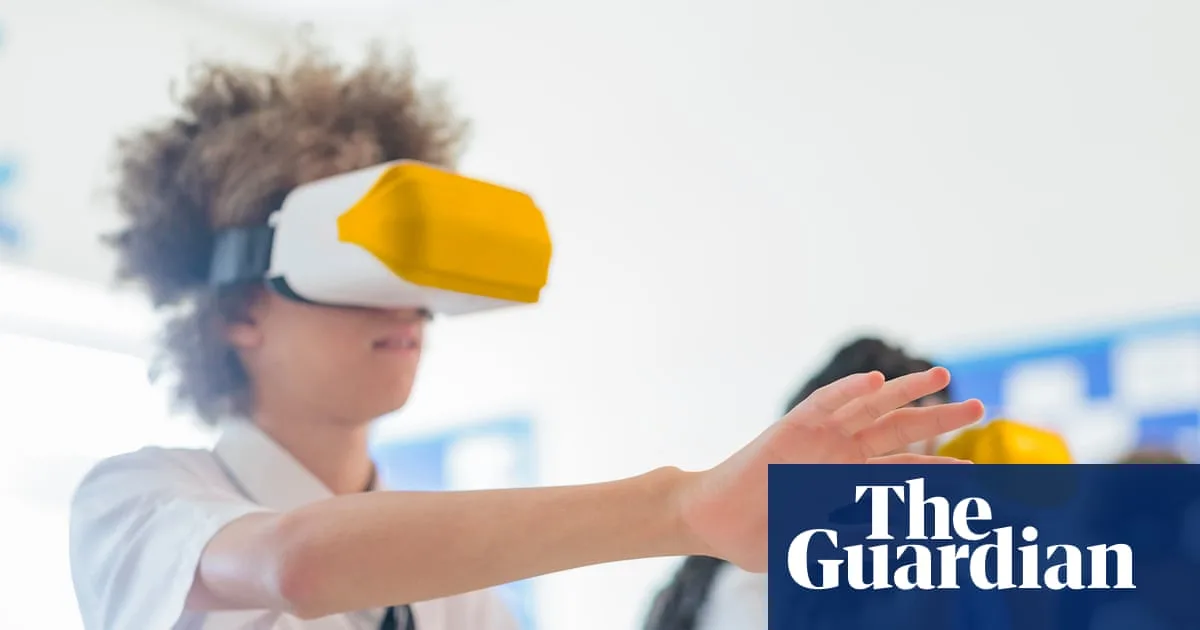
Schools in London are using virtual reality (VR) headsets to help students manage stress caused by exams, ADHD, or difficult home lives. The pilot programme, developed by tech firm Phase Space, is being run in all 15 secondary schools in the London borough of Sutton in partnership with the local NHS mental health trust.
Pupils access a seven-minute VR programme either in prearranged slots or when they need to leave a lesson due to anxiety. Co-creator Zillah Watson, a former head of VR at the BBC, said the programme is designed to help “overwhelmed and anxious students”. Early results show nine out of ten pupils experienced an immediate drop in stress, with improvements in attendance and behaviour.
Aelisha Needham, vice-principal at Ark Academy in north London, said the school uses the headsets mainly with pupils who have social, emotional or mental health issues, such as ADHD or anxiety. “Students are a lot calmer. We’re seeing a reduction in relocations from lessons,” she said. Pupils now ask to use the programme when feeling overwhelmed, rather than walking out of class.
Sixteen-year-old Lora Wilson described how the VR experience helps her: “It almost feels like I’m somewhere else and I can just relax.” She added that it has boosted her confidence, particularly around exams. “Exams terrified me. They don’t scare me as much any more.”
Andy Bell, chief executive of the Centre for Mental Health thinktank, said: “It’s encouraging to see digital solutions being used to support children’s mental health at school.” With NHS child and adolescent mental health services (Camhs) overloaded, VR may offer a low-cost, effective way for schools to help stressed pupils, said Needham.