The Modern Anxiety Epidemic: Understanding Britain's Mental Health Crisis
In contemporary Britain, where uncertainty has become a constant companion and headlines rarely offer reassurance, anxiety has reached epidemic proportions. Recent research reveals alarming statistics about the nation's mental wellbeing, with 2023 data showing that 37.1% of women and 29.9% of men report experiencing high levels of anxiety. According to Mind's comprehensive 2025 report, mental illness rates are 'steadily rising' across all demographic groups.
The Psychology of Uncertainty
Owen O'Kane, a leading psychotherapist and bestselling author, explains the fundamental connection between uncertainty and anxiety. 'If you think of a standardised definition of anxiety, it's an intolerance of uncertainty,' O'Kane states. 'The one thing that we've got in the world at the moment is a large volume of uncertainty at every level. When volume is high like that, people's tolerance level begins to drop.'
From economic instability to global crises, the relentless stream of unknowns is pushing individuals beyond their coping thresholds, affecting multiple generations simultaneously. 'Evidence would say at the moment that right across the population groups, younger populations, middle aged and older people generally... people are feeling more anxious than they've been traditionally,' O'Kane observes. 'I've been working in mental health for 30 years, and I've never seen levels as high.'

Dangerous Misconceptions About Anxiety
Despite growing awareness, dangerous attitudes persist about anxiety being simply 'part of life' or exaggerated by younger generations. 'I think this kind of old school notion, oh, you young, not are all anxious and everybody's worried. I think it's a very dangerous assumption to make,' warns O'Kane. Dismissing anxiety risks invalidating genuine suffering and preventing people from seeking crucial help when they need it most.
O'Kane distinguishes between normal 'functional worry' and clinical anxiety. 'If someone's kid was sick and they were worried about that, or they're worried about paying their mortgage, that's a very normal functional worry,' he explains. Anxiety, however, extends far beyond this, affecting physiological responses, thought patterns, and daily functioning.
'It's about physiological sensations that happen in the body. It's about the volume of worry. It's about the amount of catastrophizing that goes on, and the amount of dread, fear and doom that moves along with it,' O'Kane describes. 'It's the impact in someone's life, on their relationships and how they're managing their everyday world. Their anxiety stops them engaging with work, or it's impacting on their social life or their relationship, how they're functioning and coping day to day.'
A crucial warning sign emerges when 'bad days start to outnumber the good days' and anxiety significantly impacts daily life. 'That is a really good time to get a bit of help,' O'Kane advises, recommending speaking with a GP as an important first step.
The Education Gap in Anxiety Management
One fundamental problem contributing to the anxiety crisis is that most people were never taught how to manage anxious feelings. 'Most of us are not really taught how to manage anxiety; we sort of crash land into adulthood and we're left to get on with it,' O'Kane explains. Without proper tools or understanding, anxiety can spiral uncontrollably or remain completely unrecognised.
This educational gap partly explains the dramatic rise in anxiety among young people. Mind's research reveals that those aged 16-24 are particularly affected by growing mental health problems, with prevalence rates increasing from 17.5% in 2007 to 25.8% in 2023-24.
'I notice a lot of social anxiety with younger people, around socialising, meeting new people, how they self-evaluate,' O'Kane observes. The digital landscape significantly contributes to this trend. 'In a world that's very dominated by online culture and scrolling, they're not always having to interact face to face,' he notes.

Diverse Anxiety Types Across Age Groups
While social anxiety increases among younger generations, other anxiety forms are becoming prominent across all age demographics. 'I do notice a lot of health anxiety right across the board,' O'Kane reports. The lingering impact of the COVID-19 pandemic and subsequent lockdowns contributes significantly to this phenomenon, with many individuals and society as a whole failing to fully address these traumatic experiences.
O'Kane coined the term 'post pandemic stress disorder' in 2020 while speculating about the pandemic's psychological aftermath. 'I did talk about the kind of the residual hangover that would likely come from the pandemic,' he explains. Current mental health statistics suggest his predictions were accurate, with psychological effects persisting despite society's rapid return to normalcy.
'We've ploughed ahead like nothing's happened, but we'd be foolish to think that if you take entire population groups and disconnect them from their everyday life and their routines, with a state of threat hanging around the whole time, that it wouldn't have a long term impact,' O'Kane argues. 'It's been brushed under the carpet, but we're seeing anxiety levels higher than we've ever seen them before.'
Managing News Consumption in Anxious Times
In today's 24/7 news cycle, completely avoiding anxiety triggers proves nearly impossible, but how individuals engage with news significantly affects their mental wellbeing. 'I think people have to make individual decisions about how much they're going to absorb,' O'Kane recommends.
Establishing boundaries can make substantial differences. 'I have a blanket policy that I don't watch the news going to bed,' O'Kane shares. 'If I watch 30 minutes of horrific headlines, how on earth would I sleep properly?'
Conscious awareness of news consumption patterns is crucial, as 'over-consuming' certain stories can 'feed your own worry patterns.' O'Kane advises making 'decisions about what to invest in and what you don't invest in.'
Importantly, not every feared outcome materialises. 'Some neuroscientist studies tell us that 90% of things that we worry about in life don't come to any fruition,' O'Kane reveals, a statistic worth remembering when consuming distressing news.
The Anxious Brain's Relentless Search for Solutions
One of anxiety's most exhausting characteristics is the constant need to 'solve' every potential problem. 'The anxious brain will think of every outcome because it believes it has to solve a problem,' O'Kane explains. 'It's like the best journalist you will ever meet, just creating story after story after story.'
Many clients express hatred toward their anxiety and attempt to suppress it, but this approach often proves counterproductive. 'The biggest problem of anxiety is the relationship people have with it,' O'Kane observes. Most people reject their anxiety, but 'anything you try to repress or suppress will come back.'
Instead, O'Kane recommends understanding and working with anxiety, using the analogy of parenting a frightened child - rather than sending them away, you acknowledge and soothe them. This compassionate approach proves more effective in anxiety management.
Neuroscience Behind Anxiety Responses
Understanding brain mechanisms helps explain why anxiety feels so overwhelming. When the body detects threat, 'it sends a message to the brain: there's danger,' O'Kane describes. The amygdala - the brain's alarm system - activates while the rational prefrontal cortex shuts down, explaining why logic often disappears during anxious moments. 'It's not possible to be rational, because the brain's in a state of survival,' O'Kane clarifies.
Tackling anxiety involves learning to recognise this cycle's beginning and interrupting it when possible. It requires making 'a decision to say "Alright, here's a trigger moment where my worry processes are beginning to kick in, but I don't need to get over-invested",' O'Kane suggests.
Physically soothing the body through breathing techniques, music, or meditation can help. 'You allow the body to decompress, and you immediately deactivate that sense of threat,' O'Kane explains. The goal is to 'short circuit' the typical worry spiral, enabling the logical brain to negotiate with the anxious part.
Practical Techniques for Nighttime Anxiety
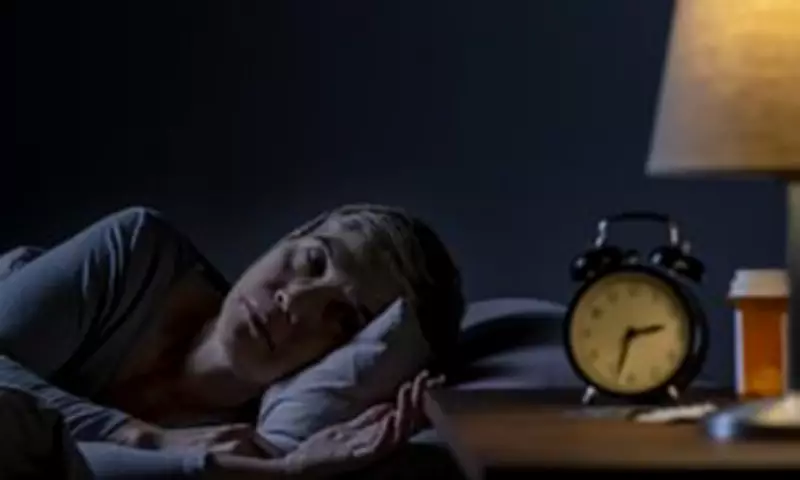
Most people experience nighttime anxiety - waking in the early hours gripped by panic about past or potential problems. Even anxiety experts like O'Kane understand this experience and share effective coping methods.
'If I wake at three in the morning and I know that I'm in overdrive, I always stop and check in with my body first,' O'Kane describes. 'I'll do a quick body scan and work out where I'm feeling tension - most of the time it's in my chest or throat. I'll focus on this point and breathe - in for four counts through the nose, hold for five, and then release with a long exhale. And I make a decision, that though there are lots of worries around at the moment, I will not engage with them.'
The natural tendency when waking anxious involves panicking about returning to sleep and counting remaining hours, but O'Kane recommends accepting the present moment instead. 'I remove the pressure to sleep - sleep will come when I need it to,' he states.
Another powerful technique involves designated 'worry time' an hour or two before bedtime. 'Write down all of the things that you're worried about and ask: do I have control over this? Is there any immediate action I can take to address any of these worries?' O'Kane suggests. Some worries might have actionable solutions like making phone calls or sending emails, but 'the majority of things will be more like "I can't do anything to solve the crisis in the Middle East today", in which case you then say "Am I willing to park these worries?"' O'Kane explains. 'It doesn't mean that you're avoiding or denying them, you're just deciding that it's not for now.' Addressing worries during rational daytime moments provides evidence that they don't require immediate nighttime attention.
Comprehensive Anxiety Management Resources
For those seeking additional support, O'Kane's BBC Maestro course 'A Life Less Anxious' offers practical, everyday tools drawn from over 25 years of clinical experience. The course helps individuals manage anxiety, emotional overwhelm, and modern life pressures through sustainable approaches rather than quick fixes. It reframes anxiety as something to understand and work with collaboratively rather than constantly battling against.