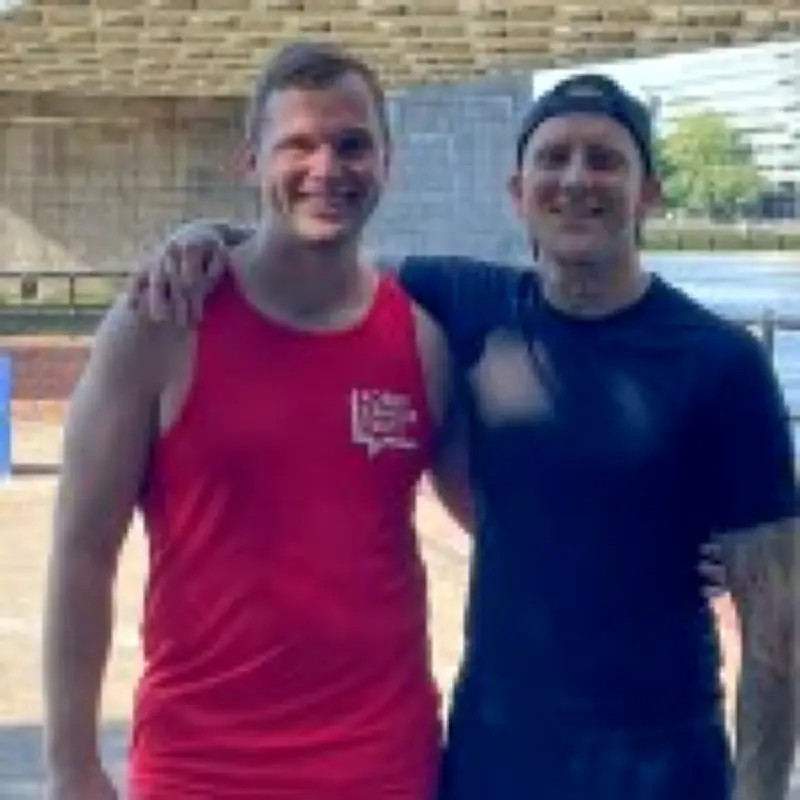
Tom Williams, 28, from Clacton-on-Sea, met Callan Rogers through The Robin Cancer Trust after both were diagnosed with testicular cancer as young men. The pair bonded instantly over their shared experience. 'He was also in that war, so you both understand what you went through without saying it,' Tom told Metro. 'We just clicked as soon as I saw him and we had an instant connection. He was really inspiring for me.'
Diagnosis and Treatment
Tom spotted a lump on his left testicle in 2019 and visited his GP the next day. His father had lost a friend to testicular cancer, so he didn't delay. A biopsy confirmed stage two testicular cancer. 'One minute, my life was going great, and the next minute, I was completely turned upside down,' Tom recalled. He had his left testicle removed in January 2020, followed by nine weeks of chemotherapy. In May 2020, during the pandemic, he was given the all-clear.
Tom returned to work in sales at a lettings company in June 2020 as lockdowns eased. 'It was way too soon, looking back now, because I was just trying to get back to some sort of normality,' he said. He completed the Brighton Marathon that September for Cancer Research UK, but after the race, he faced a 'build-up of emotions.' He described a 'mental breakdown' one Saturday night: 'I began pushing the table away, sobbing with my hands in my face. I've never cried like that.' Macmillan provided 15 counselling sessions, which he found 'really beneficial.'

Meeting Callan
Tom was introduced to Darren Couchman, a family friend and fellow survivor who works as Community Engagement Manager at The Robin Cancer Trust, the UK's only testicular, ovarian and germ-cell cancer charity. While filming a video for the charity in early 2024, Tom met Callan, also from Essex. They bonded over fitness. 'He was big into his fitness because of his fire testing job; he wanted to be fit for it and eat clean,' Tom explained. 'He would finish his job really early after a couple of hours and go to the gym and spend all day in the gym, or all afternoon in the gym, so he couldn't understand why he got cancer because he was really fit. He was so positive, he just thought he was invincible.'
Although Callan's treatment made meet-ups difficult, they messaged 'often.' They attended an MMA event together—a hobby Tom credits Callan for, after he joked it would help channel his aggression on the rugby pitch. Tom also took part in a charity run that raised thousands for charity and Callan's treatment. He now joins Callan's loved ones each year for a sponsored 10k around London named #runforCal. 'We also did a run with all his friends and family, and he raised thousands of pounds for charity and for his treatment,' Tom added.
Loss and Grief
While Tom went into remission, Callan's cancer progressed to stage four. He died in October 2024 at age 28. Tom recalled feeling 'so helpless' and 'triggered.' 'I didn't really want to go to the funeral,' he explained. 'I wanted to just deny it, I didn't want to accept that it was real. But, deep down, I knew that I had to go and show my respects.' At the funeral, Tom found it 'really tough.' He said: 'I was sitting there, trying to be strong, and I just remember feeling like I wanted to cry. If it's a family member that passes away, you can confide in your brothers, or your uncles, your aunties, or somebody. Whereas I was feeling all this grief, and I didn't know who to talk to. I didn't really have the relationship with his family at the time, and didn't want to go too deep and put my problems onto them.'
Over time, Tom grew closer to Callan's loved ones through fundraising. He reached out to Callan's girlfriend to offer support. 'I found that quite comforting,' he said. 'Even just little things, like messaging her the Robin Cancer Trust number, made me feel good, because I'm helping in a way.' Tom struggled with survivor's guilt, but it 'seems to be passing over time.' He explained: 'You question why you got to live and others haven't. But at the same time, this makes me feel very lucky and gives me the drive to go on and live my life the best I can.'

Looking Forward
Tom channeled his grief into fundraising and finally entered the Sydney Marathon, something he had always dreamed of doing. 'I kept putting it off,' he said. 'But Cal said to me before he passed away, “just go and do it,” so I stopped putting it off. I channelled the grief into the fundraising I was doing for him.' Tom is now in a relationship and says things are 'really good.' He added: 'Coming towards the end of my 20s, I definitely want to have a big family. I'd like to get married, have some kids and just be a family man. That's the goal.'
Tom hopes that by talking about Callan, others may recognise testicular cancer symptoms earlier and seek mental health support. The Robin Cancer Trust holds the annual #runforCal & Walk London, a 10K run or walk through London on July 2. Testicular cancer is most common in men aged 15 to 49. Symptoms include a lump or swelling in the testicle, the testicle getting bigger, ache or pain in the testicle or scrotum, a heavy, firm or hard scrotum, sore or swollen chest, back or lower tummy pain, unexplained weight loss, cough, or difficulty breathing or swallowing.