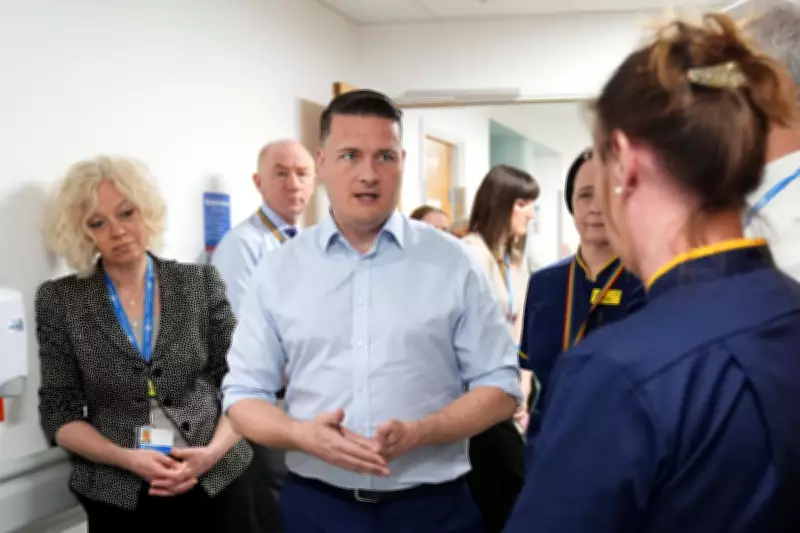
There’s too much obfuscation, too much passing the buck and giving lip service. That’s how the now ex-health secretary, Wes Streeting, described previous attempts to tackle the crisis in NHS maternity care, in a passionate speech last year. But during his two-year tenure at the helm of the Department of Health and Social Care, campaigners say it’s often been him who has obfuscated, passed the buck and given lip service to issues without making good on his promises – particularly when it comes to women’s health.
The Labour MP for Ilford North resigned his ministerial post last week in protest at Labour’s poor performance in the local elections and has since confirmed he will challenge prime minister Keir Starmer in any leadership contest. However, a YouGov poll shows that most Labour members think he was wrong to resign as health secretary (57 per cent) and that Starmer would beat Streeting in a leadership challenge by 65 per cent to 15 per cent.
Maternity campaigners say they are “disappointed and frustrated” by Streeting deserting his post, believing he has broken promises to push through desperately-needed improvements to maternity services.

Campaigners Voice Concerns
“For more than 10 years, maternal health has been devastated by politicians who failed to recognise it as a public health crisis. Streeting has done something arguably more dangerous – he said many of the right things, and then behaved just as his predecessors have done,” says Jo Cruse, founder of maternity campaigning group Delivering Better. She describes his tenure as “political gaslighting on a grand scale”, adding: “He was so busy using the cause to bolster his political profile that he appeared to have forgotten he actually needed to do something meaningful to change it.”
His resignation as health secretary comes just a month before the expected publication of the national investigation into maternity and neonatal care in England, led by Baroness Amos, which Streeting commissioned. Streeting had pledged to “personally lead” a taskforce to see its recommendations put into action – but his resignation means that will no longer happen. Now, the Department of Health and Social Care has announced the appointment of a new maternity adviser, Michelle Welsh MP, who was herself harmed by poor maternity care and has long campaigned for change. But this is unlikely to rebuild the trust that Streeting has lost.
Broken Promises on Maternity Services
When Streeting came into office in July 2024, he described the state of maternity services as a “cause for national shame” and an issue which “keeps him up at night”. Maternal death rates in the UK are at their highest levels in 20 years, and half of NHS maternity departments in England require urgent safety improvements, while maternity negligence claims account for 42 per cent of all NHS England compensation payouts – costing the taxpayer £1.3bn in 2024/25. But he then spent months ignoring repeated requests to meet with victims of poor care. It was only after his office was exposed in October 2024 for sending a crassly insensitive “cut and paste” dismissal to a mother whose baby had died, that he finally agreed to meet families.
Even then their stories did not provoke the kind of immediate action that campaigners had hoped for and which was desperately needed. In June last year, he commissioned the Amos investigation, and in January, a report by MPs found his department’s “failure to address problems with maternity care” had led to “avoidable harm and unnecessary costs”. With no publication date for the inquiry given and as Streeting leaves his post, campaigners have been left in dismay.
“A change of health secretary at this moment is the last thing women, babies and midwives need at such a critical time for maternity services,” says Gill Walton, chief executive of the Royal College of Midwives. “[They] cannot be kept waiting because of a change at the top.”

With one in four women experiencing a negative birth experience, around 300,000 will have suffered harm during his tenure. “A health secretary who truly prioritised the lives, health and experiences of women and families would have jumped on the opportunity to take action, fund services properly and prioritise running a safely staffed, non-discriminatory maternity service,” says birth educator and author Megan Rossiter. “Instead we have someone who’s stalled at every opportunity, reduced funding, and wasted money.”
Glimmers of Care, but Insufficient Action
To his credit, Streeting appears to have been genuinely moved by patient stories. Bereaved mother and maternity taskforce member Lauren Caulfield says he “really does care and did want to do good”, recalling him breaking down in tears during conversations with families. “He was willing to accept when he’d got it wrong and change his decisions,” she adds.
He also agreed to commission an independent review into around 1,000 maternity cases in Sussex after lobbying from families. Katie Fowler, whose daughter Abigail died as a result of the care she received in 2022, says she is “grateful” Streeting listened, but highlights how “it took two years of families sharing their worst experiences and fighting for him to finally see that it was the right and necessary thing to do”.
Campaigners fear there is a real danger that the appointment of another health secretary now – England’s sixth since the Covid-19 pandemic – will derail any progress. “If the new health secretary will also require many months of convincing to take action, this is a setback we do not have time for,” Fowler adds. Replacement health secretary James Murray may have little appetite to lead the maternity taskforce or act on the Amos report. Streeting certainly has a track record of not following others’ work: a plan to improve maternity care by his Conservative predecessor Victoria Atkins reportedly “went in the bin” after he was elected, while he has never implemented recommendations made in the 2024 Birth Trauma Inquiry report by then-Tory MP Theo Clarke – parliamentary insiders speculate he did not want to give her credit.
Broader Pattern of Neglect
Streeting’s resignation reflects a broader pattern of women’s issues being deprioritised by the government. It comes after Jess Phillips quit her role as safeguarding minister, sharing how “real change” in tackling violence against women and girls typically only came after “threats made by me in light of catastrophic mistakes” – such as Starmer’s decision to hire Peter Mandelson despite being aware of his continued links to sex offender Jeffery Epstein.
Over his two years as health secretary, Streeting made several grand promises to improve women’s healthcare, accepting women had been made to feel like “second-class citizens” by the NHS. While women in the UK live longer than men, they spend a greater proportion of their lives in poor health, and gynaecology waiting lists remain among the highest in the NHS. A King’s College London study in 2024 found women are more likely to be denied pain relief, while a government review found eight out of 10 have had their concerns dismissed by medical professionals. But his most decisive acts have been cuts: dropping ring-fenced funding for Women’s Health Hubs (which aimed to ensure women could easily access services like cervical screening, contraception and menopause care in every region) and slashing budgets for improving maternity staffing and safety from £95m to just £2m in 2025/26.
When Streeting announced the landmark 10 Year Plan for the NHS in July 2025, it included barely any mention of specific policies targeted at women’s health, save for the introduction of home-testing smear kits (a policy which is still to be implemented). In scrapping targeted funding for Women’s Health Hubs, he dismissed a key recommendation of the 2022 Women’s Health Strategy. Launching a “renewed” version of that strategy last month, he said it would end the “gaslighting” and “medical misogyny” women face accessing healthcare. But it soon emerged that his Men’s Health Strategy, launched five months earlier, had been allocated 60 per cent more new funding than the women’s equivalent.
For all his rhetoric, women got very little from Streeting’s tenure as health secretary – and not everyone is convinced he will represent their concerns if he lands the top job. As Rossiter puts it: “Streeting says all the right things, but what he provides is lip service, not meaningful change.”