
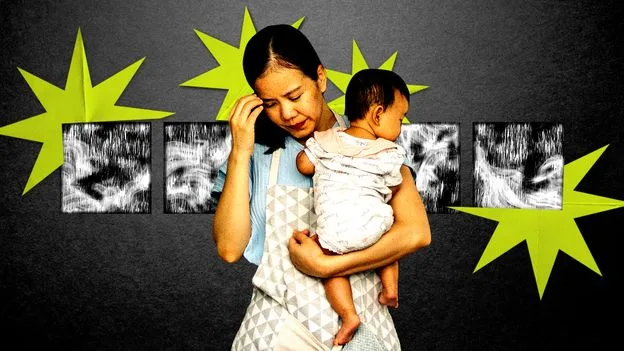
Parenting is often described as exhausting, but new research suggests that mothers and fathers in ancient times were probably far less sleep-deprived than today's caregivers. A Reddit thread asking how tiring parenthood is drew more than 400 responses, with many describing the experience as "literally constant".
Modern parents face pressures that would have been unfamiliar to our ancestors, including raising children without a strong community support network and juggling work with childcare duties. While sleep patterns certainly change after having a baby – from night feeds to early morning starts – evidence indicates that the overall loss of sleep may be smaller than commonly thought.
A German study of nearly 40,000 people found that first-time mothers lost an average of one hour of sleep per night in the first three months after birth, while fathers lost a third of an hour. However, parents with at least one child under six still reported around seven hours of sleep per night, only 10 to 14 minutes less than non-parents. Similarly, a 2024 US survey found that parents of young children typically spent between eight and nine hours in bed each night, and a French study recorded average sleep of eight hours or more for both mothers and fathers over a three-year period.
The disparity between actual sleep and perceived exhaustion becomes even clearer when looking at contemporary hunter-gatherer societies. Evolutionary anthropologist David Samson, who spent three months living with the Hadza in Tanzania, noted that nearly all adults – many of them parents – said they were very satisfied with their sleep. In contrast, parents in industrialised nations tend to rate their sleep quality poorly.
This suggests that factors other than sheer sleep duration, such as stress, isolation and pressure, may be driving modern parental fatigue. By understanding how our ancestors slept, researchers hope to offer new guidance for today's exhausted mothers and fathers.




