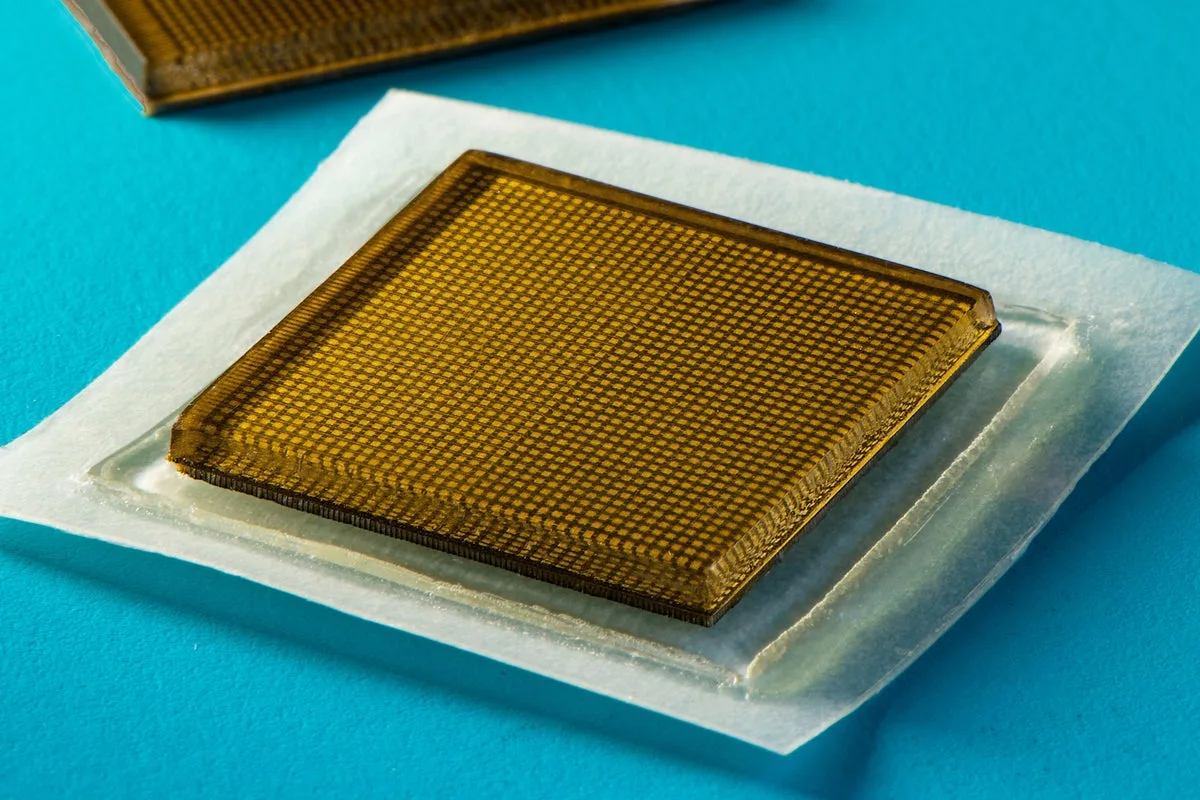
Engineers at the Massachusetts Institute of Technology have created stamp-sized ultrasound stickers that can provide continuous live images of internal organs for up to 48 hours. The technology, described as a breakthrough in wearable imaging, could eventually allow patients to monitor their health at home or even observe unborn babies in real-time via a smartphone.
The stickers, which combine a stretchy adhesive layer with a rigid array of transducers, produce high-resolution images of major blood vessels and deeper organs such as the heart, lungs, and stomach. In a study published in the journal Science, the devices were tested on volunteers performing activities like jogging, cycling, and weightlifting, capturing detailed physiological changes such as heart shape during exercise and stomach distension after drinking.
Currently, the stickers must be connected to instruments that translate sound waves into images, but the team is working on wireless versions. Professor Xuanhe Zhao, a mechanical engineer at MIT, envisions a future where a few patches communicate with a phone, and AI algorithms analyse the images on demand. He believes this marks a new era of wearable imaging, allowing people to see their internal organs with simple patches.
The researchers also suggest immediate applications in hospitals, where the stickers could be used like EKG monitors to continuously image organs without requiring a technician to hold a probe. The team is developing AI software to interpret the images and hopes the stickers could eventually be sold over the counter, similar to plasters.