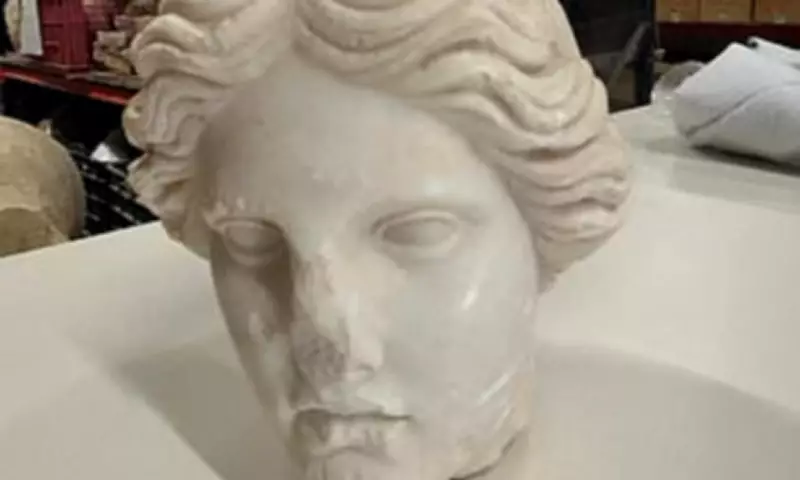
A remarkably well-preserved marble head, estimated to be around 2,000 years old, has been discovered on a beach in Alicante, Spain, during regeneration work. Archaeologists believe it is one of the most significant Roman-era sculptural finds in the region.
Discovery at Almadraba Beach
The head was found by workmen carrying out regeneration projects on the popular Almadraba beach. Experts were called to the scene and identified the artifact as dating back to the High Imperial Roman period, specifically the first or second century AD. The white marble head, which measures 22.22 centimetres in height and 19.78 centimetres in width, is in near-perfect condition, with only minor damage to the nose.
Possible Depiction of Venus
Archaeologists suggest that the head may represent the goddess Venus, the Roman goddess of love, beauty, and fertility. The hairstyle shows Hellenistic influence, with wavy hair pulled back and a middle parting, typical of idealized representations of divinities like Greek Aphrodite or Roman Venus. The bust is believed to have once been placed on a base in Roman patrician houses, though further tests are needed to confirm this.

Historical Context
The area has been designated an archaeological zone for over 15 years, following the discovery of a Roman villa linked to Lucentum in 2009. The villa is thought to have belonged to a prominent Roman citizen. The newly discovered head adds to the rich history of the site, which also includes foundations of houses, abundant ceramic remains, and coins from the period between the third century BC and fourth century AD.
Excavation and Impact
Regeneration work at Almadraba beach has been paused to allow for a full excavation. The beach was scheduled to reopen for the peak summer season, but this has been delayed due to the find. Councillor for culture, Nayma Beldjilali, described the discovery as potentially one of the most important Roman sculpture finds in the history of Alicante and the province. José Manuel Pérez Burgos, head of integral heritage, emphasized the cultural significance, noting that the bust reflects the Pax Romana and the expansion of the Roman Empire under Emperor Caesar Augustus.