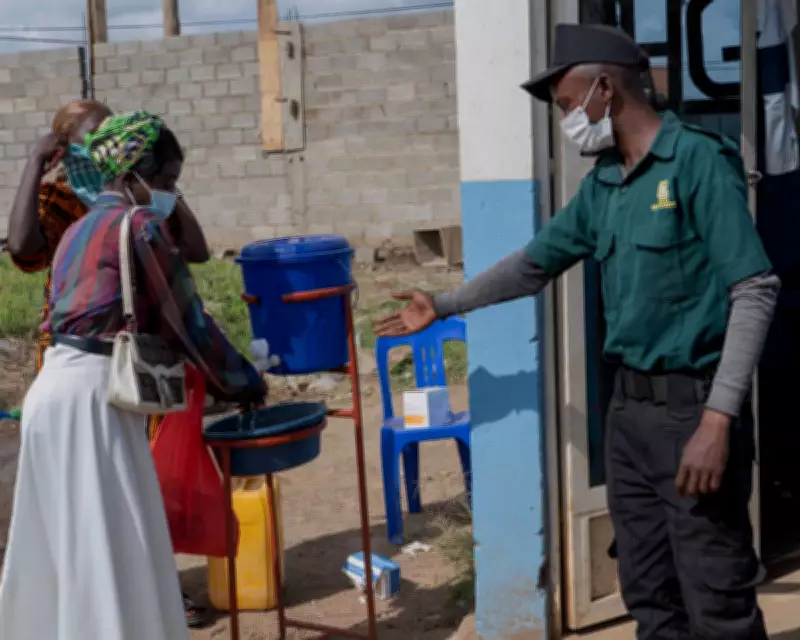
Residents of Ituri province in eastern Democratic Republic of the Congo (DRC) are living in growing fear as a new outbreak of Ebola spreads, nearly six years after the last outbreak in the region ended. The World Health Organization (WHO) announced the outbreak last week, and cases have been reported in multiple areas, sparking panic among locals.
Fear and Economic Strain
“On public transport, in bars and at mass gatherings, everyone is talking about Ebola,” said Gloire Mumbesa, a resident of Mongbwalu, a mining town in Ituri. He noted that cases have been reported locally and panic is spreading due to the lack of a vaccine for the Bundibudyo strain. “The fear is that this disease may spread to many other areas,” he added.
Dieudonné Lossadekana, a resident of Bunia city where the first suspected case was reported, expressed shock at the resurgence. “We’re stunned by the resurgence of Ebola in our region. We’ve already recorded several dozen deaths. For us, it’s heartbreaking,” he said.

The economic impact is a major concern. Residents fear authorities may impose restrictions that hinder their ability to earn a living in a region already plagued by armed conflict and poverty. “We live in a region where poverty is rife and people live from hand to mouth,” said Claude Kasuna in Irumu territory. “When a health emergency like this one strikes, it hits us hard economically.”
Outbreak Details
WHO Director General Dr. Tedros Adhanom Ghebreyesus declared the outbreak a “public health emergency of international concern” after more than 300 suspected cases and 88 deaths were reported in the DRC, along with two deaths in neighbouring Uganda. The majority of cases are in Ituri province, a business hub bordering Uganda and South Sudan, which has been the centre of a long-running conflict between Hema and Lendu militias fighting over land and minerals. The fighting has killed over 50,000 people since 1999.
A health worker who was the first suspected case reported fever, haemorrhaging, vomiting, and other symptoms on 24 April and died at a medical centre in Bunia, according to WHO. Jean Pierre Badombo, a former mayor of Mongbwalu, told Reuters that people started falling ill in mid-April after a large open-casket funeral procession arrived from Bunia. “After that, we experienced a cascade of deaths,” he said.
Government Response
On Monday, Congolese Health Minister Samuel Roger Kamba announced the government would open three Ebola treatment centres in Ituri. The WHO regional office for Africa said 35 experts and seven tonnes of emergency medical supplies had arrived in Bunia.
Elsewhere in eastern DRC, one case was reported in rebel-controlled Goma—a woman who travelled from Bunia after her husband died of the disease. Heather Kerr, DRC country director at the International Rescue Committee, said the conflict made containing Ebola “all the harder.” “Eastern DRC’s years of conflict and displacement have left health systems on their knees. With dozens of lives already lost and an already overstretched health system, we need to act fast,” she said.
Manenji Mangundu, DRC country director at Oxfam, said the outbreak was “hitting a country already stretched to breaking point” due to ongoing conflict and years of aid cuts.
The Virus and Challenges
Ebola, first identified in 1976 in what is now the DRC, is a highly contagious and often fatal viral disease. It spreads through body fluids and causes organ damage, blood vessel impairment, and severe bleeding. The current outbreak involves the rare Bundibugyo variant, which has no approved treatment or vaccine. Dr. Jean Kaseya, director general of Africa CDC, said he was in “panic mode” due to the lack of a vaccine and stressed the need for manufacturing capacity on the continent.
Jean-Jacques Muyembe-Tamfum, director general of the National Institute of Biomedical Research in the DRC and co-discoverer of Ebola, said candidate compounds for a Bundibugyo vaccine were expected to enter trials by the end of May or in June. In the meantime, the government is implementing public health measures like protecting healthcare workers and treating cases based on symptoms. “This is how we brought the Bundibudyo strain outbreak under control in 2012 in Isiro, not far from Ituri,” he said.

Historical Context
This is the 17th Ebola outbreak in the DRC. From August 2018 to June 2020, the country recorded the second largest outbreak globally, centred in North Kivu and Ituri provinces, causing over 2,000 deaths. Authorities must address enduring stigma, misconceptions, and rumours associated with Ebola. Kasuna said, “Our people tend to believe in false myths rather than rely on scientific evidence. We need to raise awareness to save people’s lives.”