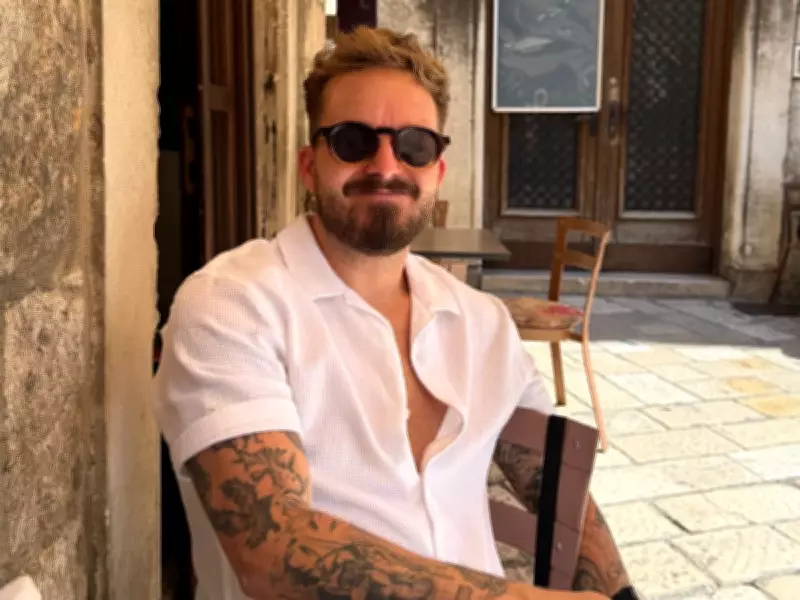
A man who dismissed his hearing loss and leg weakness as signs of getting older was shocked to discover they were symptoms of a rare genetic brain tumour. Michael Archer, 32, from St Neots in Cambridgeshire, initially joked with colleagues about going deaf and feeling less strong after turning 30. However, in September 2022, he had his ears cleaned and later saw a physiotherapist, who suspected a neurological issue and referred him back to his doctor. In summer 2024, an MRI at Hinchingbrooke Hospital and blood tests led to a diagnosis of neurofibromatosis type 2 (NF2), a rare condition causing non-cancerous tumours on nerves, especially in the brain and spinal cord.
A Shocking Diagnosis
Michael said: 'When I started working in an office, it became an inside joke that Michael is deaf. I’d always been fit and played football, but my body stopped working as it should. I felt weaker, and my coordination felt off. I was so scared after my diagnosis, my whole world had been completely changed and tipped upside down.' His symptoms worsened after his 30th birthday, prompting a doctor’s visit, but initial checks showed no concern. Only when he saw a physiotherapist in March 2024, believing his problems were muscular, did further investigations begin.
He told Talk to the Press: 'I could have brushed these symptoms off as just getting old, as they really started after I hit 30. I was really blasé about it and didn’t expect anything bad at all. I sat with the doctor and he did some tests on my legs and then showed me two tumours in my brain and two on my spinal cord. I was stunned and just couldn’t grasp what was happening to me. I cried the whole way home to my friends and thought f*** I’m going to die.'

Impact and Treatment
The tumours compress his spinal cord, causing leg stiffness and coordination problems. After diagnosis in October 2024, Michael turned to drinking. He said: 'It sounded like a death sentence, so my first reaction was complete depression. I started drinking heavily and struggling to cope, I basically got drunk to run away from the diagnosis for the first few months. Overnight, the whole life you imagine is gone and not going to be what you thought.'
Now treated at Addenbrookes Hospital, Michael faces surgery in October 2026. Afterwards, he will begin Avastin, a medication to halt tumour growth. One brain tumour has grown 3mm in six months, so he expects to take Avastin for life. He said: 'It is like a lottery where the tumours will grow. You are always uncertain, and you don’t know what’s around the corner.'
Turning Experience into Advocacy
Michael now uses social media to advocate for NF2 awareness, raising funds and connecting with others. He found online information 'pretty grim' and studies out of date. He said: 'I decided to go on Instagram and talk about my experience and see if I could connect with others in the same position.' His campaign, 'F*** NF2', includes content and t-shirt sales, with half the profits going to the Cure NF2 Foundation, a national charity supporting research.