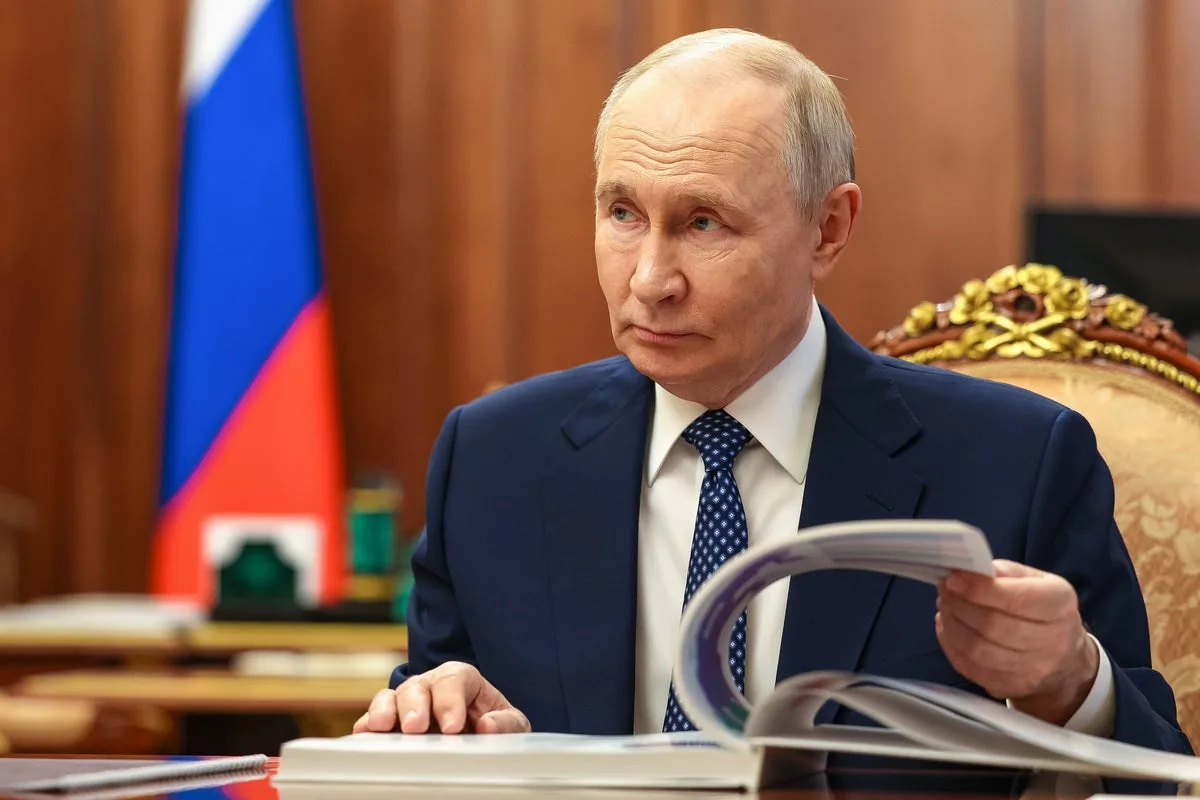
Putin Faces Rival Visions of War or Peace at Russia's Davos Forum
Putin Faces Rival Visions of War or Peace at Russia's Davos

President Vladimir Putin hosted Russia's premier annual investment conference in St Petersburg, where two rival visions for the nation's future clashed amidst the ongoing war in Ukraine. At the St Petersburg International Economic Forum, some participants advocated for Russia to continue its fight and prepare for global confrontation with the West, while others highlighted the economic benefits of ending a conflict that recently saw Ukrainian drones strike a St Petersburg oil terminal and naval base, bringing the war almost to the forum's doorstep.

Internal Debate Intensifies

These conflicting narratives underscore a significant internal debate among Russia's political and business leaders about the country's future direction, revealing the domestic influences shaping Putin's decisions after more than four years of war in Ukraine. Putin, 73, has long ruled by balancing the views of different Kremlin factions vying for influence.

Signs that the $3-trillion economy is stagnating as the war drags on with no end in sight have strengthened the arguments of some within the elite that the war should be ended and peace struck with the mediation of U.S. President Donald Trump. But some nationalists see the war as merely the first stage of a much deeper global confrontation with what they say is a declining West that means years or even decades of possibly global war.

Wide Pickt banner — collaborative shopping lists app for Telegram, phone mockup with grocery list

Nationalist Vision of Protracted Conflict

"We have to admit that we will be at war in the next few years, maybe for a couple of decades," said Andrey Bezrukov, a former spy arrested by the FBI in 2010 while living under a false identity in the United States. "It may be a very hot war, it may be a creeping war. Even if it goes to other regions, we will have two generations that can be considered basically to be at war. And we need to learn how to live with this war," Bezrukov said to applause in a packed hall.

Nationalists have said Russia must get in shape or face potential collapse and destruction in what they see as an increasingly dangerous world. Among ideas put forward by nationalists at the conference were streamlining decision making, developing technology, and changing the perception of the Russian army within Russian society.

Forum Showcases Military Tech

In pavilions once graced each year by financiers from Western companies such as Goldman Sachs and Citi, drones and weapons were on show, while cyber companies advertised facial recognition technology and advanced cyber defensive programmes which utilise AI. Russia controls about one-fifth of Ukrainian territory following Putin's decision to send in tens of thousands of troops in February 2022, but its advances on the battlefield have slowed this year.

Russia has seized most of the Donbas region in eastern Ukraine in fighting that began there in 2014 but has been unable to take the remaining part amounting to less than 10% of Donbas. Ukraine says it will not withdraw its forces from the part of Donbas it still holds and that it will never recognise Russian sovereignty over Ukrainian territory Moscow has seized.

Stalemate and Economic Pressures

With stalemate at U.S.-brokered peace talks, the war has dragged on, and the Kremlin says the U.S. is now preoccupied by its war with Iran. "Unfortunately, they are paying less attention," said Russian Foreign Ministry spokeswoman Maria Zakharova. Several prominent figures in Russia have tried in the past to warn Putin about the economic consequences of the war. Kirill Dmitriev, Russia's point man in contacts with the Trump administration, has been touting the potential economic benefits of a peace deal.


"The question is: does this war end or do we stare into a much tougher future?" one Russian participant told Reuters on condition of anonymity because of the sensitivity of the matter. Putin says Moscow does not intend to attack NATO, whose member states' combined economies dwarf that of Russia even though it is the world's biggest supplier of natural resources.

Pickt after-article banner — collaborative shopping lists app with family illustration

Ultra-Nationalist Rhetoric

Ultra-nationalist Russian ideologue Alexander Dugin, whose daughter Darya was killed in a 2022 car bomb that Moscow blamed on Ukraine, told reporters the war in Ukraine "will end either with Russia's victory or it will never end." "We need to gather all our strength, gather all of our will and stop pretending that we are a peaceful country that goes off to barbecues or summer vacations," he said. Dugin said Russia would not attack the West. But, asked to sum up Russia's relations with the West in the coming years, he said simply: "War."


