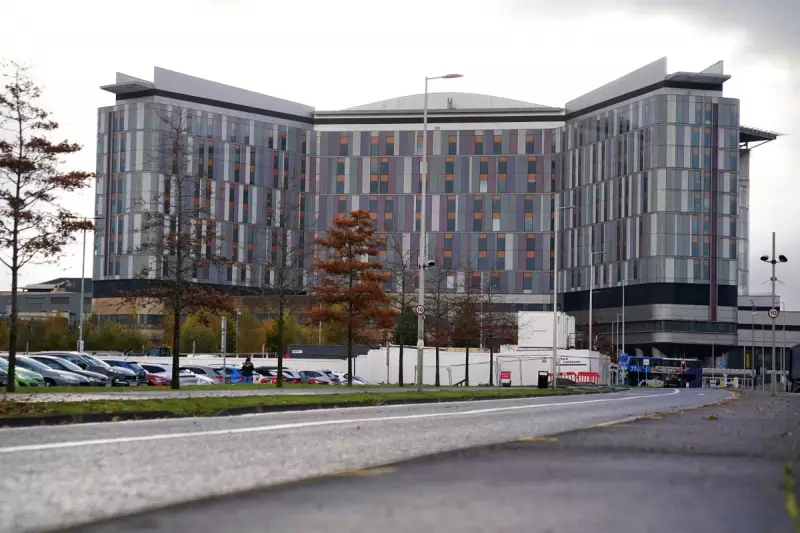
An NHS health board has publicly accepted that a probable causal link existed between infections contracted by patients and the water system at a major Scottish hospital campus.
Inquiry Focuses on Hospital Design and Construction
The admission forms part of the ongoing Scottish Hospitals Inquiry, which is scrutinising the design and construction of the Queen Elizabeth University Hospital (QEUH) and the adjoining Royal Hospital for Children in Glasgow. The inquiry was established following a series of deaths linked to infections, most notably that of 10-year-old Milly Main in 2017.
Milly died after contracting an infection while being treated on the cancer ward at the Royal Hospital for Children, which is located on the same campus as the QEUH.

Health Board Revises Its Position
In newly published closing submissions to the inquiry, NHS Greater Glasgow and Clyde (NHSGGC) stated that while a definite link cannot be conclusively proven, it now accepts a probable connection. The board's submission marks a departure from its earlier stance.
"NHSGGC accepts that, on the balance of probabilities, there is a causal connection between some infections suffered by patients and the hospital environment, in particular the water system," the submission states.
The board specifically acknowledged that it is "more likely than not" that a significant number of additional bloodstream infections in paediatric haemato-oncology patients between 2016 and 2018 were connected to the state of the hospital's water infrastructure.
Remedial Actions and Ongoing Scrutiny
NHSGGC noted that infection rates began a steady decline after remedial measures, including work on the water system, were initiated in 2018. The inquiry is now moving towards its final phase, with oral hearings set to commence on Monday, 20 January 2026.
When questioned about the submissions, an NHSGGC spokesperson reiterated the board's commitment to supporting the inquiry's investigations. A Scottish Government spokesperson stated that the statutory public inquiry was established to provide answers for families and to ensure lessons are learned for future NHS projects.
The government, as an independent core participant, said it would be inappropriate to comment further while the inquiry is ongoing.