A conundrum that millions of people would like to unravel—what is the secret to happiness—may finally have an answer, according to scientists. Experts from the University of Oxford surveyed 80,000 individuals across 76 countries about their happiness and life satisfaction, and the results revealed five key traits among happy people.
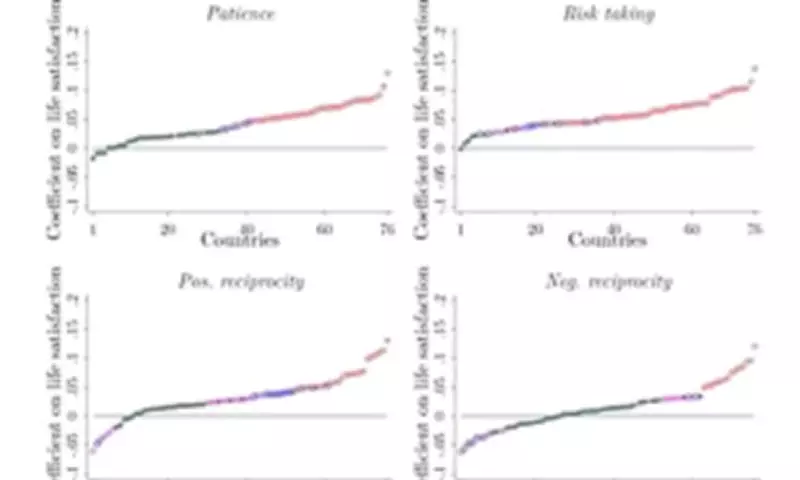
Across all nations, those who were more patient, risk-taking, reciprocal, altruistic, and trusting reported higher levels of happiness and life satisfaction. This suggests that wellbeing depends on more than material comforts alone, according to the researchers. 'A potential lesson for stakeholders such as businesses and governments could be to promote initiatives that build stronger preferences in order to increase wellbeing,' they explained. 'Initiatives that make people more patient, risk taking, reciprocal, altruistic and trusting could all bear the promise of also increasing wellbeing.'
Key Traits Linked to Happiness
The study, published in the International Journal of Happiness and Development, aimed to determine what drives wellbeing beyond income and personal characteristics. The team carried out surveys on happiness and life satisfaction with 80,000 people across 76 countries, revealing a correlation between life satisfaction and five key traits.

Patience and Risk Taking
Firstly, the team uncovered a link with patience and risk taking. 'Life satisfaction is significantly correlated with patience,' they explained. 'Risk taking is also significantly correlated with life satisfaction with a similar coefficient as patience.'
Positive and Negative Reciprocity
Next, they found that people were more satisfied with their lives when they had high levels of both positive and negative reciprocity. The team said: 'The results for positive and negative reciprocity imply that higher willingness to both reward good behaviour and punish unfair behaviour is associated with higher life satisfaction. In other words, being more willing to respond to actions from others, whether fair or unfair, correlates with higher life satisfaction.'
Altruism and Trust
Finally, altruism and trust were 'significantly correlated' with life satisfaction. The experts added: 'The coefficients are remarkably similar for the different regions of the world.'
The study comes shortly after a survey revealed that Brits reach their peak health and happiness at age 47. That's good news for 47-year-old celebrities, including Kourtney Kardashian, James Corden, and Zoe Saldana—not to mention NASA astronaut Christina Koch, who recently flew around the moon. The survey, commissioned by TePe, found that Brits feel fitter, happier and more confident than ever in their late 40s. According to Miranda Pascucci, Head of Clinical Education and Dental Therapist at TePe, this comes as a result of focusing on internal health over appearance. 'As people get older, many begin to realise that health isn't just about what's visible,' she explained. 'It's about how you feel and how well your body functions.'
Generosity and Happiness
Previous research from 2017 also found that being generous really does make people happier. An international team of experts discovered that neurons in an area of the brain associated with generosity activate neurons in the ventral striatum, which are associated with happiness. A group of 50 volunteers in Switzerland took part in a spending experiment, with each given 25 Swiss Francs per week for four weeks. Participants performed an independent decision-making task, in which they could behave more or less generously while brain activity was measured using functional magnetic resonance imaging (fMRI). They were asked to choose to give between three and 25 francs of their money as a present to a recipient. The researchers found that participants who had committed to spending their endowment on others behaved more generously in the decision-making task and also discovered greater self-reported increases in happiness as compared to the control group. The full results were published in the journal Nature Communications.