
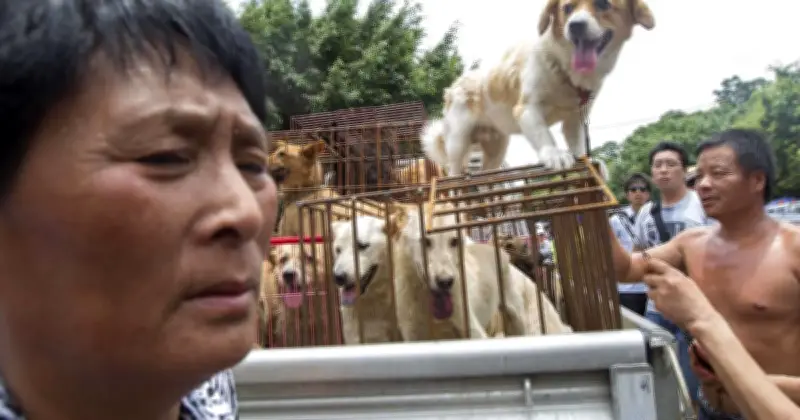
The controversial Yulin Lychee and Dog Meat Festival in southern China has commenced once again, drawing widespread condemnation from animal welfare groups and international observers. The annual 10-day event, which began in 2010, is expected to result in the slaughter of thousands of dogs and cats before it concludes on June 30.
Animal Cruelty and Public Health Concerns
Animal welfare advocates report that animals are transported long distances in cramped, unsanitary conditions without food or water before being brutally killed. At the festival's peak, approximately 10,000 dogs and cats were killed and consumed. However, due to persistent national and global pressure campaigns, the number has reportedly dropped to an estimated 2,000 to 3,000 dogs during the peak period of June 20–22, according to animal welfare groups.
Campaigners allege that many animals are stolen from homes or snatched from streets. Images released by activists show frightened animals crammed into wire cages awaiting slaughter. Last month, Humane World for Animals released a video depicting animals in cages with no food or water, urging the public to demand an end to the trade.
Local Authorities Distancing Themselves
Local authorities in Yulin have distanced themselves from the festival since 2014, but the event continues to attract participants and critics alike. Critics argue that the festival has become emblematic of the wider dog and cat meat trade in China.
Recent Breakthroughs
In a recent development, a dog slaughterhouse in Yulin was permanently shut down through collaboration between Chinese animal welfare groups and international activists. Nine dogs were rescued, including three wearing collars believed to be stolen pets.
The festival's continuation highlights ongoing challenges in addressing animal welfare issues in China, despite growing awareness and activism.




