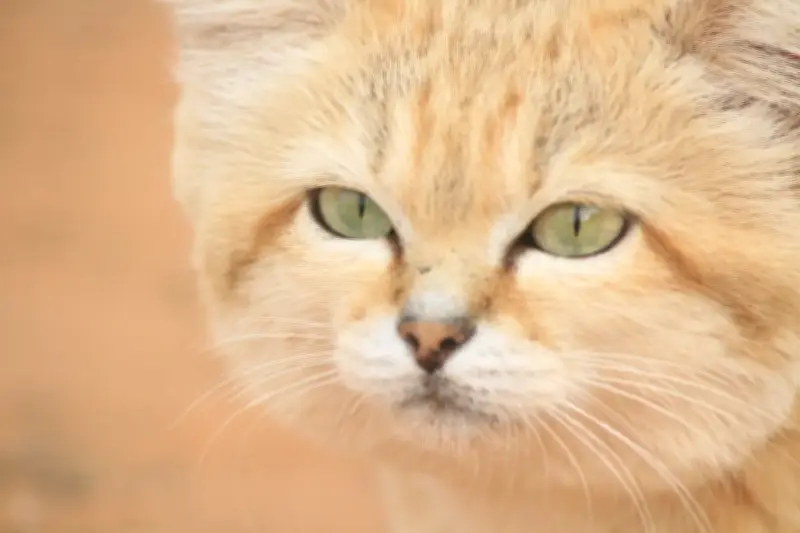
A chance YouTube video uploaded in 2017 by wildlife photographer Mohammed Almuntasir has led to the first material evidence that the sand cat (Felis margarita), the world's only felid adapted to true desert conditions, exists in Libya. The 18-second clip, filmed in the remote dunes of south-west Libya, initially sparked disbelief among viewers. “When I posted it, nobody believed it had been filmed in Libya,” Almuntasir said. “Everyone denied it, but I kept insisting that the cat is here, in several places; one of them was only 70km from Zintan, where I live.”
Scientific Collaboration and Groundbreaking Research
The video caught the attention of Firas Hayder, a zoologist specialising in small carnivores and a postdoctoral researcher at Sol Plaatje University in South Africa. Hayder contacted Almuntasir, leading to an eight-year collaboration conducted almost entirely remotely. “I taught Mohammed the field research methods from South Africa – how to record GPS coordinates, how to document each sighting with photographs or video,” Hayder said. “He applied all of that across the south-western desert, collecting testimony from local Tuareg communities who know the terrain intimately.”
Their efforts culminated in a peer-reviewed study published in the Journal of Arid Environments in February 2026. The study documented the sand cat at 13 sites across the Libyan Sahara, as well as the Saharan striped polecat at eight new locations, seven of them outside the species’ recognised IUCN range. A high proportion of sand cat sightings — 15 out of 36 — were concentrated in Wadi Armet, an isolated valley roughly 1,000km south-west of Tripoli.
Challenges in the Field
Libya’s south-west is one of the least studied terrestrial environments in north Africa, with no protected areas, no camera trap infrastructure, no trained field teams and no functioning central authority to coordinate research. Smuggling networks operating across porous borders with Algeria, Niger and Chad make fieldwork physically dangerous. “The south-western regions of Libya are active with smuggling networks, so they are not safe,” Almuntasir said. “On one occasion we came under gunfire during one of our trips, which forced us to leave the area quickly.”
To find evidence of the sand cat, Almuntasir joined local hunters from Zintan on their expeditions into the desert, carrying a camera instead of a rifle. In some cases, he and his guides followed paw prints for days to locate a burrow, then pitched a tent and waited for the animal to emerge.
Implications for Conservation
The findings suggest that the species is more widespread and in better condition in Libya than previously believed, and that the country’s south-west may represent a strong refuge for desert-adapted species. The sand cat is one of a number of mammals considered threatened in Libya, including the cheetah, dama gazelle and sand gerbil. “There has always been a large question mark over Libya because of the scarcity of studies and surveys,” Ibrahim Elkahwage, head of the Libyan Wildlife Trust and the Libyan IUCN committee, said. “This research is an important contribution that could help reveal the enormous biodiversity hidden in the Libyan Sahara.”
However, the researchers also documented cases of sand cats being sold as pets in local markets and, in some cases, accidentally killed by hunters. Because sand cats feed primarily on rodents such as jerboas, as well as venomous snakes and scorpions, they play an important role in preventing cascading damage to the limited vegetation that sustains desert ecosystems. “All Libyans should be involved in conservation efforts,” Hayder said. “They need to feel a sense of responsibility, that these species represent their environment and represent their country.”