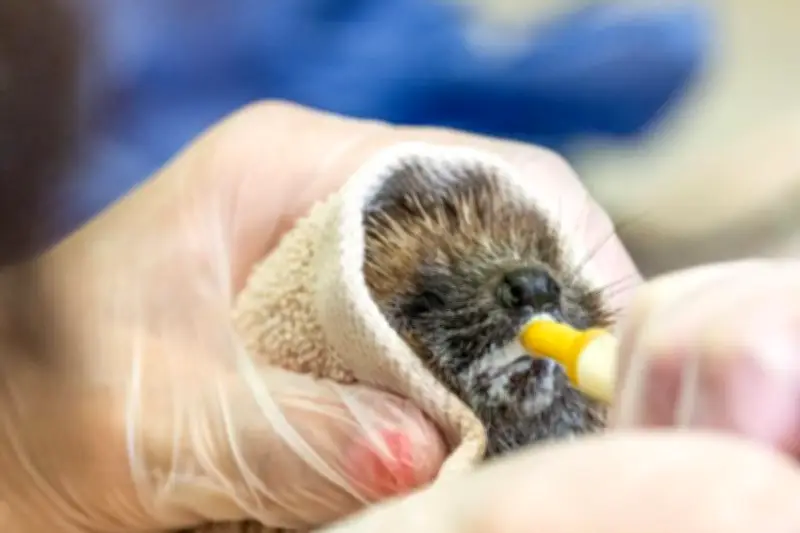
Animal rescue centres are “fit to bursting” with hedgehogs and foxes suffering from heatstroke during one of the hottest summers on record, the RSPCA said. Gardeners are being urged to create shaded spaces for wildlife struggling to keep cool during the scorching weather as the fourth heatwave of the year looms.
The animal welfare charity said two baby hedgehogs were found “in distress” in a back garden in Somerset and brought into the nearby West Hatch Wildlife Centre, where they are being cared for along with “several other recent admissions” due to the heat.
Record temperatures and rising admissions
Temperatures are expected to peak as high as 35C across south-eastern England on Wednesday. Record-breaking temperatures were recorded in both May and June, and July has been 3C above average across the UK, according to provisional Met Office data on the month so far.
Recent research from veterinary group Inspiring Vet Care found that in June this year its clinics treated 179 cases of suspected heatstroke – 66% higher than the 108 cases treated in the same month two years prior. Some 316 hedgehogs were admitted to the RSPCA’s four wildlife centres in June, a 56% rise on the 202 admitted in the same month the previous year.
RSPCA calls for public help
Amy Ockelford, a senior press officer at the RSPCA, told the Press Association that wildlife centres are operating at “maximum capacity” and are “fit to bursting”, and have seen an increase in admissions of hoglets and hedgehogs. She said: “These animals are usually not out in the daytime, but they’re coming out because they’re struggling to find food and water, and ending up with heatstroke.”
The RSPCA employee encouraged people to think about wildlife as well as pets, adding: “Keep out clean, cool water for wildlife and try and create shaded areas where you can for them to avoid the direct sun.” Ms Ockelford advised people to contact the RSPCA when they see wildlife in distress.
Other heat-related warnings
Meanwhile Royal Parks staff have been advised not to leave deckchairs under trees over fears branches will fall during hot weather. In a statement, a spokesperson for the charity – which looks after green spaces including Hyde Park and Kensington Gardens – said it has introduced the measure as an “additional precaution”.
The UK Health Security Agency (UKHSA) has issued an amber heat-health alert for the East Midlands, East of England, South East and London. The alert is in place from Tuesday to Thursday, and the agency warned that rising temperatures may increase health risks, particularly for vulnerable groups.
Sophie Barrett, a health policy and communications officer from Age UK, said that elderly bodies find it harder to regulate temperature. It is thought that 2,700 people died from heat-related causes in the May and June heatwave, and Ms Barrett said that over-85s account for more than 60% of these deaths. She told PA: “UK houses are built to retain heat, and particularly older buildings are made to keep heat in, so can become extremely hot.”
Age UK recommends not going out during the hottest part of the day, keeping the curtains and blinds drawn, and drinking plenty of fluids, among other measures.
NHS Blood and Transplant has issued an urgent plea to blood and platelet donors as blood supplies drop dangerously low due to the recent heatwaves. The impact of the hot weather has placed increased pressure on blood supplies, with stocks of certain blood groups currently at only half of what the NHS aims for, it said. O negative, B negative and Ro blood types are in particularly short supply, with O positive stocks also running low.
Even on regular warm weather days, blood donations can often drop by 5% to 10% due to an impact on donor iron levels. The recent extreme temperatures have rendered many donors unable to donate or sessions being unable to run. The NHS has also seen an increase in sickle cell patients requiring emergency transfusions and treatment due to the hot weather, leading to an increased demand for Ro blood, most common in donors of black heritage, and placing further pressure on O negative and B negative blood which must often be issued when not enough Ro blood is available.
“The need for blood never stops,” said Gerry Gogarty, director of blood and plasma supply at NHS Blood and Transplant. “Each donation has the power to save up to three lives.” More than 60,000 appointments have been made available for blood donation over the next six weeks, and the NHS is urging eligible people to donate.
As many families prepare to jet off overseas for summer holidays, NHS Blood and Transplant is encouraging the public to “give before you go”, to avoid any delay or restrictions on donating once they return home.
The AA is urging people to prepare their vehicles before setting off in hot weather. Lee Morley, AA expert patrol, said: “Heatwaves can be just as demanding on cars as they are on people. High temperatures put extra pressure on tyres, batteries and cooling systems, so taking a few minutes to check your vehicle before setting off could save drivers being stranded at the roadside.” Mr Morley recommended drivers carry at least a litre of drinking water for each person and pets travelling in the vehicle, plan regular breaks and never ignore warning signs.