
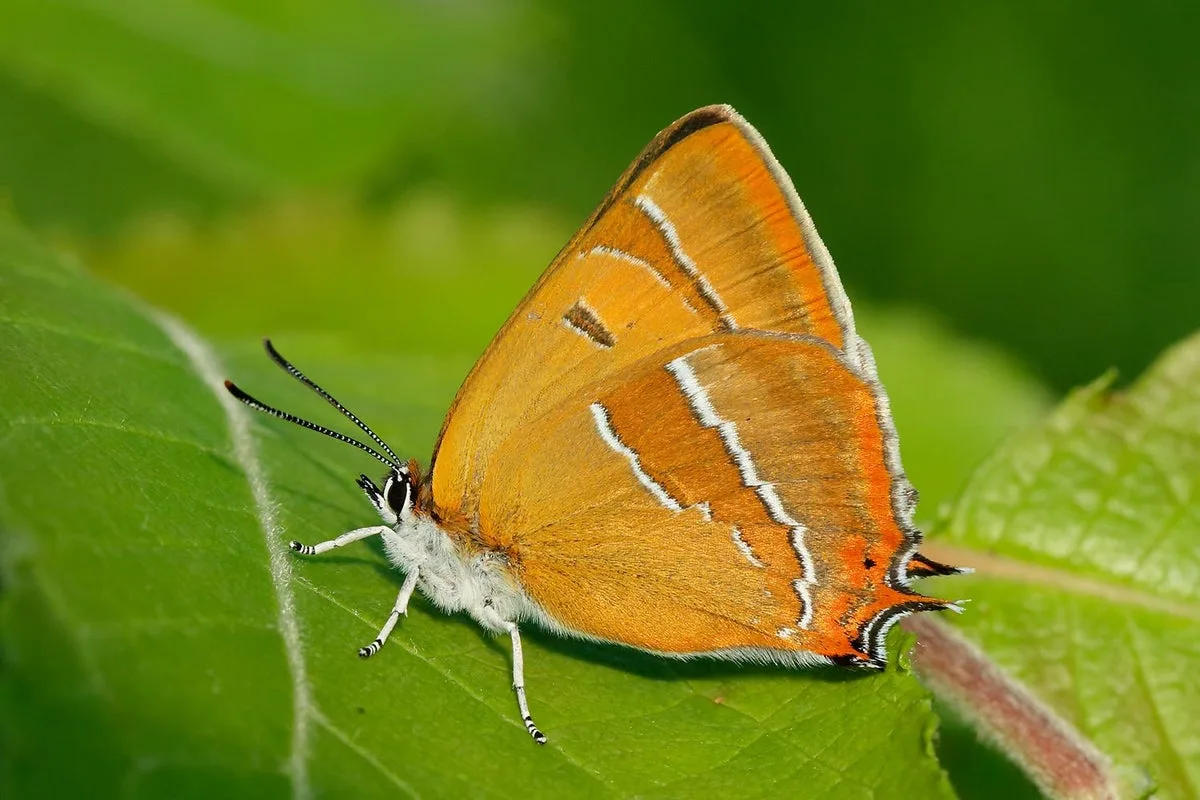
Conservationists have reported record numbers of brown hairstreak butterfly eggs in parts of south Wales, after landowners allowed hedgerows to grow wild. The brown hairstreak, once common across the UK, has suffered significant declines due to the annual mechanical 'flailing' of hedges, which destroys the blackthorn shoots the butterfly relies on for egg-laying.
Butterfly Conservation's south Wales branch worked with the National Trust and the South Wales Trunk Road Agent to reduce hedge cutting at key sites. Volunteers in the Tywi valley, who search for the tiny white eggs each winter, recorded record tallies this year. Protected sites saw a 50% increase in eggs, while a nearby field that was severely flailed saw numbers drop from 60 to just four eggs.
Richard Smith, a volunteer of more than 30 years, said the team was 'really excited' to see signs of recovery after a decade of decline. Dan Hoare, director of nature recovery at Butterfly Conservation, stressed they do not want to stop hedge management entirely, but urged landowners to 'cut back on their cutting back'. He suggested trimming hedges once every two or three years instead of annually.
Hoare added that healthy hedgerows support a range of wildlife, including moths, dormice, birds, and bats, and that thriving brown hairstreaks are an indicator of a balanced approach to hedge management.




